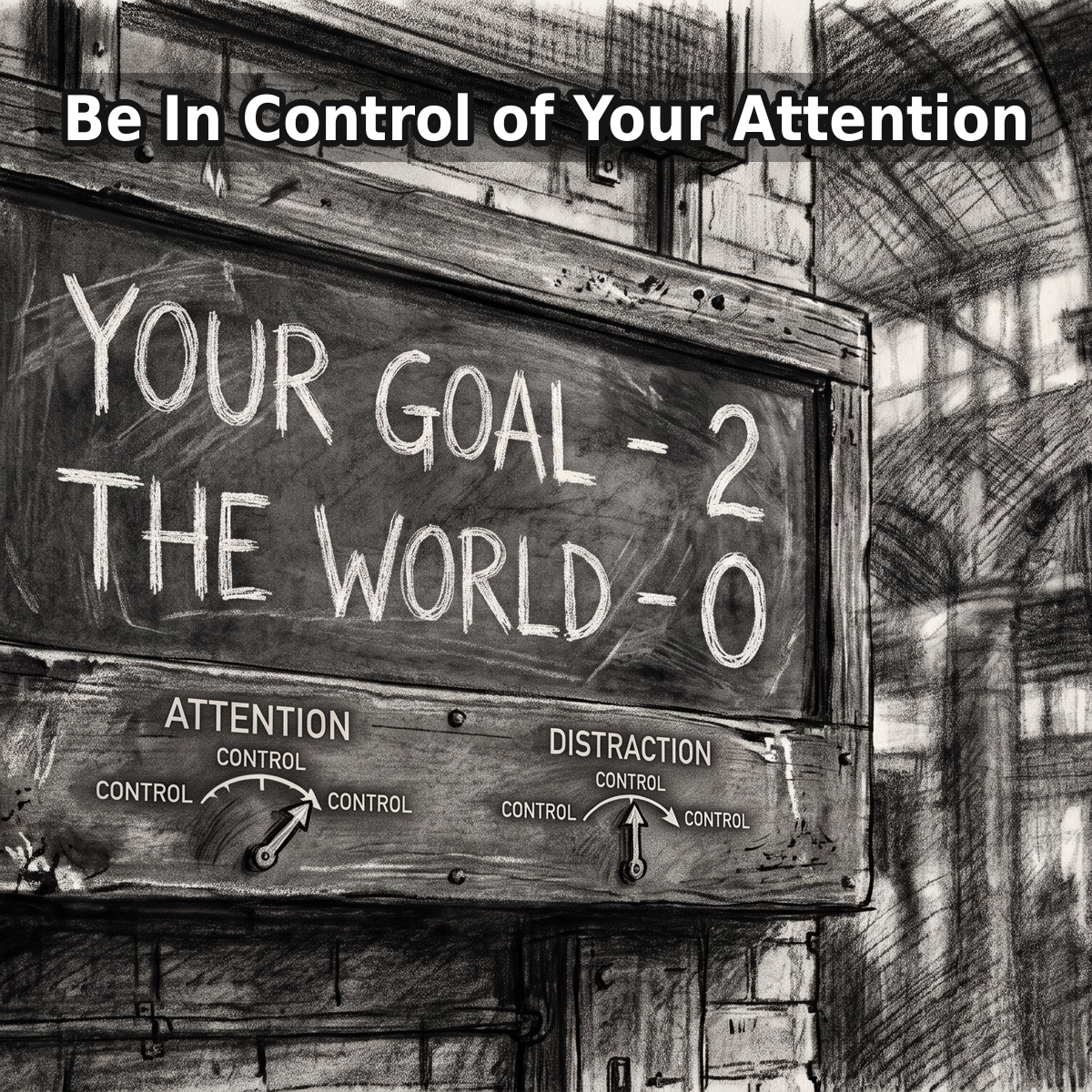
This week, I stumbled into a familiar pitfall: distraction. I found myself meandering down a tantalizing path, brimming with fun and intriguing prospects. It seemed harmless, even beneficial at first. But as the week unfolded, this new venture, initially a mere diversion, began to morph into a significant undertaking. It wasn’t until my weekly review this morning that the stark reality hit me. I had neglected key objectives, pivotal to my primary ambition, all because this newfound distraction had stealthily commandeered my time and attention.
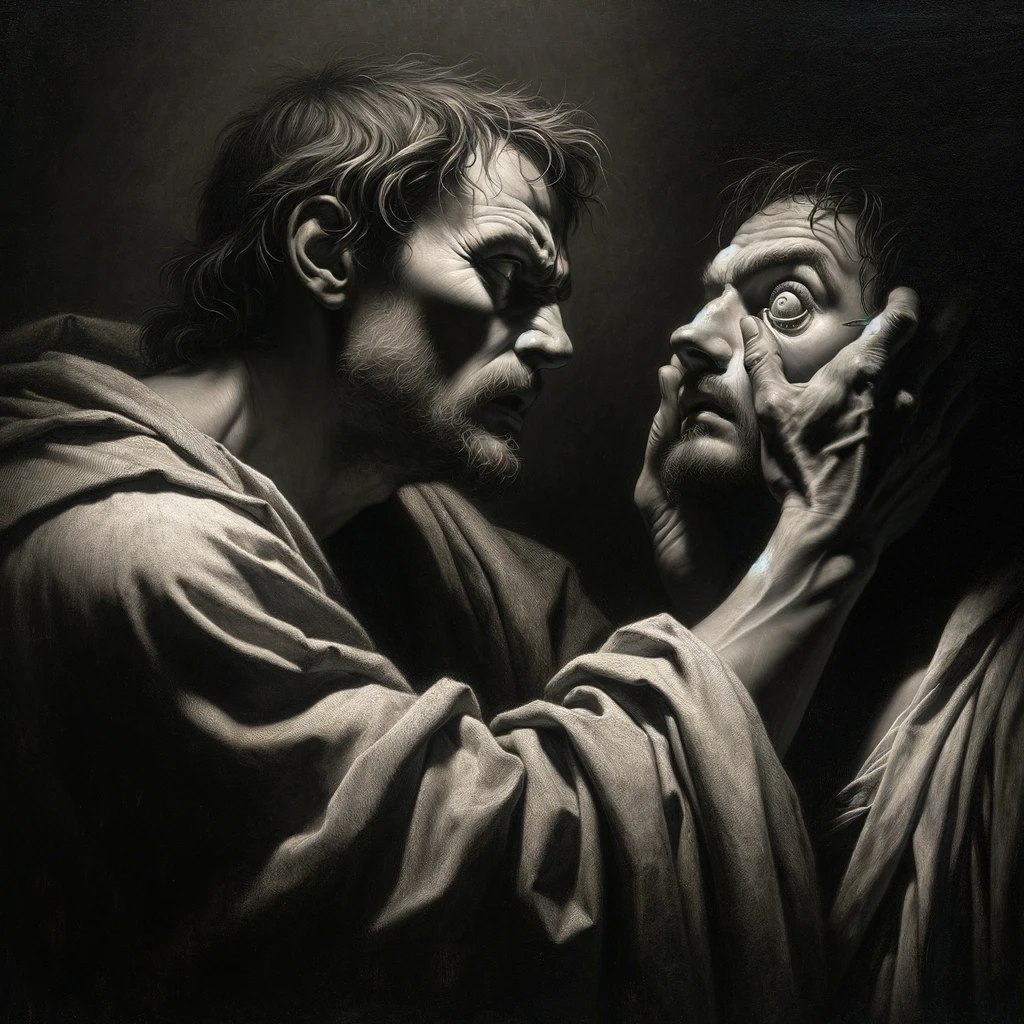
Reflecting on this, I was reminded of a powerful, yet simple teaching from the Sermon on the Mount, attributed to Jesus. In the King James Version, Matthew 5:29 reads, “And if thy right eye offend thee, pluck it out, and cast it from thee.” This passage, often interpreted metaphorically, emphasizes the essence of personal self-discipline and taking responsibility for one’s actions. It’s about recognizing what hinders our progress and having the courage to remove it, no matter how enticing it may seem. This isn’t just about avoiding wrongdoing; it’s about actively identifying and eliminating distractions that prevent us from achieving our goals.
The connection to Stoicism here is unmistakable. Stoicism teaches control over self as a key ingredient to success and self-mastery. It’s not about suppressing emotions or desires but about understanding them and ensuring they don’t derail us from our objectives. This ancient philosophy aligns strikingly with the biblical teaching, underlining the universal truth that self-control and discipline are foundational to personal growth and achievement.
Now, here’s the real kicker: if you’re aiming to achieve something truly remarkable, be prepared to make sacrifices. This means being willing to give up those “favorite sins” or distractions that, while appealing, scatter our focus. Sacrificing these comforts is a critical step in liberating ourselves to concentrate on our defined objectives. It’s about cultivating a singleness of purpose, and sometimes, that demands tough choices and letting go of what we find momentarily pleasing.
In conclusion, making the decision to cut out this week’s distraction was tough but necessary. It’s a decision that echoes the sentiments of the Sermon on the Mount and the Stoic philosophy of self-control. For us, busy professionals and individuals from all walks of life seeking to build resilience and strength, this lesson is invaluable. We must be vigilant in identifying and removing the distractions that veer us off course. It’s about making those hard choices for the greater good of our ambitions and goals. As I refocus on my primary objectives, I’m reminded of the power that lies in plucking out the distractions, no matter how alluring they may appear.