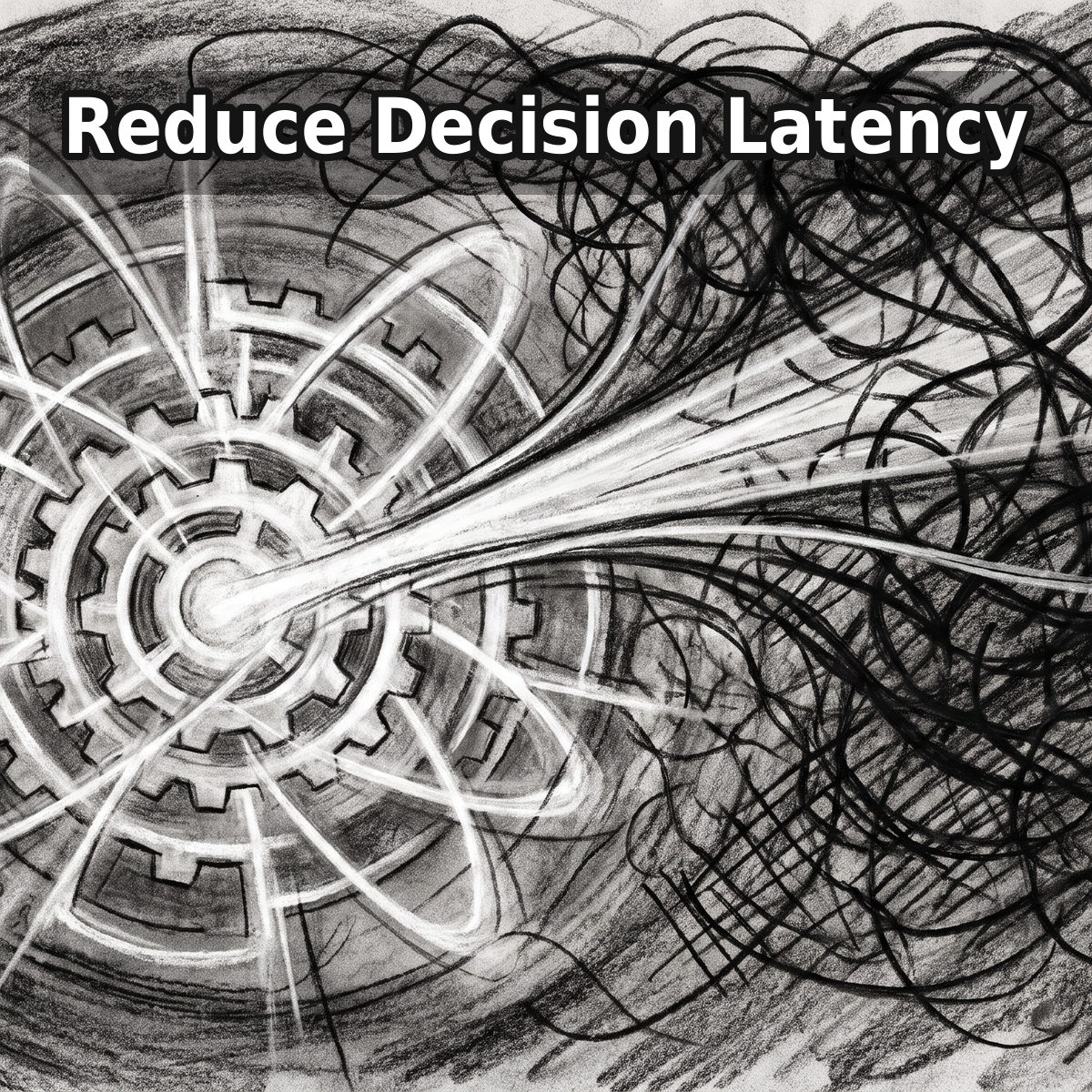
I recognized something about myself recently. I get annoyed when people take too long to make decisions. Not when the decision is genuinely difficult, but when we have discussed the problem, considered the options, understood the consequences, and still nobody is willing to make a call. I can feel my patience disappearing. This got me wondering whether I am simply impatient or whether there is something important about the cost of indecision.
I recently read an interview with Jon McNeill, a former Tesla executive who worked with Elon Musk. He described an environment where decision speed was a fundamental operating principle. Bad news was surfaced immediately, problems were summarized in three sentences, and chains of command could be bypassed when they became obstacles. He also described a five-step simplification process designed to eliminate unnecessary complexity before accelerating execution.
What struck me was not the speed itself, but the discipline required to make that speed possible. If you cannot explain a problem in three sentences, perhaps you have not identified the real problem yet. If bad news travels slowly because people are afraid to share it, then decisions are being delayed unnecessarily. Sometimes the very processes we create to help us make better decisions are preventing us from making any at all.
I suspect we frequently confuse deliberation with wisdom. Certainly, some decisions deserve careful thought, but sometimes we ask for another meeting, another analysis, or another opinion because we are afraid of being wrong. Waiting feels safer, even when waiting is itself a decision with consequences.
My 365 Commitment is built around a different approach. Every morning, determine what matters, identify the next action, and move. When something gets in the way, name the obstacle in plain language. Do not invent complicated reasons for avoiding progress. Decide what you can do today and then do it.
There is an important caveat. Speed without reflection is just recklessness. Making decisions quickly only works when we are equally willing to receive honest feedback, acknowledge mistakes, and reverse course when necessary. The objective is not to always be right. It is to discover what is right through action rather than endless speculation.
I think I will work on reducing my own decision latency. Less time circling problems and more time discovering solutions. Perhaps the most important thing to remember is that we do not need certainty to move forward. We need enough clarity to take the next step and enough humility to change direction when we learn something new.