This is one of my favorite concepts, and I am collecting and returning to it frequently in my daily musings. I have collected about 30 of these concepts so far, and this one is my favorite. There are three sources of inspiration for this concept, and I will outline them below.
Inspiration from Fantasy: Brandon Sanderson’s Stormlight Archive
The first is Brandon Sanderson’s magnificent work on the Cosmere exemplified in the Stormlight Archive Series. I saw someone reading the first book in this series in the airport and smiled to myself, thinking of Kaladin’s heroic journey and how much that inspired me personally. However, my favorite character in this series is a girl named Lift. She is unknowingly a member of the Knight’s Radiant, much like Kaladin. She is not one of the famed Windrunners but rather what is known as an EdgeDancer. She has the ability to manipulate the forces of Abrasion and Progression. She can reduce friction, become incredibly agile and swift, and also has the ability to heal and promote growth in living organisms. Of the 10 orders of Knights Radiant, this one appeals to me the most. Learning to dance on the edge is about understanding the balance between taking risks, speed, and the growth of created things.
The Power of Poetry: Patrick Overton’s Faith in the Unknown
The second is a poem by Patrick Overton. This poem is often repeated and captures rather eloquently the idea of taking a plunge into darkness when you have faith that the path you cannot see will be there. I have borrowed from this concept many times in my life, and it is the essence of being an EdgeDancer.
“When you have come to the edge
Of all light that you know
And are about to drop off into the darkness
Of the unknown, Faith is knowing
One of two things will happen:
There will be something solid to stand on or
You will be taught to fly.”
This poem is the true essence of being an EdgeDancer. You know in your soul that when you take that plunge into darkness, you will be faced with two outcomes, and both of them are good. 1. You will find that your faith was well placed and that you are heading in the right direction; 2. Your faith was misplaced, and now you are in the uncomfortable darkness of chaos, and you are forced to find order once again. You are now definitely learning and growing. The EdgeDancer becomes quite comfortable with this constant threat of being thrown into chaos and is happy with this iterative learning process.
Philosophical Backbone: Daoism and the Balance of Opposites
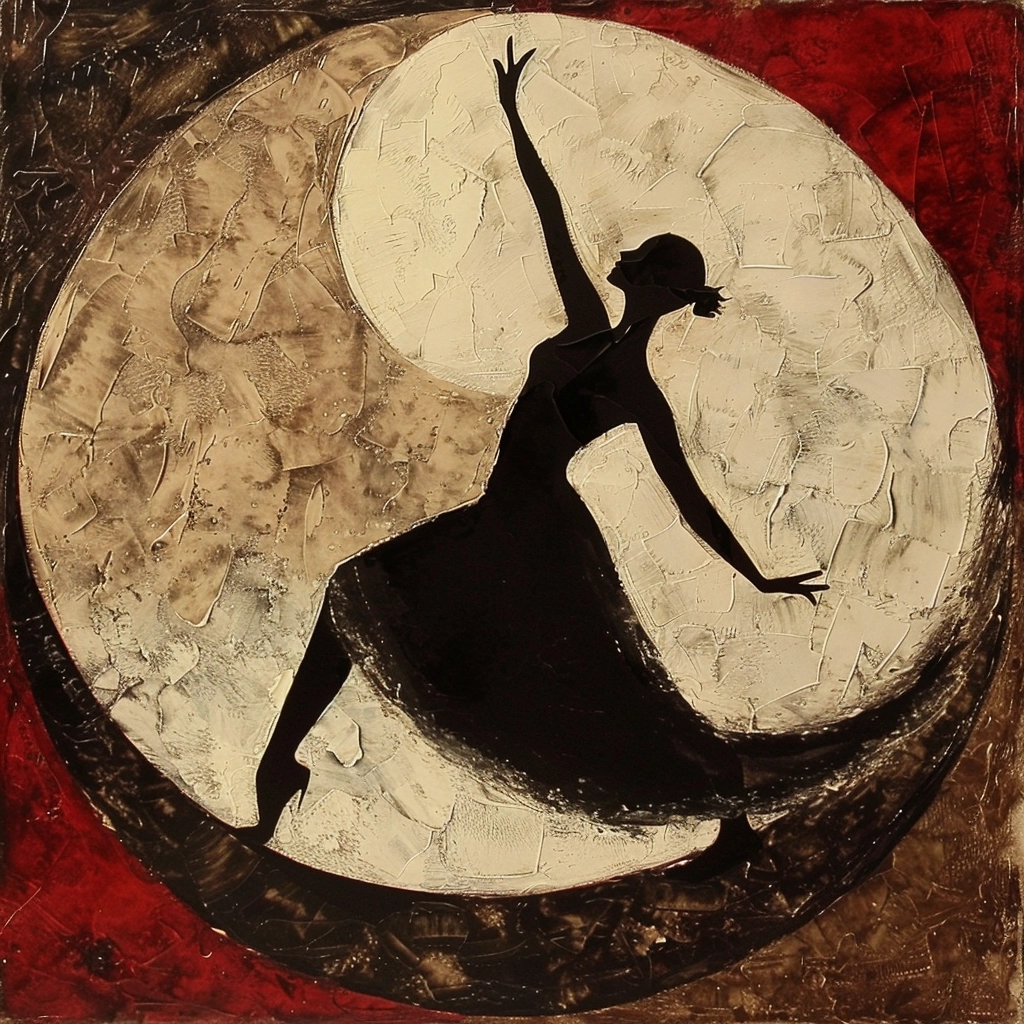
The third concept that serves as the backbone of Dancing on the Edge is from Daoism (Taoism). The modern-day philosopher Jordan Peterson brought this to my attention several years ago in one of his exhaustive books on myth and legends. This is represented by the ancient Chinese yin-yang symbol. You know, the black and white swirls with the opposing color dot on each side. Yin is typically associated with characteristics such as darkness, femininity, passivity, and absorption. It is often symbolized by water, earth, and the moon. Yang, on the other hand, is associated with light, masculinity, activity, and penetration, often symbolized by fire, sky, and the sun. You might shorten this to chaos and order. Both are necessary in the world of the EdgeDancer. Sometimes, you need order to maintain, and sometimes, you need chaos to grow.
Embracing the Dance on the Edge
This perspective emphasizes balance and flux. It suggests that change is the only constant and that each state contains the seeds of its opposite, whether order descends into chaos or chaos forms into order. The art of Edge Dancing is the knowledge that at any moment, your perfect order could slip into chaos and that out of chaos, you can find perfect order.
Conclusion: Living Dynamically and Productively
The point of all three of these influences on this concept is that true and productive living is dynamic and in constant flux. Rather than resisting this, we should embrace this and learn to dance on the edge. The mentality of an edge dancer includes a readiness to take risks, an acceptance of continuous failure as a path to success, and a focus on constant progress rather than perfection.