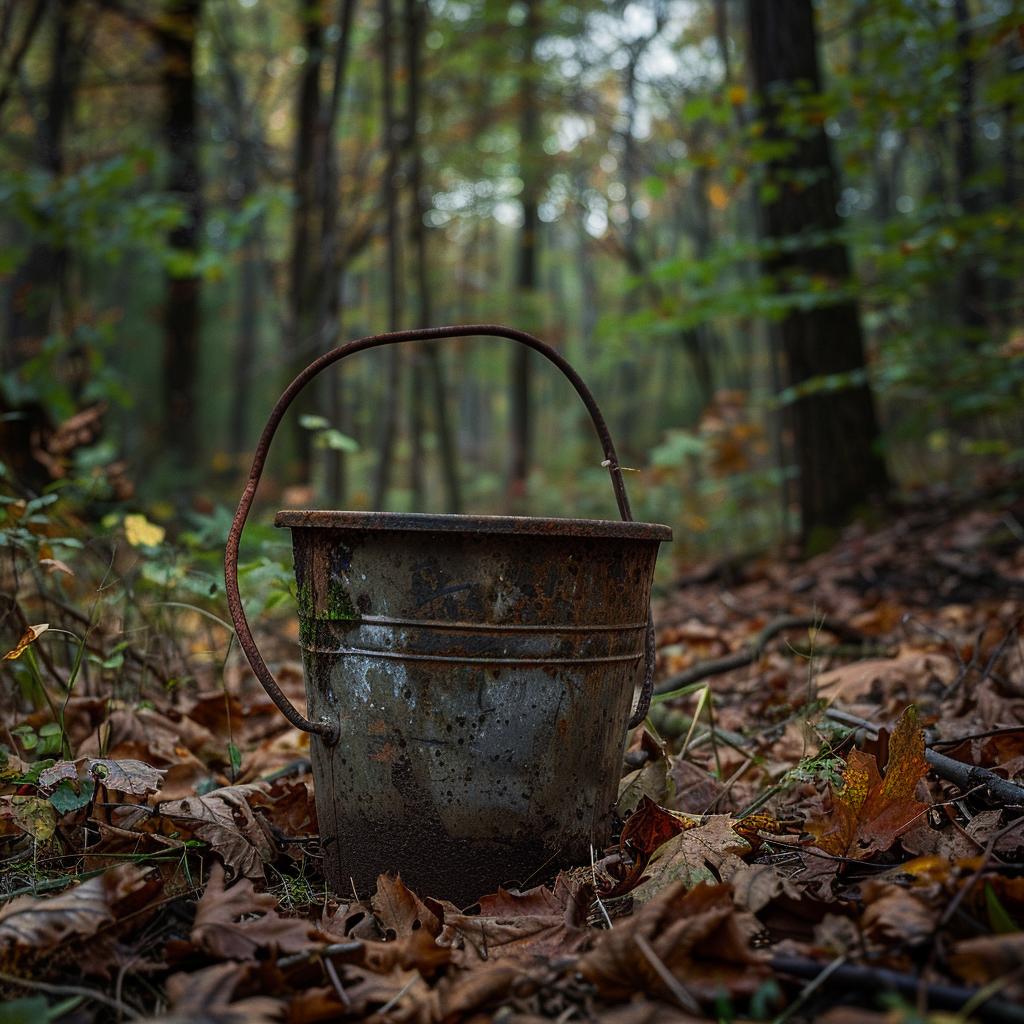
This is Day 3 of my week in the wilderness. By this time I am on the trail and am no longer connected to the world. Hopefully, I am enjoying myself by this time and am still fresh and excited with a bounce in my step. As I leave behind the road, the parking lot, the cars, the signs, the regulations, I will start to think about a different sort of philosophy.
I often go back to my favorite author of all time, Wendell Berry. This is an excerpt from an essay that he wrote called, the Work of Local Culture:
In the woods the bucket is no metaphor; it simply reveals what is always happening in the woods, if the woods is let alone. Of course, in most places in my part of the country, the human community did not leave the woods alone. It felled the trees, and replaced them with pastures and crops. But this did not revoke the law of the woods, which is that the ground must be protected by a cover of vegetation, and that the growth of the years must return—or be returned—to the ground to rot and build soil. A good local culture, in one of its most important functions, is a collection of the memories, ways, and skills necessary for the observance, within the bounds of domesticity, of this natural law. If the local culture cannot preserve and improve the local soil, then, as both reason and history inform us, the local community will decay and perish, and the work of soil building will be resumed by nature.
A human community, then, if it is to last long, must exert a sort of centripetal force, holding local soil and local memory in place. Practically speaking, human society has no work more important than this. Once we have acknowledged this principle, we can only be alarmed at the extent to which it has been ignored. For although our present society does generate a centripetal force of great power, this is not a local force, but one centered almost exclusively in our great commercial and industrial cities, which have drawn irresistibly into themselves both the products of the countryside and the people and talents of the country communities.
There is, as one assumes there must be, a countervailing or centrifugal force that also operates in our society, but this returns to the countryside not the residue of the land’s growth to refertilize the fields, not the learning and experience of the greater world ready to go to work locally, and not—or not often—even a just monetary compensation. What are returned, instead, are overpriced manufactured goods, pollution in various forms, and garbage. A landfill on the edge of my own rural county in Kentucky, for example, daily receives about eighty truckloads of garbage. Fifty to sixty of these loads come from cities in New York, New Jersey, and Pennsylvania. Thus, the end result of the phenomenal modern productivity of the countryside is a debased countryside, which becomes daily less pleasant, and which will inevitably become less productive.
The cities, which have imposed this inversion of forces on the country, have been unable to preserve themselves from it. The typical modern city is surrounded by a circle of affluent suburbs, eating its way outward, like ringworm, leaving the so-called inner city desolate, filthy, ugly, and dangerous.