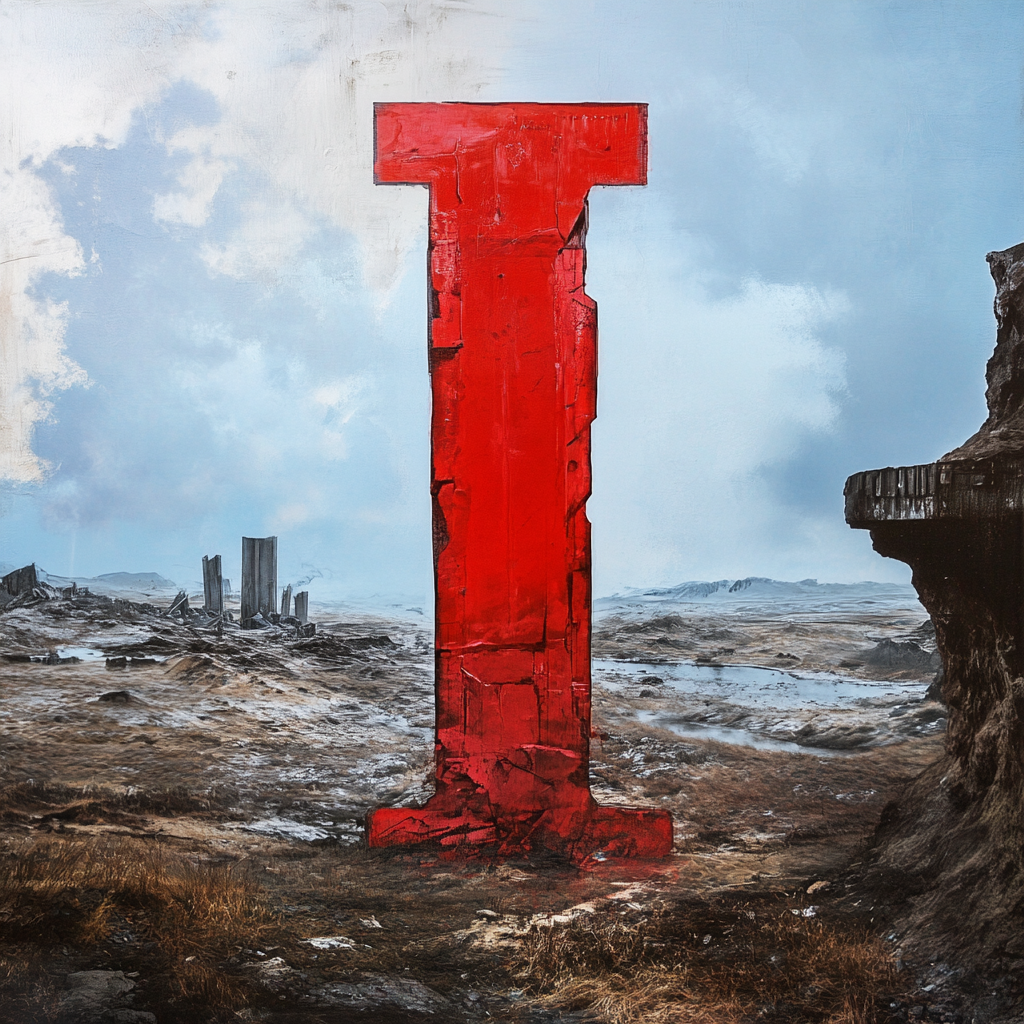
My next poet in the series of “poets that I am thankful for” is Ayn Rand. Now she was not a poet, in the true sense of the word. However, I do consider her short story Anthem to be one long poem dedicated to her moral philosophy. This work inspired many others that would follow her and still serves as the foundation of what many term – rugged individualism. Although I do not completely agree with her fundamental philosophy, I am thankful that voices such as Ayn Rand’s exist in our world standing as defenders of the individual.
Ayn Rand (1905–1982) was a Russian-American novelist, philosopher, and screenwriter, best known for her influential philosophy of Objectivism and her novels The Fountainhead and Atlas Shrugged. Born Alisa Zinovyevna Rosenbaum in St. Petersburg, Russia, Rand witnessed the Russian Revolution, which profoundly shaped her opposition to collectivism and authoritarianism. She immigrated to the United States in 1926, pursuing a career in Hollywood as a screenwriter before turning to fiction writing.
Rand’s works advocate for individualism, rational self-interest, and laissez-faire capitalism, challenging the ethical and political norms of her time. Her philosophy of Objectivism emphasizes reason, personal achievement, and the pursuit of happiness as central to human existence.
Ayn Rand’s Anthem is a dystopian novella set in a collectivist future where individuality has been completely suppressed. The protagonist, Equality 7-2521, is a young man who struggles with the rigid conformity of his society, which forbids personal identity and free thought. In this world, the word “I” is unknown, and people are referred to only by collective pronouns.
Equality 7-2521 secretly conducts scientific experiments and rediscovers electricity, which he hopes to present to the authorities to benefit mankind. However, his innovation is rejected as dangerous individualism. He escapes into the wilderness, where he embraces his own identity and renames himself Prometheus. Along with a woman named Liberty 5-3000, who joins him and takes the name Gaea, he vows to build a new society based on individual freedom and self-expression.
The novella explores themes of individuality, freedom, and the power of the human spirit to overcome oppressive collectivism. It serves as a critique of totalitarianism and an affirmation of Rand’s philosophy of objectivism.
Excerpt from Anthem – Chapter 11
I am. I think. I will.
My hands… My spirit… My sky… My forest… This earth of mine…. What must I say besides? These are the words. This is the answer.
I stand here on the summit of the mountain. I lift my head and I spread my arms. This, my body and spirit, this is the end of the quest. I wished to know the meaning of things. I am the meaning. I wished to find a warrant for being. I need no warrant for being, and no word of sanction upon my being. I am the warrant and the sanction.
It is my eyes which see, and the sight of my eyes grants beauty to the earth. It is my ears which hear, and the hearing of my ears gives its song to the world. It is my mind which thinks, and the judgement of my mind is the only searchlight that can find the truth. It is my will which chooses, and the choice of my will is the only edict I must respect.
Many words have been granted me, and some are wise, and some are false, but only three are holy: “I will it!”
Whatever road I take, the guiding star is within me; the guiding star and the loadstone which point the way. They point in but one direction. They point to me.
I know not if this earth on which I stand is the core of the universe or if it is but a speck of dust lost in eternity. I know not and I care not. For I know what happiness is possible to me on earth. And my happiness needs no higher aim to vindicate it. My happiness is not the means to any end. It is the end. It is its own goal. It is its own purpose.
Neither am I the means to any end others may wish to accomplish. I am not a tool for their use. I am not a servant of their needs. I am not a bandage for their wounds. I am not a sacrifice on their altars.
I am a man. This miracle of me is mine to own and keep, and mine to guard, and mine to use, and mine to kneel before!
I do not surrender my treasures, nor do I share them. The fortune of my spirit is not to be blown into coins of brass and flung to the winds as alms for the poor of the spirit. I guard my treasures: my thought, my will, my freedom. And the greatest of these is freedom.
I owe nothing to my brothers, nor do I gather debts from them. I ask none to live for me, nor do I live for any others. I covet no man’s soul, nor is my soul theirs to covet.
I am neither foe nor friend to my brothers, but such as each of them shall deserve of me. And to earn my love, my brothers must do more than to have been born. I do not grant my love without reason, nor to any chance passer-by who may wish to claim it. I honor men with my love. But honor is a thing to be earned.
I shall choose friends among men, but neither slaves nor masters. And I shall choose only such as please me, and them I shall love and respect, but neither command nor obey. And we shall join our hands when we wish, or walk alone when we so desire. For in the temple of his spirit, each man is alone. Let each man keep his temple untouched and undefiled. Then let him join hands with others if he wishes, but only beyond his holy threshold.
For the word “We” must never be spoken, save by one’s choice and as a second thought. This word must never be placed first within man’s soul, else it becomes a monster, the root of all the evils on earth, the root of man’s torture by men, and of an unspeakable lie.
The word “We” is as lime poured over men, which sets and hardens to stone, and crushes all beneath it, and that which is white and that which is black are lost equally in the grey of it. It is the word by which the depraved steal the virtue of the good, by which the weak steal the might of the strong, by which the fools steal the wisdom of the sages.
What is my joy if all hands, even the unclean, can reach into it? What is my wisdom, if even the fools can dictate to me? What is my freedom, if all creatures, even the botched and the impotent, are my masters? What is my life, if I am but to bow, to agree and to obey?
But I am done with this creed of corruption.
I am done with the monster of “We,” the word of serfdom, of plunder, of misery, falsehood and shame.
And now I see the face of god, and I raise this god over the earth, this god whom men have sought since men came into being, this god who will grant them joy and peace and pride.
This god, this one word:
“I.”