Disruptions happen. No matter how well you plan, how disciplined you are, or how committed you feel in the moment, life has a way of throwing obstacles in your path. The mistake many people make isn’t the disruption itself—it’s what happens afterward.
Most of us respond to setbacks with guilt or frustration. We miss a workout, and instead of adjusting, we dwell on failure. We overspend in one category, and instead of recalibrating, we feel defeated. But what if, instead of reacting emotionally to disruptions, we had a structured plan for handling them?
That’s where If-Then thinking comes in.
The Origins of If-Then Planning
I first came across this concept while learning about WOOP (Wish, Outcome, Obstacle, Plan), a goal-setting framework created by psychologist Gabriele Oettingen and researcher Peter Gollwitzer. Originally designed to help students achieve educational goals, WOOP emphasizes identifying potential obstacles before they happen and having a plan to deal with them.
Instead of just hoping for success, you acknowledge that roadblocks will come. And instead of feeling guilty when they do, you execute your plan for getting back on track.
That idea stuck with me. What if we applied the same strategic mindset to habits and daily commitments?
Using “If-Then” Rules for Recovery
The premise is simple: Identify common disruptions and pre-plan your response. Instead of wondering what to do in the moment, you execute a predefined recovery step.
Here are some examples:
- If I miss my morning focus time, then I’ll review my priorities at lunch.
- If I forget my habit for a day, then I’ll make sure to do it twice tomorrow.
- If I’m traveling, then I’ll simplify my routine into a 3-minute version.
By having these built-in resets, small setbacks don’t become permanent failures. They become momentary adjustments.
Applying If-Then to Real Goals
This kind of thinking works in every area of life. Here are a few ways it can help with specific goals:
- Running: If bad weather stops my morning run, then I’ll do a treadmill workout in the evening.
- Gym Workouts: If I miss my usual gym session, then I’ll complete a bodyweight circuit at home.
- Finances: If I overspend in one category, then I’ll adjust by reducing expenses in another area for the next week.
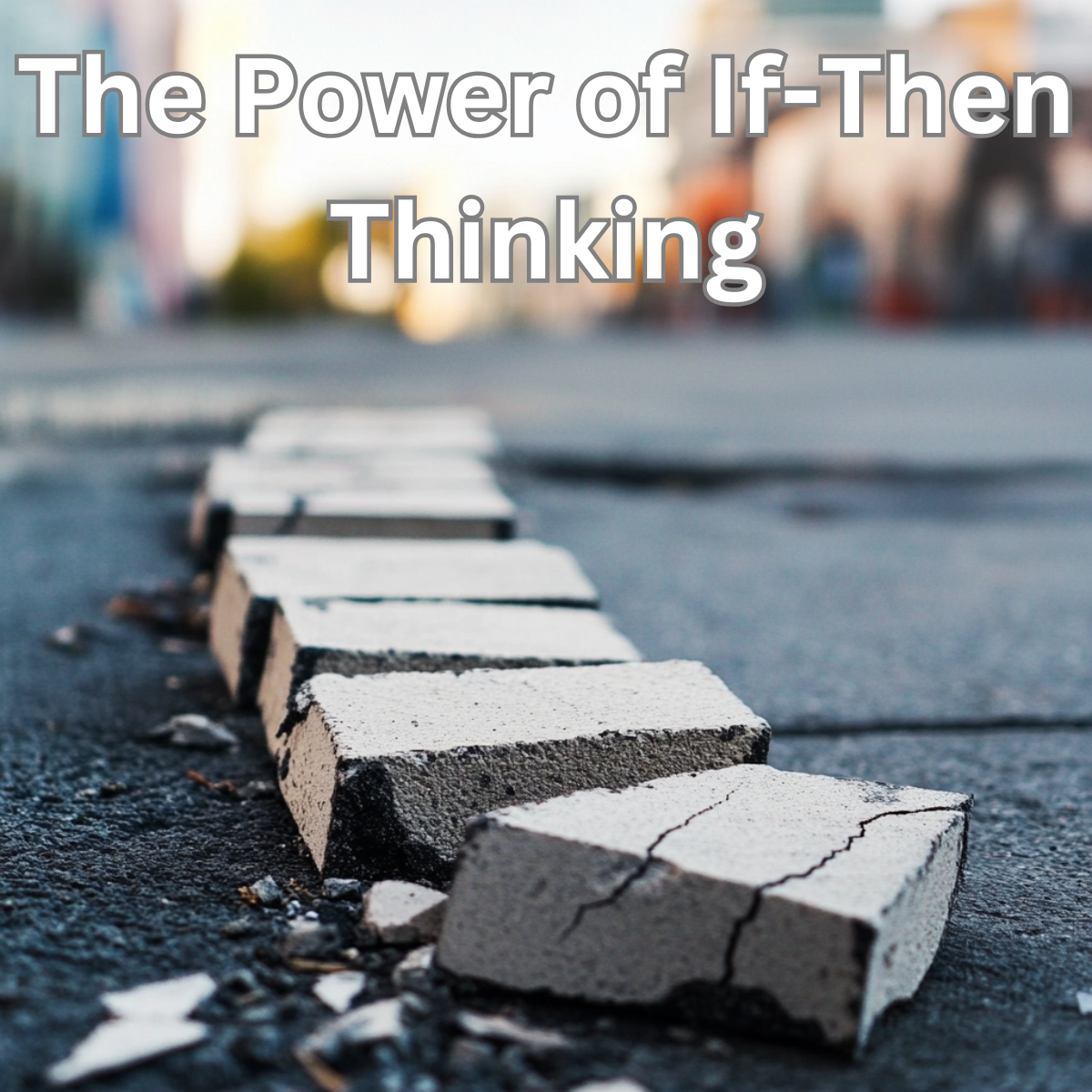
The power of If-Then thinking is that it eliminates the need for decision-making in the moment. You already know what to do—you just follow the plan.
The Key to Habit Formation
Success isn’t about perfect execution; it’s about how quickly you recover from setbacks. The people who sustain good habits over time aren’t the ones who never mess up—they’re the ones who know exactly how to get back on track.
By anticipating disruptions and pre-planning for them, you remove guilt, frustration, and hesitation from the equation. You create a system that keeps you moving forward, no matter what.
So, the next time life throws a disruption your way, don’t let it derail you. Just follow your If-Then plan and keep going.