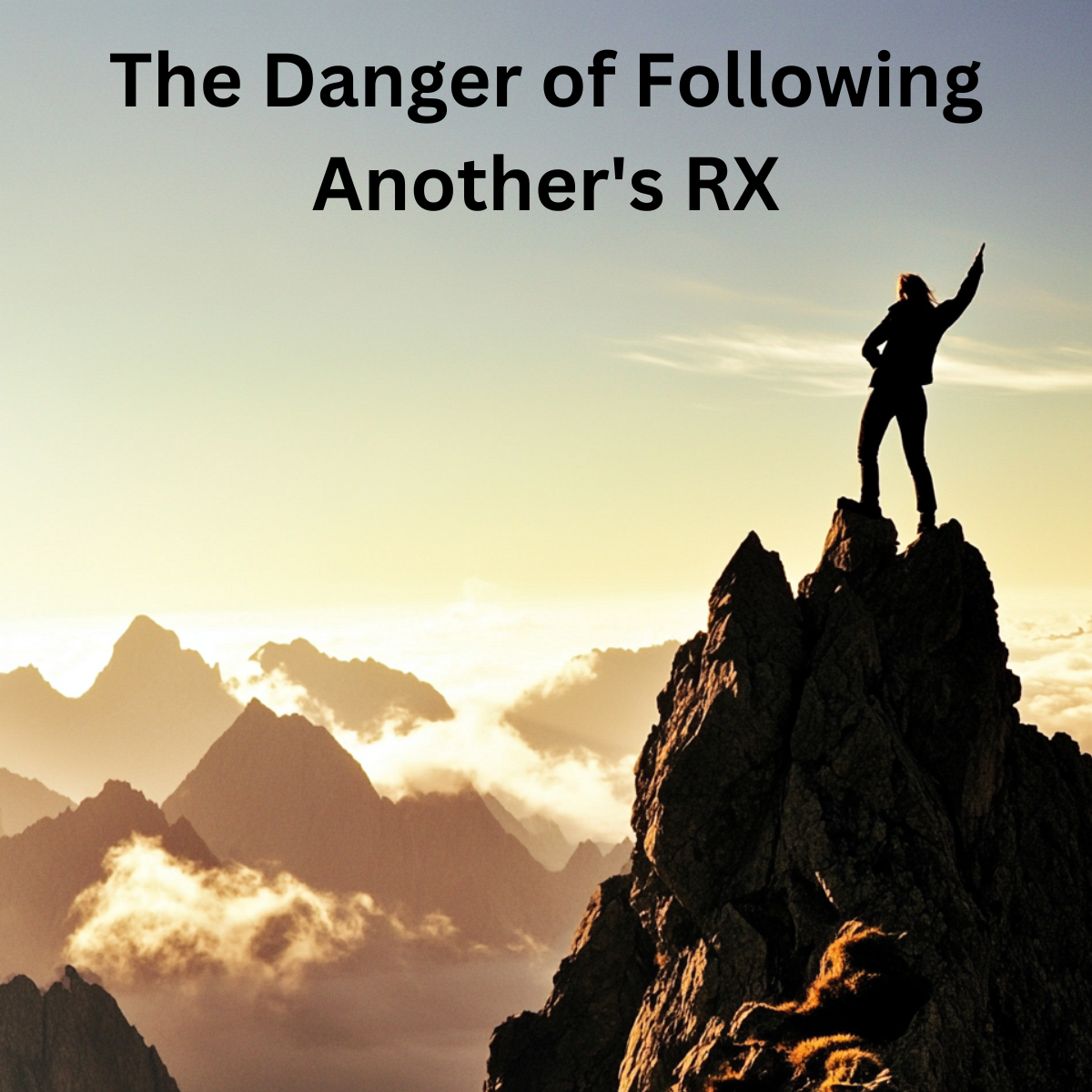
It’s tempting to believe that success can be reduced to a formula—five steps, three principles, one secret. Someone who has “made it” lays out their prescription, their RX, for success, and it’s hard not to lean in. After all, if it worked for them, shouldn’t it work for you?
So, you buy their material, read their books, listen to their speeches, and maybe even try to follow their steps exactly. But at some point, frustration sets in. The pieces don’t quite fit. The results don’t match. And you begin to wonder—why isn’t this working for me?
The Missing Variable
What those success formulas fail to mention is that they were created after the fact. They were written by someone who has already fought their battles, weathered their storms, and climbed their mountains. It’s easy to tell someone “the secret to success is…” once you’ve reached the summit. But the journey itself? That’s messy. It’s full of wrong turns, hard lessons, and personal realizations that can’t be packaged neatly into a list of steps.
The Illusion of a Shortcut
We want a shortcut. A direct route. A guarantee. But that’s the danger of following another person’s RX—it assumes that what worked for them will work for you. It ignores your own starting point, your own challenges, and your own unique strengths.
Success isn’t a formula. It’s a process. A commitment. And most importantly, it’s something that you have to work out for yourself.
The Best Advice I Ever Got
Honestly, the best advice I ever received was this: pick a path and get on it.
Not because it’s the “right” path. Not because it’s guaranteed to work. But because forward motion, trial and error, and persistence are what lead to personal growth. The path itself will teach you what no book or seminar ever could.
It’s okay to learn from others. It’s okay to take inspiration from their journey. But at the end of the day, the only RX that matters is the one you write for yourself.
So, pick a path. Step forward. Adjust as you go. That’s the real secret to success.


A corollary to your best advice (pick a path) – one of my former bosses always said “I want to get as much hindsight as quickly as possible”. Basically, get started. If the path is the wrong one, you’ll figure it out and regroup. But standing around with indecision and doing nothing won’t gain you any hindsight!
Yes, most of my mistakes in life have occurred post-hesitation.