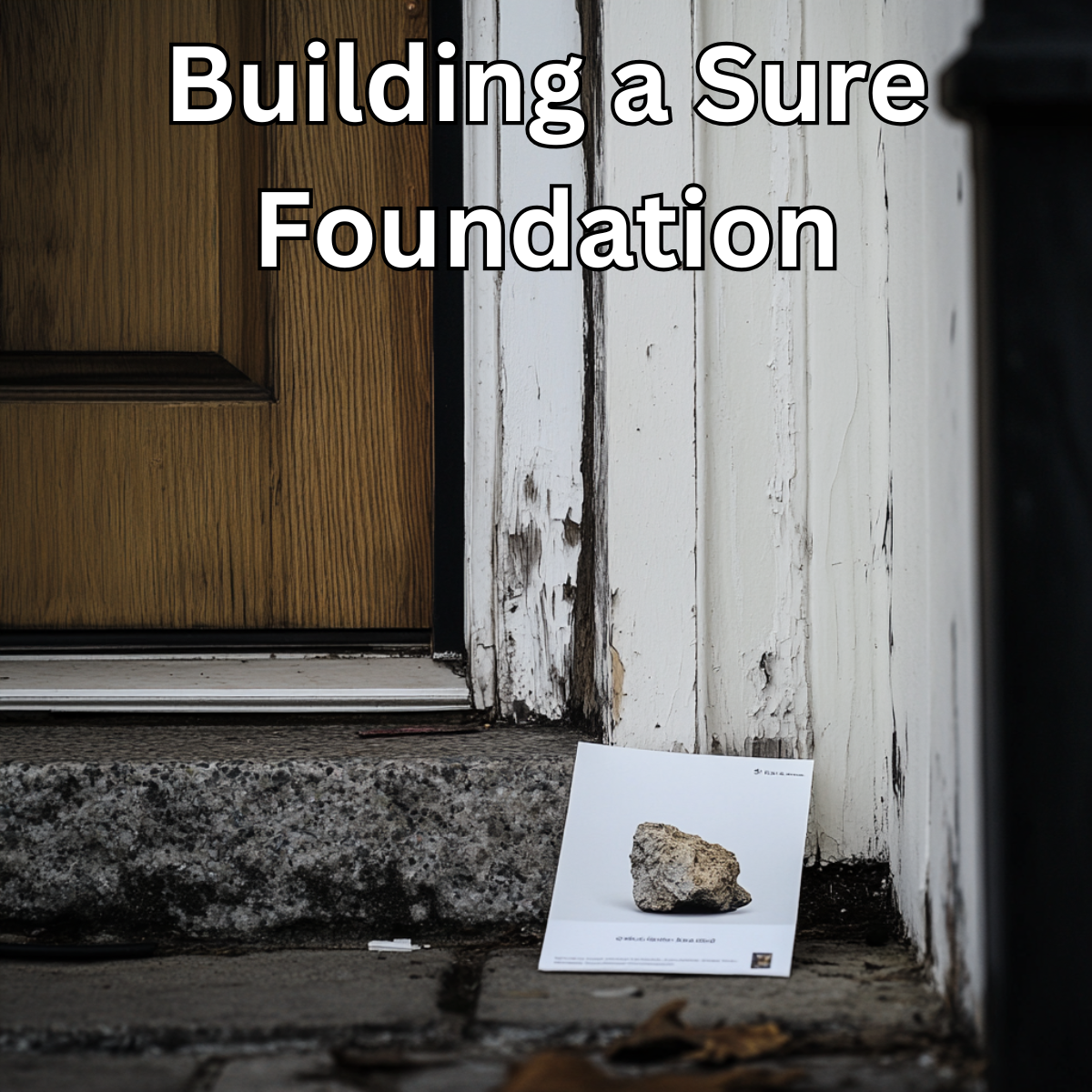
Every other week, like clockwork, I find a flyer on my doorstep. Sometimes it’s from The Rock, sometimes from The Cornerstone. Competing messages, yet both echo the same idea: build your foundation on something solid.
It’s a reminder—whether intentional or not—of a simple but profound truth that Jesus taught in the Sermon on the Mount:
“Therefore whosoever heareth these sayings of mine, and doeth them, I will liken him unto a wise man, which built his house upon a rock: And the rain descended, and the floods came, and the winds blew, and beat upon that house; and it fell not: for it was founded upon a rock. And every one that heareth these sayings of mine, and doeth them not, shall be likened unto a foolish man, which built his house upon the sand: And the rain descended, and the floods came, and the winds blew, and beat upon that house; and it fell: and great was the fall of it.” (Matthew 7:24-27, KJV)
A house built on rock stands firm when storms come. A house built on sand collapses under pressure. The metaphor is clear—your foundation determines your stability.
But here’s the real question: how do you actually build a foundation?
Not in theory. Not in metaphor. In real life.
What is a Foundation?
A foundation is the structure that holds everything together. It’s what keeps you grounded when life tests you. You see this idea everywhere:
- Athletes build a foundation of discipline and training before they ever win a championship.
- Businesses establish core principles before they can grow and scale.
- Relationships thrive when built on trust and honesty, not convenience or charm.
In spiritual terms, Jesus was saying that His teachings—when lived and applied—create a life capable of enduring hardship. But even if we step back from faith for a moment, the concept remains universal: anything worth having requires a strong foundation.
How Do You Build One?
If you want to build a foundation—not just in faith, but in anything—where do you start?
1. Choose the Right Foundation
Before you start building, you need to know what you’re building on. If you want a life of integrity, wisdom, or purpose, then your foundation has to reflect those values.
- Want to be honest? Build a foundation on truth.
- Want to be wise? Build on knowledge and experience.
- Want to be strong? Build on discipline and endurance.
A foundation isn’t just what you believe. It’s what you commit to living by.
2. Seek Truth Relentlessly
A strong foundation requires depth. If you build on assumptions or shallow understanding, cracks will form. Seek wisdom from those who have walked the path before you—mentors, scripture, history, and experience.
- Read. Study. Reflect.
- Test what you learn.
- Don’t just accept something because it sounds good—dig deeper.
A foundation must be proven, not just assumed.
3. Develop Habits That Reinforce It
Once you know your foundation, you have to practice it daily. If you say you value honesty, but lie when it’s convenient, your foundation is weak. If you want resilience, but avoid discomfort, you’re building on sand.
- Small, consistent actions shape a strong foundation.
- What you do every day matters more than what you intend to do.
Discipline, not intention, builds strength.
4. Surround Yourself with the Right People
Foundations are reinforced by community. If you’re surrounded by people who compromise, you’ll be tempted to compromise too. If you’re surrounded by people who live with integrity, you’ll be strengthened in your own convictions.
Choose wisely. The people around you are either reinforcing your foundation or eroding it.
5. Test It Under Pressure
A foundation isn’t truly tested until the storms come. Difficulties, failures, disappointments—these moments reveal whether what you’ve built can hold.
- If you compromise under pressure, your foundation needs work.
- If you stand firm, you know you’ve built on something real.
No one enjoys hardship, but it’s necessary. A foundation that is never tested is never proven.
6. Commit to Lifelong Maintenance
A strong foundation isn’t something you build once and forget about. It requires ongoing attention. Even the strongest structures need maintenance.
- Reevaluate. Adjust. Strengthen weak spots.
- Keep learning. Keep growing.
The moment you stop reinforcing your foundation, erosion begins.
Final Thought: It Takes a Lifetime
Building a strong foundation isn’t quick or easy. It takes time, patience, and persistence.
But the alternative—a life built on sand—is far more costly.
So choose wisely.
What you build on will determine what stands when the storm comes.