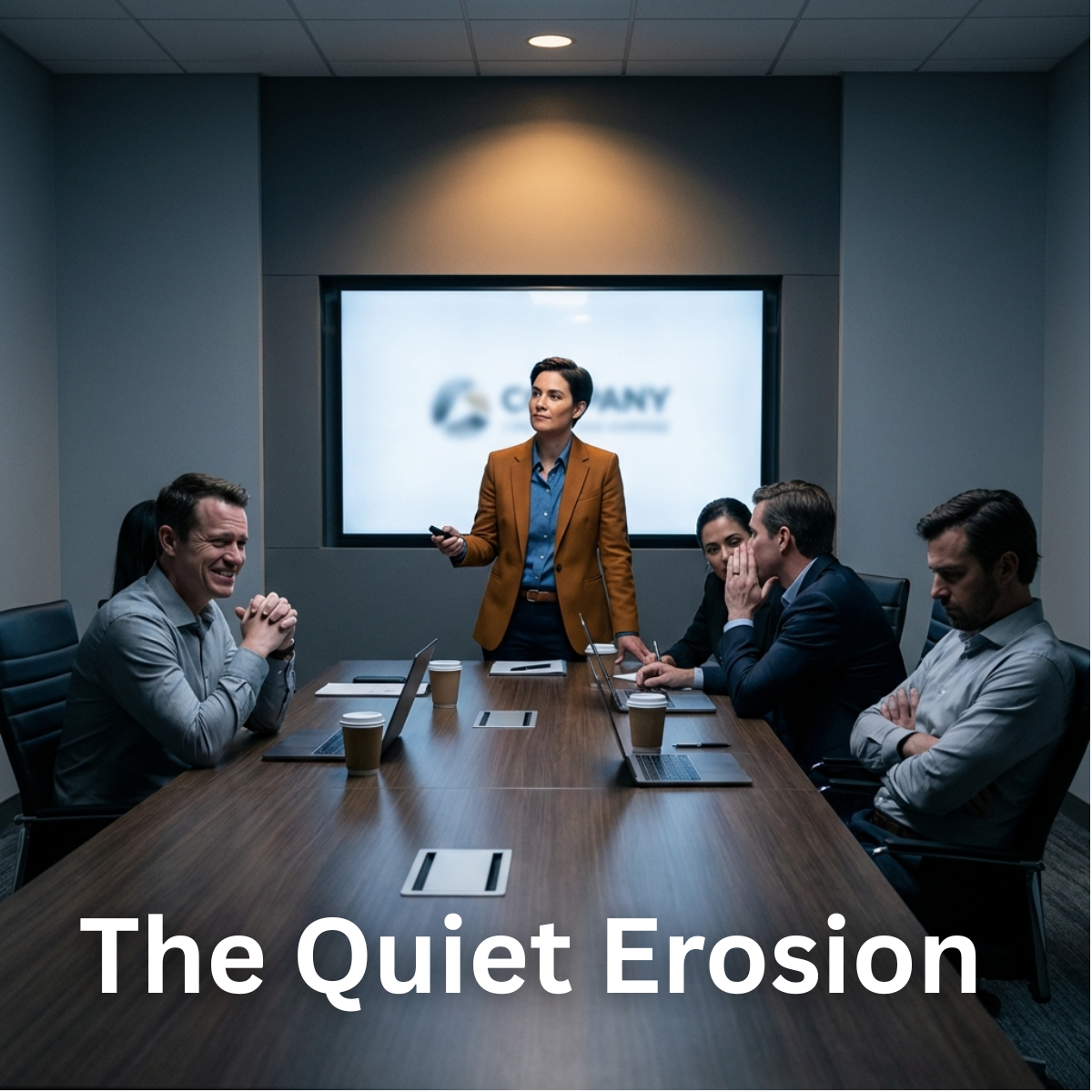
Leadership does not always fail loudly. Sometimes it dies in whispers. The most dangerous threats to authority are not the ones that challenge you openly. Those you can address. The real damage comes from the people who nod in meetings, smile in hallways, and slowly dismantle your effectiveness through a thousand small acts of resistance.
They never say no. They just make yes meaningless.
The Art of Literal Obedience
There is a particular kind of compliance that kills momentum. It looks like cooperation. Someone does precisely what you asked. Nothing more. Nothing less. No judgment. No initiative. No thought beyond the instruction itself.
When the outcome fails, they have their defense ready. “I did what you asked.” Technically true. Functionally useless. This is not defiance. It is something worse. It is the appearance of alignment without the substance. Over time, it makes leadership look ineffective because nothing moves forward the way it should.
The Slow Bleed of Delay
Refusal is obvious. Delay is not. Nothing gets rejected outright. Everything just takes longer than it should. Deadlines slip. Requests get lost. Work arrives too late to matter. Every delay comes with a plausible excuse. Too busy. Needed more clarity. Waiting on someone else.
This is one of the safest forms of resistance because it looks like busyness, not defiance. It is hard to call out. Hard to prove. But it drains energy and erodes trust. When everything takes twice as long as it should, momentum dies. And with it, credibility.
The Shadow Narrative
Some people agree in meetings and question in hallways. They nod when decisions are made. Then raise concerns only after the moment has passed. They do not challenge you directly. They just plant doubt in side conversations. They ask questions that sound reasonable but carry a hint of skepticism.
This creates a shadow narrative where authority erodes quietly. People start to wonder if the direction is sound. Not because of what was said in the meeting, but because of what was whispered afterward. The leader becomes isolated without realizing it. Decisions lose support before they are even implemented.
The Last to Know
Information is power. Withholding it is sabotage. Some people control access to key data. They share bad news late. They withhold context that would help inform decisions. They make sure you are the last to know what matters.
Leaders lose leverage when they operate in the dark. When you do not have the whole picture, you make weaker decisions. When you find out too late, you lose the ability to respond. This is not an accident. It is a strategy. And it works because it is hard to prove intent.
The Shield of Confusion
Clarity is a weapon. So is its absence. Some people respond with vague language. They ask endless clarifying questions without making progress. They claim misunderstanding after outcomes fail. Confusion becomes a shield.
This is not about needing more information. It is about creating enough ambiguity to avoid accountability. When nothing is ever quite clear, nothing is ever quite their fault. And leadership looks indecisive because every instruction seems to require ten follow-ups.
The Quiet Drift
Not everyone resists openly. Some just drift. Slight deviations from agreed priorities. Reinterpreting strategy to fit personal preferences. Supporting alternatives quietly instead of committing fully. It looks reasonable. It sounds like flexibility. But it fragments execution.
When everyone is doing their own version of the plan, nothing coheres. The leader looks ineffective because outcomes do not match expectations. But no one openly defied anything. They just interpreted things differently. And that is enough to break momentum.
The Micro-Signals
Authority is not just about what is said. It is about what is signaled. Eye rolls. Sighs. Silence in meetings. Jokes that subtly question decisions. “I’m just asking questions” framed skepticism. These micro-signals teach others how seriously to take you.
People watch how others respond to leadership. If someone can dismiss a decision with a sigh and face no consequence, others learn that the decision does not really matter. If skepticism is rewarded with laughter, skepticism spreads. These small moments shape culture more than any memo ever will.
The Bypass
Some people do not challenge you. They just go around you. They escalate to peers or higher-ups instead of addressing issues directly. They seek validation elsewhere. They frame it as “just keeping people informed.” But what they are really doing is bypassing authority without open confrontation.
This is dangerous because it looks responsible. It sounds like transparency. But it undermines the chain of decision-making. It teaches others that your authority is optional. That if they do not like a decision, they can just find someone else to agree with them.
The Loudest Statement
Silence in the face of something that is not right is not neutral. It is a decision. And in leadership, it is often the most dangerous one. When people undermine authority through delay, ambiguity, or quiet resistance, the leader’s response matters. Not addressing it signals acceptance. What goes unaddressed gets interpreted as allowed. It becomes the new standard.
Leadership is not just about direction. It is about moral clarity. Naming what is not right, even imperfectly, sets a tone that says this matters. Silence feels safe in the moment. It feels like the path of least resistance. But over time, it is the loudest statement a leader can make, and rarely the one they intend.