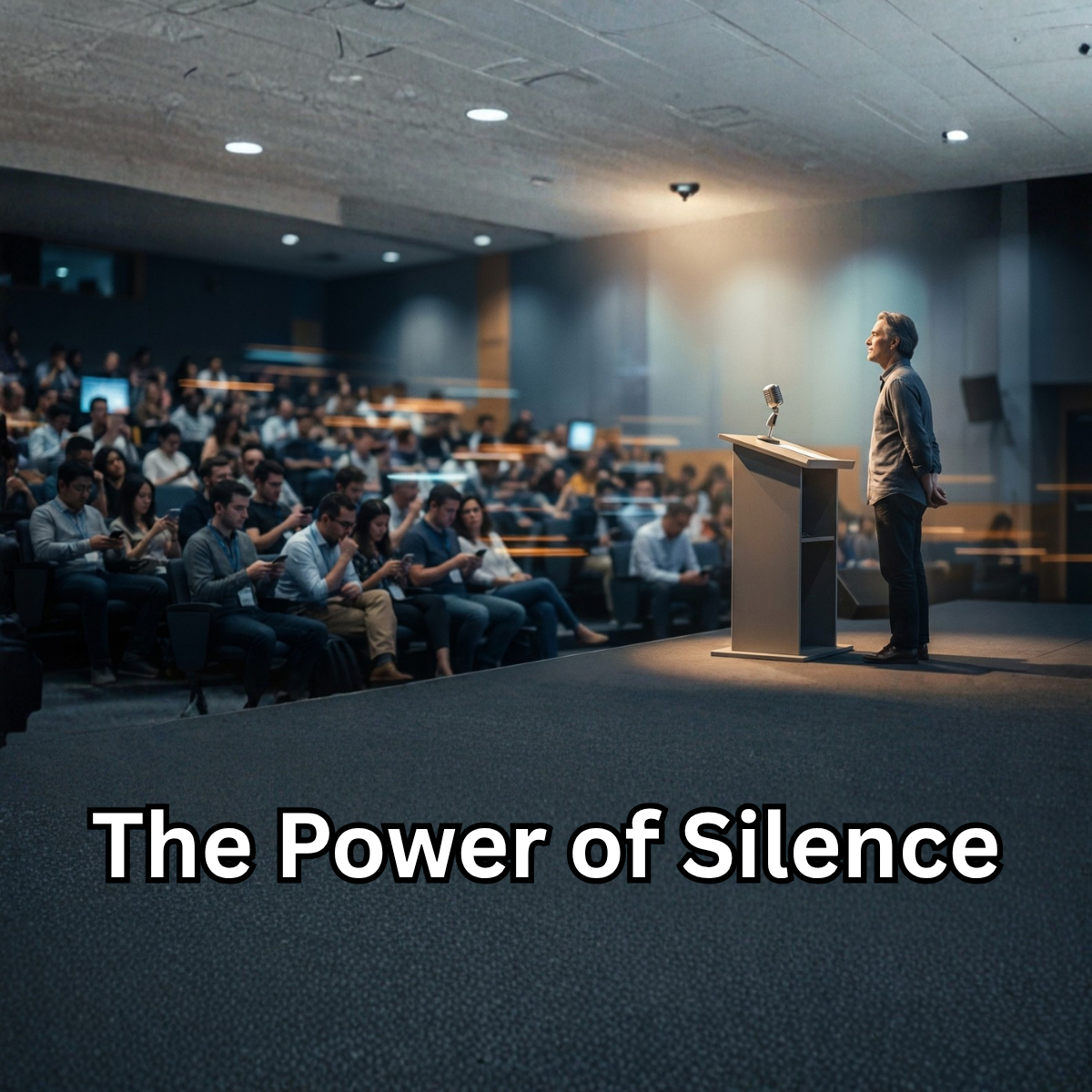
I learned that silence was more important than words on a Tuesday afternoon in a room full of forty people who were not paying attention.
I had been trained to speak from an early age. Toastmasters, mock trial, speech and debate, academic decathlon. I became a college professor.
At one point in my career, I was giving four to five presentations in front of large audiences every week. I knew how to use a pause. I had learned that sometimes you stop talking and let your audience come to a conclusion for themselves. You never want to provide all the answers.
Sometimes you want to leave the question hanging and let that light bulb moment come. That moment is more powerful than anything you could actually say.
But I had never seen total silence used the way I saw it that day.
We were gathered to receive a special visit from an ecclesiastic leader who had written several books and was well known on a particular topic. The topic itself was not what mattered. What mattered was how this man addressed us when it came his time to speak.
The meeting was chaotic, unorganized, even hectic. It was largely informational, at times trying to motivate a bunch of volunteers for a charity organization. I was a young man and was only halfway tuned in. When this man was asked to come forward, he slowly walked to the front of the room and then just stood there.
He slowly let his gaze fall upon each person in the room, one by one. As he did so, the chatter and murmuring and background noise slowly died away. Even the staff that was busy cleaning tables stopped what they were doing. The pause continued. People at first shifted awkwardly in their chairs and then became still as statues. We were all captured, in full attention. Not a word was said. This was the best attention getter I had ever witnessed, and I have witnessed many.
Then with all of our attention captured, he sang an old Irish ballad, one I had never heard of. Although the topic of the song was that of loss and sorrow, the words somehow had incredible topicality to what we were doing during that conference. He sang and when he was done, he abruptly stopped.
Not a single person in the room was holding back tears. We all had tears welling up in our eyes or pouring down our cheeks. It looked as if he was going to say something, and then he didn’t. Message received. We all left that conference more motivated and inspired in those five minutes than we had ever felt in our lives.
“That moment is more powerful than anything you could actually say.”
I think about that day when I am tempted to fill every gap with words. I think about how he stood there and said nothing until we were ready to hear something. I think about how he stopped before we wanted him to stop, and how that made the message land deeper than any explanation could have.
The next time you have something important to say, try saying less. Try saying nothing first. Let the silence do the work you think your words need to do.