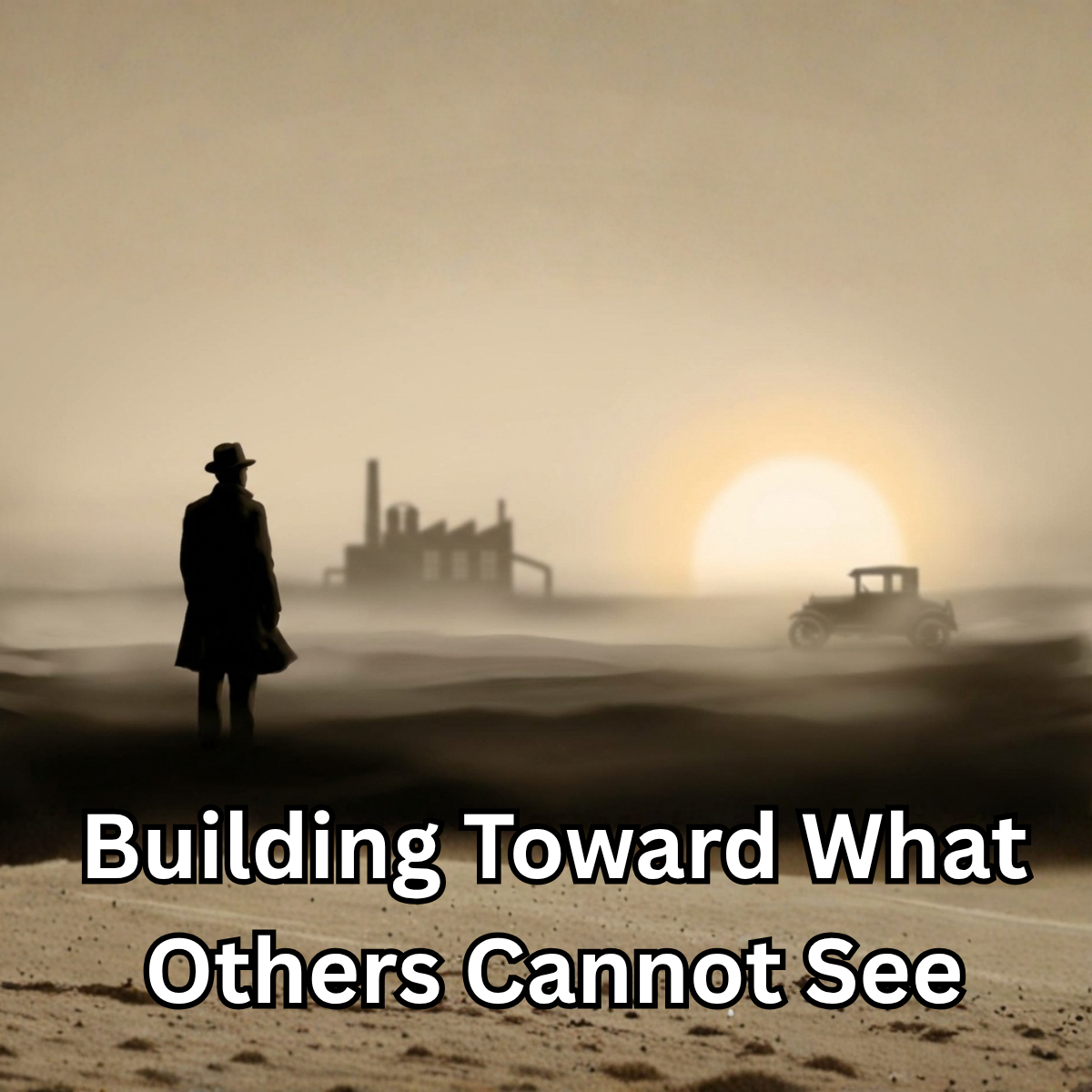
I pulled a book off my shelf this week that I had not touched in years. It was about the early days of Henry Ford. I have been thinking about risk lately, about what it actually means to take one, and I wanted to look at someone who did it when the stakes were real. Most people do not realize what a tremendous risk taker Henry Ford was.
Ford did not just take risks. He believed in a future that did not yet exist, and he acted as if it were inevitable. That is a different thing entirely.
In the late 1800s and early 1900s, automobiles were rare, expensive, and unreliable. The dominant mode of transportation was still the horse.
Roads were largely undeveloped. Even the early car companies that did exist were building custom vehicles, high priced machines for the wealthy. Ford saw something completely different. He saw a world where the average working person owned a car. That belief drove him long before there was any proof.
He left a stable job at Edison Illuminating Company to pursue automobiles. He failed twice, first with Detroit Automobile Company and then with Henry Ford Company, before founding Ford Motor Company. He kept building prototypes, the Quadricycle and others, when there was no clear market. At the time, this was not visionary. It looked like stubbornness.
What made his conviction different was that it had structure. He believed in accessibility over luxury. He believed cost would drop with scale. He believed demand would follow affordability. He was not reacting to the present. He was building toward a predicted future state.
Most people wait for validation. They follow existing demand. They optimize within current reality. Ford did the opposite. He acted on a thesis about the future. He was willing to be early, and wrong, for a long time.
This translates directly to how we approach our own ambitions. If your ambition depends on current conditions, you will always lag. If you develop a clear view of where things are going, you can move ahead of the curve. The question is not whether you can see opportunity in what already exists. The question is whether you believe in something that others do not yet see, and whether you are building toward it or waiting for permission.
“Conviction reduces perceived risk. If you truly believe something is inevitable, the risk becomes not acting.”
I am spending the next four days reviewing my notes on Ford, looking for lessons I can pull from his experience. But this one stands out already. He did not wait for the world to be ready. He built as if the future he imagined was already on its way. That is the risk worth taking. The one small step is to ask yourself what future you believe in that does not yet exist, and then to take one action today that moves you toward it.