You might have seen the movie Obsession recently. I will not spoil it for you, but it is a classic story of a young man using a talisman to get a wish granted, and he wished for a girl to be obsessed with him. Of course, this backfires, and he gets what he wanted, but the mechanism by which he gets it is at a terrible price. I was reading about the creation of this movie and the director acknowledged that the idea came from a Simpson’s episode called the Treehouse of Horror. I do not remember seeing that, but let me guess: it’s a classic monkey’s paw story.
The term comes from “The Monkey’s Paw,” a 1902 short story by W. W. Jacobs. Here is the beginning of that story:
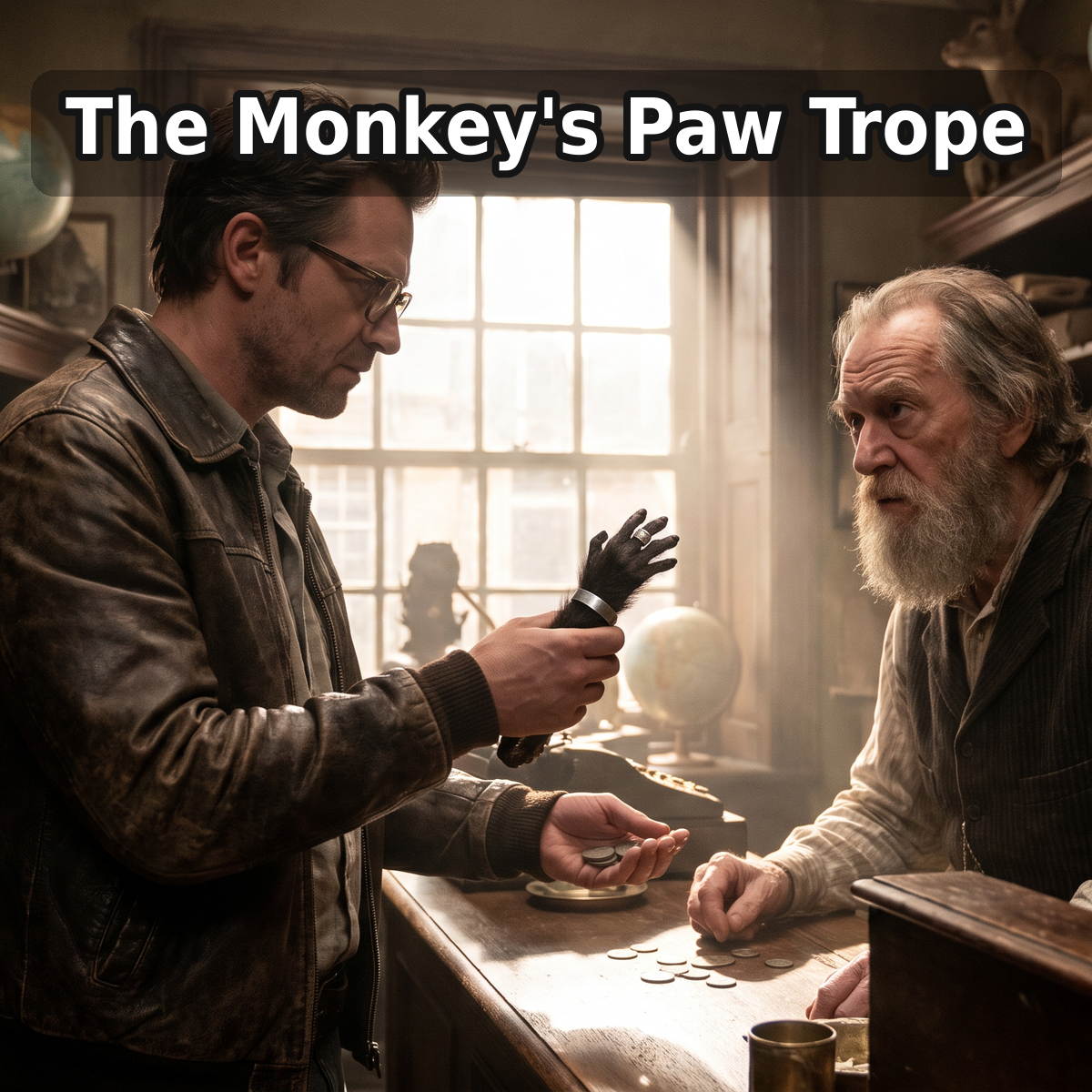
An older couple, Mr. and Mrs. White, live with their adult son Herbert. A family friend, Sergeant-Major Morris, visits them after serving in India. He has a strange object with him: a dried monkey’s paw. The paw has supposedly been enchanted so that three different people can each make three wishes. But Morris warns them that the magic is dangerous. His point is essentially that people should not interfere with fate. Mr. White gets the paw anyway. For his first wish, he asks for £200.
That seems harmless enough. The next day, Herbert goes to work at a factory. Later, representatives from the company arrive at the White house. Herbert has been killed in an industrial accident. The company says it accepts no legal responsibility, but it offers the family a payment as compensation. The amount is £200. So Mr. White got exactly what he asked for. Just not in the way he imagined. That is the core of the Monkey’s Paw idea.
The story continues; I will not spoil the ending. You need to read it yourself – then suddenly you will understand just how many movies and shows you have seen over the years tell this same story, but just in different ways and with different dilemmas. However, my purpose here is not to teach you about overly used plot types in modern cinema. Rather, I am reflecting on my last day of the latest round of my 365 commitment.
Every time I do this, I pray for and identify something that I am trying to achieve. It is sort of a bargain, if you will. I will commit to a few core habits for 365 days in a row, and in return I will get some great favor, if God decides to allow it. To keep my humility in check, I always say, but if not, after that bargain. I will win this great boon by keeping this commitment, but if not, I will do it anyway. I know. I know. Don’t get after me about this; I realize how silly it is and how presumptuous it is, but it has been working rather well for me, so I stick with it.
Every year, I have had amazing success. I completed a marathon, then a 50-mile marathon, then got a job that I wanted, and was able to achieve a few personal goals that I had been working on for years. All great things, and consequently, I always make this commitment in earnest. Except for this last year. I half heartedly made a commitment, and I half heartedly considered what I wanted to achieve. The funny thing is that I got it! However, it was not quite what I wanted, and it came with consequences. I got a monkey’s paw.
Which leads me to this conclusion on the last day of this round of the 365 Commitment. Commitments and personal contracts are serious business. Tread lightly when you decide to make them. Do not just put one foot in. Go all in and make the commitment stick. When I have done this in that manner, the dividends have been amazing. When I go in with a lazy attitude, then I get unpredictable results.
Should you draft a line-by-line contract with stipulations and exit clauses for God to consider in your prayer? No. But I can tell you this much: you need to take your end of the bargain seriously, and God will never fail to deliver. Chances are you will be provided with much more than you deserve.