I have always been a person who likes to think things through. Give me a difficult problem and I will carry it around for days. I will think about it when I am walking, driving, or trying to sleep. Sometimes something useful emerges. Other times I realize I have spent hours circling the same thought without moving an inch.
That is the danger of random pondering. We confuse the amount of time spent thinking with the quality of the thinking. They are not the same thing.
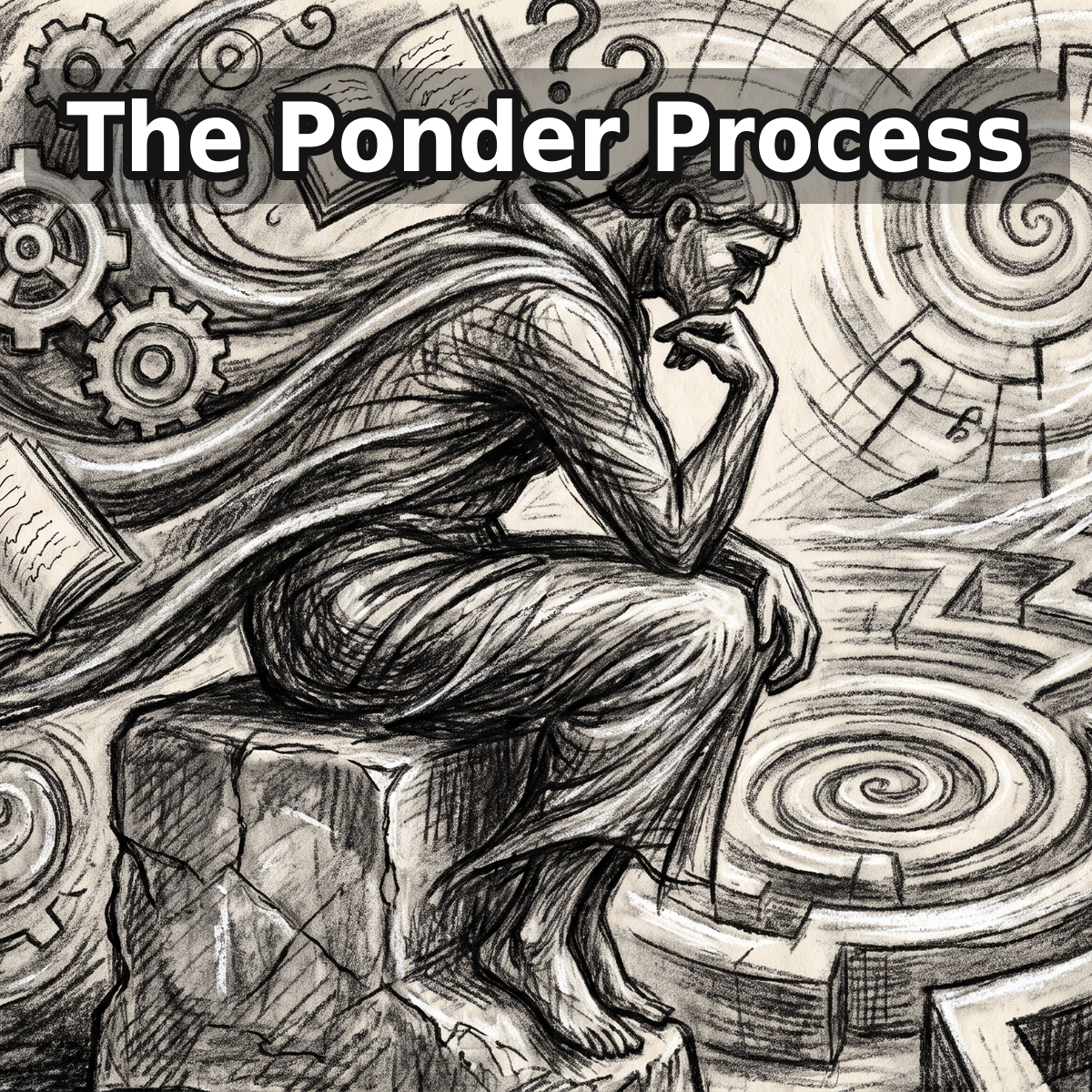
I have been trying to approach pondering more like a practice than a pastime. Here is a simple process that helps.
First, write down the question you are actually trying to answer. Not the general situation, not the feeling surrounding it, but the specific question. “Why is everything so difficult?” is not particularly useful. “What is the one obstacle preventing me from making progress?” is much better.
Second, separate what you know from what you assume. This is harder than it sounds. Much of our mental energy goes toward reacting to stories we have invented about what other people think or what might happen next. We can spend an incredible amount of time solving problems that do not actually exist.
Third, consider what is within your influence. There is little value in spending an hour designing solutions to things you cannot change. Find the part of the problem where your decisions matter. This is usually where the most productive thinking begins.
Fourth, deliberately consider several paths forward. Even an imperfect alternative can reveal something important. Ask what would happen if you did nothing, if you acted today, or if you asked someone else for help. Force yourself to consider possibilities beyond your first reaction.
Finally, decide on one action and give the pondering session an ending. Not every question needs to be solved today. Some questions need to rest. But you should leave with either a step to take or a clear reason to revisit it later.
I think we underestimate how much energy we waste thinking without purpose. Our minds are powerful tools, but they require direction just like anything else.
The purpose of pondering is not to make ourselves feel busy inside our own heads. It is to produce clarity. And clarity, if we are willing, eventually asks us to do something.
Next time you find yourself lost in thought, perhaps the first thing to ponder is whether you are actually getting anywhere.