Patience is often romanticized as a virtue that, when practiced, will inevitably lead to success. We’re told that with enough waiting, everything we desire will fall into place. But anyone who has lived through seasons of uncertainty knows it’s not that simple. Sometimes patience feels like holding your breath underwater—waiting for a breakthrough that may never come. Other times, moving on feels like giving up, like abandoning something you once believed in deeply.
So how do we know when to hold steady, and when it’s time to let go?
This is a question I’ve wrestled with countless times. Whether it’s a job, a relationship, a project, or a dream, discerning whether to stay the course or chart a new one is one of life’s most challenging decisions. It’s a tug-of-war between hope and reality, between what might be and what already is.
Let me offer a framework—simple, but not easy—to help navigate this decision.
1. Check Your ‘Why’
Whenever I feel stuck, the first thing I ask myself is, “Why am I doing this in the first place?” Our motivations matter. If your reason for staying is rooted in fear—fear of failure, fear of judgment, or fear of starting over—it may be time to reevaluate. Fear tends to trap us in cycles that lead nowhere.
On the other hand, if your “why” is tied to something meaningful—a value, a purpose, a vision for the future—then patience might be the answer. Meaning is what fuels us through seasons of waiting. When we know why we’re enduring the struggle, it becomes easier to persevere.
2. Look for Growth, Not Just Results
We often measure progress by tangible results: Did the business turn a profit? Did the relationship move forward? Did the plan succeed? But patience isn’t just about waiting for results—it’s about recognizing growth along the way.
Ask yourself: Am I growing through this process? Is this challenge shaping me into someone stronger, wiser, or more resilient? Sometimes the journey itself is the point, even if the destination doesn’t look like we expected. If you’re growing—even slowly—it may be worth holding on.
However, if you’re stagnant—emotionally, spiritually, or mentally—it’s worth considering whether the situation is truly serving you. Patience without growth is simply standing still.
3. Listen to the Still Small Voice
There’s a part of us that knows the truth before we’re ready to admit it. Call it intuition, call it gut instinct, call it divine guidance—it’s that still small voice inside us that whispers what we often don’t want to hear.
When we’re rushing, when we’re striving, we tend to drown out that voice. Patience gives us the space to listen. To ask ourselves the hard questions:
- Am I staying because I’m hopeful, or because I’m afraid?
- Is this season refining me, or breaking me?
- If I stepped away, would I feel relief or regret?
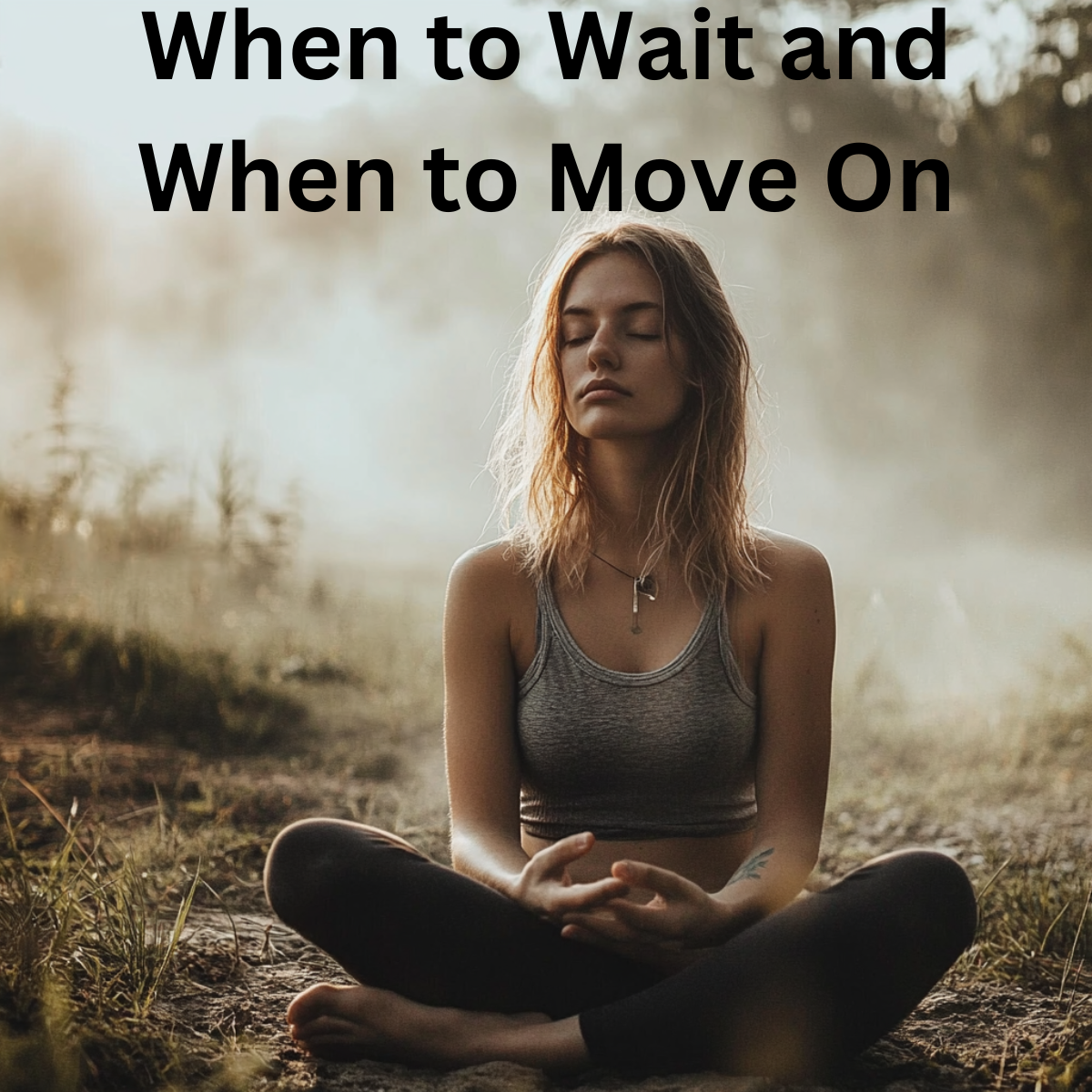
Take time to sit in stillness. The answers aren’t always loud and clear, but if you create space for reflection, clarity has a way of rising to the surface.
4. Be Honest About the Cost
Patience often requires sacrifice—time, energy, even a sense of certainty. But there’s a difference between investing in something worthwhile and pouring yourself into a bottomless pit.
Ask yourself: What is this costing me? Is this cost aligned with the potential outcome? Sometimes, the things we hold onto most tightly are the very things draining us. The harder we grip, the harder it is to admit we’re losing more than we’re gaining.
But the opposite is also true—sometimes the cost of quitting is higher than the cost of staying. Sometimes we let go too soon, not realizing we were on the edge of a breakthrough.
It’s a delicate balance, one that requires both courage and honesty.
5. Set a Timeframe
One practical way to discern whether to stay or move on is to set a timeframe. Give yourself a deadline—a season of focused effort and patience. During that time, commit fully. Don’t waffle between half-hearted attempts and doubts. Be all in.
At the end of that season, reevaluate. Has there been progress? Have you gained clarity? Is this still worth your investment?
Sometimes patience is about giving ourselves the grace of time. But having a timeframe helps prevent endless waiting for something that may never come.
The Truth About Letting Go
Letting go isn’t failure. It’s not weakness. Sometimes it’s the most courageous thing we can do. It’s trusting that moving on doesn’t mean giving up on ourselves—it means making space for something better.
But patience isn’t weakness either. It’s the willingness to endure discomfort, to wait in faith, to trust that good things take time.
The real challenge is knowing which one the moment is calling for: patience or release.
A Closing Thought
There’s a quote I often come back to when I’m caught in this tension: “Everything you want is on the other side of fear.” Fear is the thread that often ties these decisions together. Fear of waiting too long. Fear of quitting too soon.
But when we quiet the noise, when we strip away the fear, what’s left is clarity. And clarity gives us the courage to make the right choice—not necessarily the easy one.
So whether your path calls for patience or release, trust yourself to take the next step. Both require faith. Both require strength. And both can lead to something greater than you ever imagined.