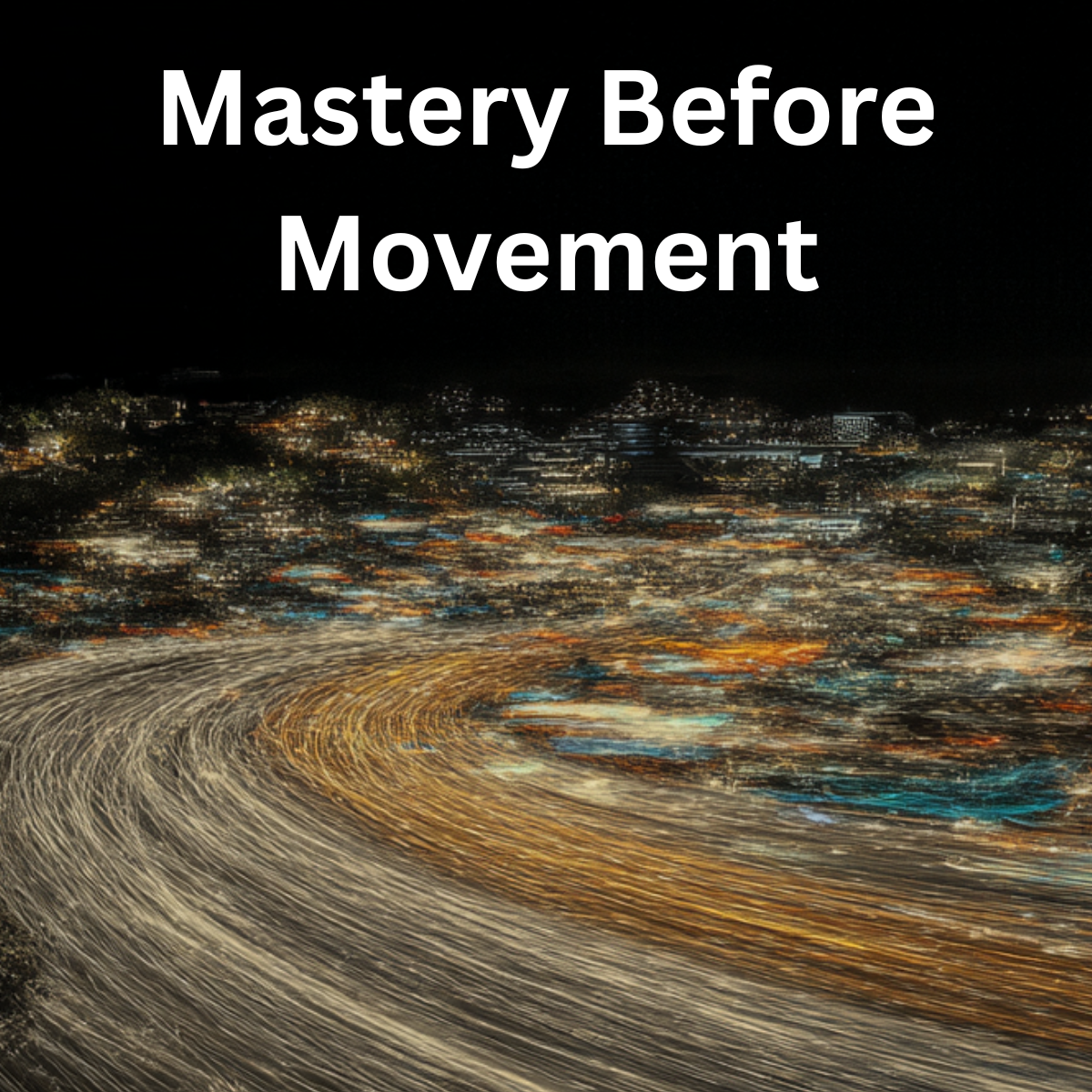
There is a tension that many of us feel, though we rarely stop to name it. It is the quiet conflict between the pursuit of something new and the deepening of what we already have. Between novelty and mastery.
We live in a world that celebrates movement. The next app, the next tool, the next strategy. Innovation surrounds us at such velocity that we barely have time to absorb what just happened before the next shift demands our attention. And yet, buried beneath this avalanche of progress is a quiet truth. Most of us are only scratching the surface of the tools already in our hands.
Your phone is capable of replacing a drawer full of physical tools. It can scan documents, navigate complex routes, manage projects, and edit high-resolution photos. Yet most people only use a small fraction of its potential.
The same is true in the workplace. Your software stack might contain features that eliminate repetitive tasks, streamline collaboration, and automate reporting. But many of these capabilities go unused because no one takes the time to learn them.
Even your car, with its suite of sensors and assistive technologies, remains underutilized unless you are willing to open the manual and explore what is actually available.
Every time we adopt something new without understanding the last thing, we leave value behind. Unused capacity is wasted investment. Underutilized innovation is unrealized return. It is like purchasing a 3D printer and only using it to make paperweights. The capability was never missing. What was missing was a deeper understanding of what was already there.
The challenge, then, is to discern the right moment. When do you go deeper, and when do you move on? It is not a question that can be answered with a slogan or a rule of thumb. It requires thought. It requires awareness of your direction, your priorities, and the opportunity cost of your decisions.
Go deep when the tool aligns with your long-term goals. When it has a broad base of adoption or shows signs of persistence. When it solves a real problem, but feels underwhelming only because your use has been shallow.
Move on when the tool no longer serves your path. When its limitations are structural rather than based on your understanding. When a better option offers significantly more leverage without excessive switching costs.
There is something powerful about taking what others overlook and mastering it. About turning what is common into something uncommon through disciplined effort. In that sense, mastery is not just the use of a tool. It is the transformation of it.
Sometimes the breakthrough is not what you adopt next, but what you finally understand.