This morning, on Christmas Eve, I found myself on a team call. Before you judge me too harshly for being the kind of manager who schedules meetings on the day before Christmas, let me offer a small defense. Many of my team members are scattered across the globe, working from places where December 24th carries no particular weight, where the calendar does not pause for this Western holiday. For them, today is simply Wednesday, and the work continues. Still, I caught myself wondering if I had become some version of Scrooge, demanding productivity while others prepare for celebration.
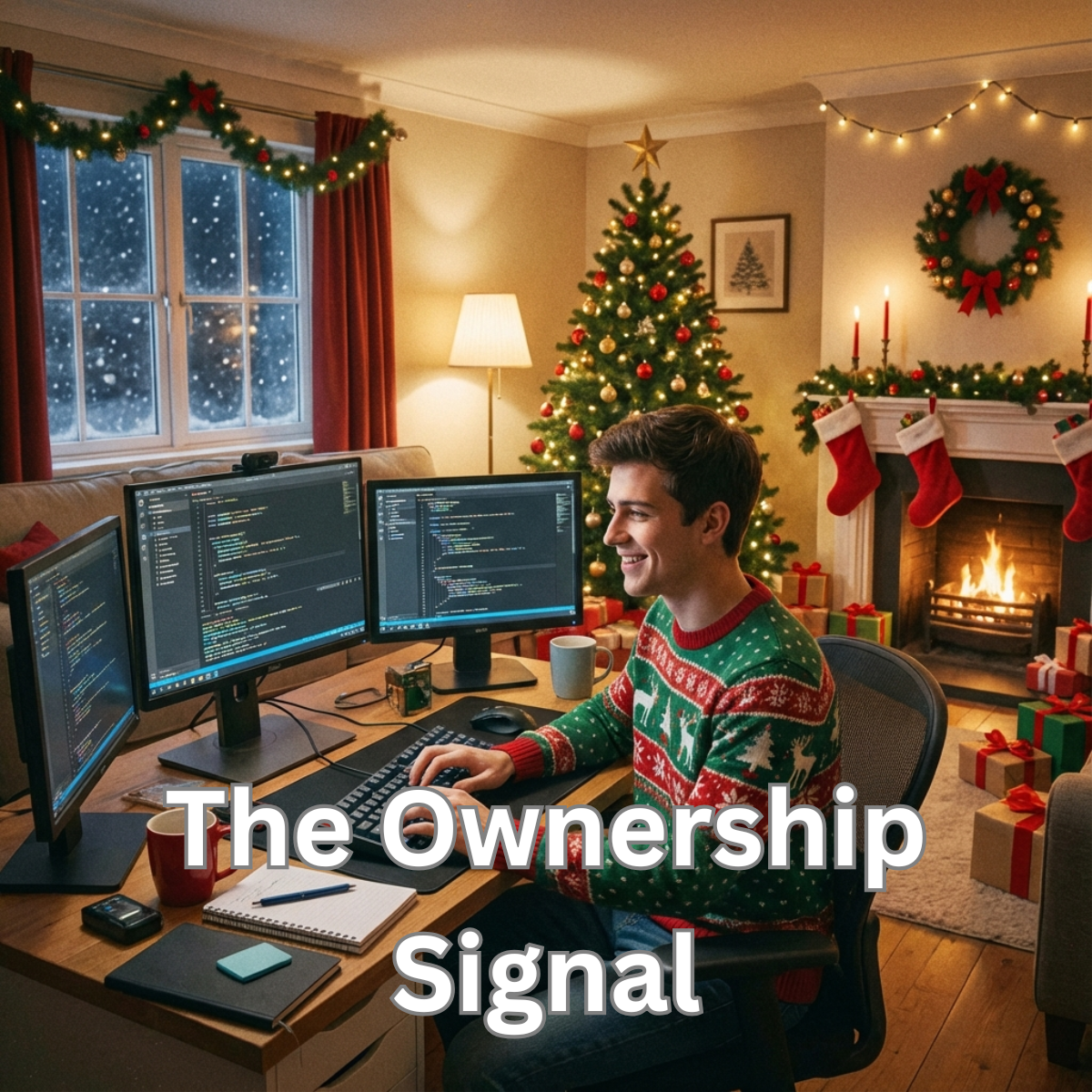
Then something happened that shifted my entire perspective. One of the team members, a young engineer I have been working with for several months, joined the call with an energy that was almost electric. His eyes were bright even though he had been awake all night. He was not exhausted. He was exhilarated. He had been wrestling with a problem, one of those stubborn technical challenges that refuses to yield, and somewhere in the dark hours of the morning, he had broken through. He could barely contain himself as he walked us through what he had discovered, the obstacles he had overcome, and the elegant solution he had crafted. At the same time, the rest of the world slept.
I watched him talk, animated and alive, and I realized something profound. This was not a man clocking in. This was not someone fulfilling an obligation or checking a box on a task list. This was ownership. Real ownership. The kind that makes you forget about sleep, that makes you lose track of time, that turns work into something closer to calling. He was not working for me. He was working for himself, for the satisfaction of solving the problem, for the pride of creating something that worked when it had not worked before.
That moment made me pause and reflect. What does it really mean to have a sense of ownership? How do you recognize it when you see it? And perhaps more importantly, how do you cultivate it in others, or in yourself, when it seems absent?
Ownership is not about titles, equity, or having your name on a door. Ownership is a posture of the heart. It is the difference between someone who says, “That is not my job,” and someone who says, “Let me figure this out.” It is the difference between waiting to be told what to do and stepping forward to solve a problem before anyone asks. Ownership is what happens when the boundary between your work and your identity begins to blur, not in an unhealthy way, but in a way that makes you care deeply about the outcome.
The signs of ownership are subtle but unmistakable. The first is initiative. People who feel ownership do not wait for permission. They see a gap, and they fill it. They notice a problem, and they address it. They do not ask if it is their responsibility. They simply act because they have internalized the mission as their own. They are not looking for someone to tell them what to do next. They already know, or they are figuring it out.
The second sign is persistence. Ownership means you do not give up when things get hard. You do not hand the problem back to someone else when it becomes inconvenient or frustrating. You stay with it. You work through the night if that is what it takes. You try one approach, and when it fails, you try another. You are not deterred by setbacks because the outcome matters to you personally. It is not just a task to complete. It is a challenge to conquer.
The third sign is pride, the good kind. People who feel ownership take pride in their work. They care about quality. They care about details. They do not cut corners or settle for good enough. They want what they create to be excellent, not because someone is watching, but because they are watching. They hold themselves to a higher standard than any external expectation. When they finish something, they want to be able to look at it and feel satisfied, knowing they gave it everything they had.
The fourth sign is accountability. Ownership means you do not make excuses. You do not blame others. You do not point fingers when something goes wrong. You take responsibility, even when the failure is not entirely your fault. You ask what you could have done differently. You learn from mistakes. You own the outcome, whether it is a success or a failure, because you understand that you are part of the system. The system is only as strong as the people who refuse to pass the buck.
The fifth sign is investment. People who feel ownership invest themselves in the work. They think about it when they are not at their desk. They wake up with ideas. They stay late because they are on the verge of a breakthrough. They talk about the work with excitement, not dread. They are not counting the hours until they can leave. They are engaged, present, and fully committed. The work is not separate from their life. It is woven into it.
The absence of ownership is equally recognizable. It shows up in the language people use. They say things like, “I was just doing what I was told,” or “That is not my problem,” or “I am just here for the paycheck.” They do the minimum required and nothing more. They wait for instructions. They avoid risk. They do not volunteer. They do not stay late. They do not think about the work when they are not being paid to do so. They are present in body but absent in spirit. They are going through the motions, and it shows.
The question then becomes, how do you create a culture where ownership thrives? How do you move people from clocking in to caring deeply? The answer is not simple, but it starts with trust. You cannot demand ownership. You cannot mandate it. You can only create the conditions where it can emerge. That means giving people autonomy, the freedom to make decisions, to take risks, to try things, and fail without being punished. It means communicating the vision clearly so that people understand not just what they are doing, but why it matters. It means recognizing and celebrating the behaviors you want to see, not just the outcomes. It means treating people like adults, like partners, like co-creators of something meaningful.
It also means modeling ownership yourself. If you want your team to care, you have to care. If you want people to take initiative, you have to take initiative. If you want them to be accountable, you have to be responsible. Ownership is contagious, but only if it starts at the top. People watch what you do more than they listen to what you say. If you are just going through the motions, they will too. If you are all in, they will follow.
This morning, watching that young engineer light up as he shared his breakthrough, I was reminded of why I do this work. It is not about the product we are building or the revenue we are generating, though those things matter. It is about creating an environment where people can experience the deep satisfaction of ownership, feel the pride of solving a complex problem, and lose themselves in the work and find themselves in the process. That is the real gift, not just for them, but for me as well.
So yes, I scheduled a meeting on Christmas Eve. And yes, some of my team showed up ready to work. But they did not show up because they had to. They showed up because they wanted to. They showed up because they care. They showed up because they own it. And that, more than any holiday bonus or year-end celebration, is the truest sign of a team that is building something worth building.
Ownership is not a policy you can write into a handbook. It is not a metric you can track on a dashboard. It is a spirit, a mindset, a way of being. It is what happens when people stop working for someone else and start working for themselves, when they stop asking what is required and start asking what is possible. It is the difference between a job and a mission, between compliance and commitment, between showing up and being present.
And when you see it, when you witness that spark of ownership in someone’s eyes, when you hear the excitement in their voice as they share what they have created, you know you are in the presence of something rare and precious. You know you are building something that will last, not because you forced it, but because people chose it. That is the kind of culture worth fighting for. That is the kind of team worth leading. That is the kind of work worth doing.