I woke this morning to the familiar glow of a screen, and before my feet touched the floor, I had already consumed a dozen messages that I did not choose. Notifications from people I barely know. Headlines engineered to provoke. Advertisements disguised as advice. By the time I poured my first bowl of Cheerios, my mind had been shaped by forces I never invited, and I had not yet spoken a single word of my own.
This is the condition we accept as normal. We move through our days as if we are passive recipients, as if the messages that arrive in our inboxes, feeds, and notifications are simply the weather. We complain about the storm, but we do not question why we are standing in it. We feel anxious, distracted, or angry, and we blame ourselves for lacking discipline. We rarely stop to ask what we are letting in and whether we chose it.
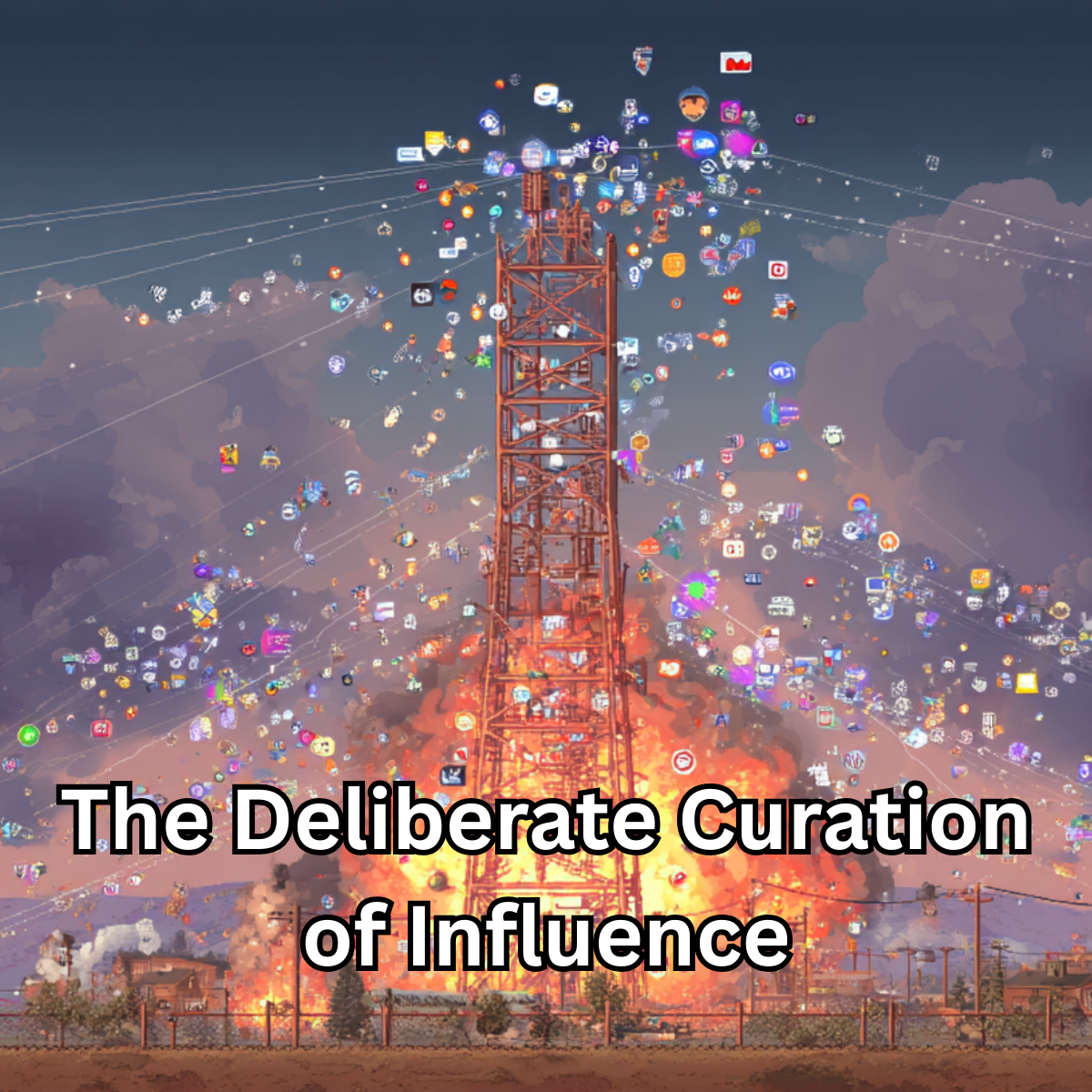
The instinct, when you recognize this pattern, is to build walls. You delete apps. You turn off notifications. You create rules and filters. You imagine yourself as a fortress, repelling the siege of inputs that want to colonize your attention. This approach has merit. It acknowledges the problem. It takes the threat seriously. But it also traps you in a posture of constant defense. You spend your energy blocking, filtering, and resisting. You become the gatekeeper, inspecting every message for danger. This is exhausting. It turns your mental life into a tower defense game where the waves never stop coming, and the only victory is survival.
There is a better way, though it requires more effort at the beginning and more honesty about what you actually want. Instead of defending against the flood, you can choose to fill the space with inputs you deliberately select. You can become the curator of your own mind. This is not about building higher walls. It is about planting a garden and tending it with enough care that weeds struggle to find room.
The difference between defense and curation is the difference between saying no and saying yes. Defense is reactive. It waits for the threat to arrive and then pushes back. Curation is proactive. It decides in advance what belongs and then makes space for it. When you curate your inputs, you are not constantly scanning for danger. You are actively seeking nourishment. You are asking what voices, ideas, and perspectives will help you become the person you want to be, and then you are making those voices louder than the noise.
This sounds simple, but it is not easy. Beneficial inputs are harder to find than harmful ones. Harmful inputs are designed to find you. They are loud, urgent, and emotionally charged. They arrive without invitation. They know how to trigger your attention. Beneficial inputs, by contrast, are often quiet. They require you to seek them out. They do not shout. They do not promise instant results. They ask you to slow down, to think, to reflect. They reward patience, and patience is the one resource most of us feel we do not have.
So we default to convenience. We consume what arrives rather than what we choose. We scroll through feeds curated by algorithms that know our weaknesses better than we do. We let other people set the agenda for our thoughts. We tell ourselves we will get to the good stuff later, when we have more time, when things calm down. But things do not calm down. The noise does not stop. And later never comes.
I have tried both approaches. I have spent seasons in defense mode, blocking and filtering, trying to keep the chaos at bay. I have felt the relief of a quieter inbox and the satisfaction of fewer distractions. But I have also felt the creeping sense that I was still being shaped by what I was avoiding. My attention was still defined by the threats I was guarding against. I was not choosing what to focus on. I was only choosing what to ignore.
Then I tried something different. I started asking what I wanted to let in. I made a list of sources that had helped me think more clearly, act more wisely, or feel more grounded. I looked for writers, thinkers, and creators whose work made me better. I subscribed to their newsletters. I set aside time to read their books. I followed their podcasts. I treated these inputs as appointments, not as optional extras. I gave them the same priority I gave to meetings and deadlines.
At first, it felt like one more thing to manage. I already had too much to do, and now I was adding more reading, more listening, more thinking. But over time, I noticed something shift. The space in my mind that had been occupied by reactive noise began to fill with ideas I had chosen. The anxious hum of urgency started to quiet. I still received the same flood of messages, but they no longer had the same power. They arrived in a mind that was already full of better things.
This is the hidden benefit of curation. When you fill your attention with inputs you selected, there is less room for inputs you did not. You are not blocking the noise. You are crowding it out. You are not defending against influence. You are choosing which influences to amplify. This is not passive. It is not easy. It requires you to know what you want and to protect it with the same energy you would use to defend against what you do not want.
The work begins with awareness. You have to notice what is shaping you. Pay attention to the messages that arrive and how they make you feel. Notice which voices leave you anxious, angry, or distracted. Notice which ones leave you calm, curious, or motivated. Do not judge yourself for the patterns you find. Just see them clearly. You cannot curate what you do not notice.
Then you have to decide what belongs. This is harder than it sounds because it requires you to articulate what you actually value. What kind of person do you want to be? What kind of work do you want to do? What kind of relationships do you want to build? The answers to these questions will tell you what inputs serve you and what inputs do not. If you want to be calm, you cannot fill your mind with outrage. If you want to be creative, you cannot spend all your time consuming other people’s finished work. If you want to be kind, you cannot marinate in contempt.
Once you know what belongs, you have to make space for it. This is the part most people skip. They identify good sources, bookmark articles, subscribe to newsletters, and then never actually engage. The inputs sit in a folder labeled ‘later,’ and ‘later’ never comes. Making space means treating these inputs as non-negotiable. It means scheduling time to read, listen, or reflect. It means protecting that time the way you would protect a meeting with someone you respect.
You also have to remove what does not belong. This is not about building walls. It is about making choices. Unsubscribe from the newsletters that make you feel worse. Unfollow the accounts that trigger comparison or anger. Stop attending meetings that do not serve your goals. Stop reading articles that leave you anxious without making you wiser. Every input you remove creates space for an input you chose.
The benefits of this approach are not immediate. You will not feel smarter after one good article. You will not feel calmer after one thoughtful podcast. But over weeks and months, you will notice a shift. Your thoughts will feel more like your own. Your emotions will feel less reactive. Your decisions will feel more grounded. You will still encounter noise, but it will not define you. You will have a foundation that holds steady when the chaos arrives.
I still receive messages I did not choose to receive. I still see headlines designed to provoke. I still encounter people who want to shape my thinking for their own purposes. But I no longer feel like a passive receiver. I have filled the space with voices I trust, ideas I value, and perspectives that help me grow. The noise still arrives, but it arrives in a mind that is already occupied by better things.
This is not a perfect system. There are days when I slip back into reactive mode, when I let the urgent crowd out the important, when I scroll instead of reading. But those days are fewer now, and when they happen, I know how to return. I go back to the sources I chose. I make space for the inputs that serve me. I remember that my attention is mine to give, and I can give it to what I want rather than what wants it.
If you feel shaped by forces you did not choose, if you feel anxious, distracted, or overwhelmed by the flood of messages that arrive each day, consider this approach. Stop defending and start curating. Identify the sources that make you better. Make space for them. Protect that space. Let the good inputs crowd out the bad ones. You will not eliminate the noise, but you will reduce its power. You will not control what arrives, but you will control what stays. And over time, you will find that your mind feels more like your own.