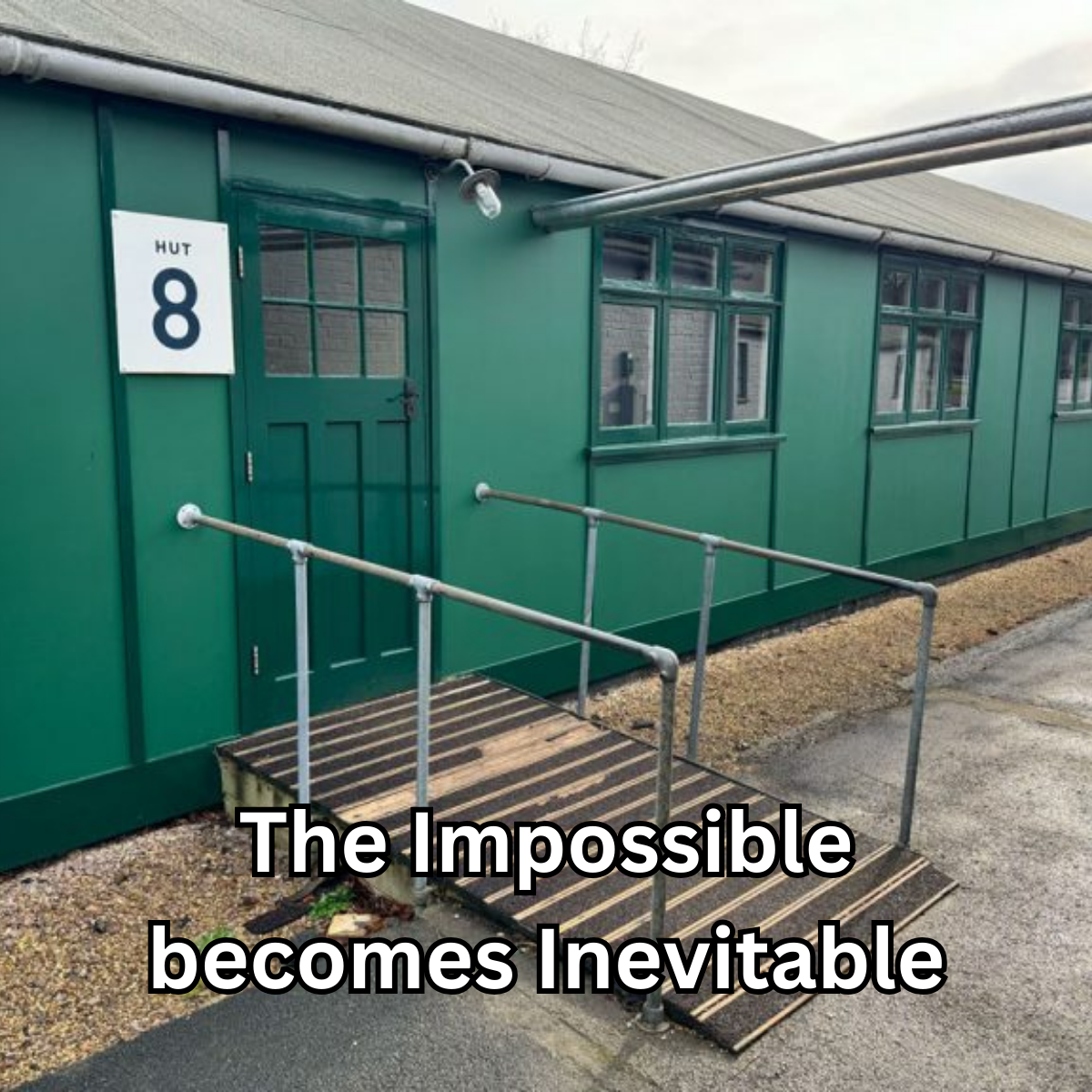
There is a particular kind of magic that happens when a small group of people decides that the rules no longer apply. Not because they are reckless, but because the problem in front of them is too large to be solved by ordinary means. This is what happened in a nondescript wooden building at Bletchley Park during the Second World War, where a handful of mathematicians and cryptographers gathered under the technical leadership of Alan Turing to crack what many believed was an unbreakable code.
The German Enigma machine generated 160 sextillion possible settings. The task was not just difficult. It was absurd. Any reasonable person would have looked at those odds and concluded that the work was impossible. But Turing and his team were not interested in being reasonable. They were interested in being right.
What made them different was not just their brilliance, though brilliance was abundant. It was their willingness to abandon convention when convention stood in the way. When they needed more staff, they did not wait for bureaucratic approval. They placed a crossword puzzle in the newspaper. They challenged anyone who could solve it in under ten minutes to apply for an interview. This was not standard recruitment. It was audacious. It was strange. It worked. Among those who answered the call was Joan Clarke, who solved the puzzle faster than Turing himself and became one of the team’s most valuable members.
The lesson here is not about crossword puzzles. It is about the courage to ask a different question. Most teams, when faced with a resource shortage, complain about it. Turing’s team asked how they could find the people they needed without waiting for permission. They took ownership of the problem and invented a solution that no one had tried before.
This is the posture that separates teams who achieve the impossible from teams who merely attempt it. It is not enough to work hard. It is not enough to be smart. You must be willing to break the rules that are slowing you down, even when those rules feel safe. You must be willing to take accountability to the extreme, to write directly to Winston Churchill when the bureaucracy fails you, to demand what you need and justify it with clarity. Turing’s team did exactly that. They bypassed the chain of command, explained their needs in plain terms, and Churchill granted their requests immediately. The work continued. The war was shortened by years.
Small teams attempting the impossible today face a similar choice. You can follow the established process and hope it delivers what you need, or you can take responsibility for the outcome and invent a new path. The second option is uncomfortable. It requires you to act before you feel ready. It requires you to move quickly, to test ideas that might fail, to ask for what you need without apology. It requires you to believe that the problem is worth solving, even when the odds suggest otherwise.
The people in Hut 8 were not superhuman. They were eccentric, stubborn, and often difficult to work with. But they shared a common belief that the work mattered more than their comfort. They defined roles that played to their strengths. They moved with urgency. They protected their focus. They did not wait for inspiration. They began at first light and let momentum carry them forward.
If you are part of a small team trying to do something that feels impossible, remember this. The work will not be easy. The path will not be clear. But if you are willing to break the norms that no longer serve you, if you are willing to take ownership of the outcome, if you are willing to keep moving when others stop, you will find that the impossible becomes inevitable. Not because you are lucky. Because you refused to accept the limits that others placed on you.