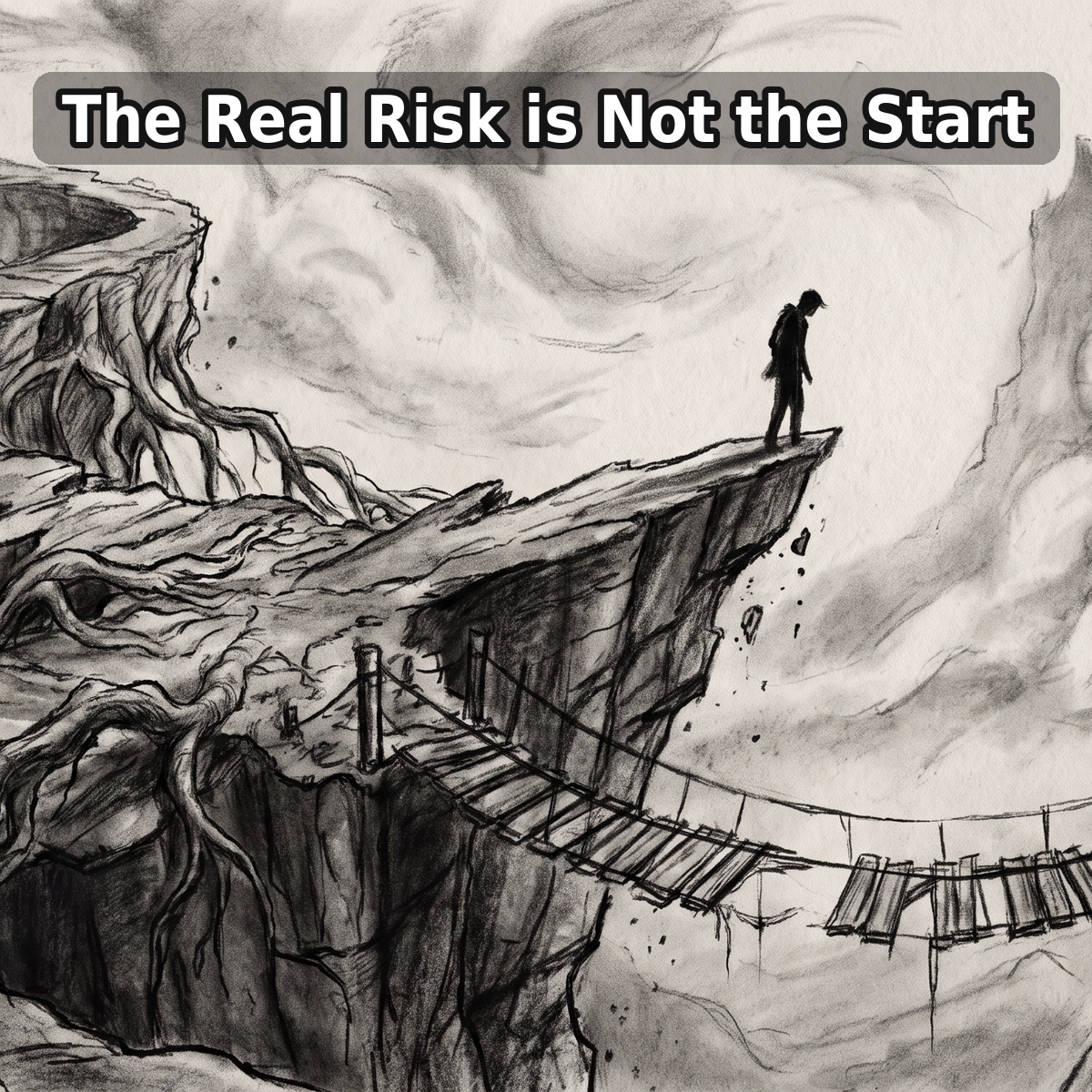
There are two ways to look at taking risks. Do you build a solid foundation, and then when you get that done, climb to the top and then take your leap? The advantage to this approach is that your fall back down is not all the way to the bottom. You fall to the foundation that you have built. The other way to look at this is to dance on the edge. Meaning, you keep pushing the edge of what you are comfortable with, taking greater and greater risks. This approach has the greatest potential for growth, but also is the most dangerous. You can over extend or slip into chaos with one small step. So what is the best approach? Secure a foundation or dance on the edge?
Military history is interesting in this regard. For thousands of years, most military strategies worked on the foundational approach. You secure yourself, build strength within you lines, identify a clear front of battle and slowly push in an area that your enemy is weak and you can gain the most advantage. World War I is a great example of this scenario. The Blitzkrieg by the Germans through this whole concept upside down. Pushing along the edge of the front until a weakness is found and then push through with rapid advancement aided by rapid and superior modern weaponry. What many people do not realize is that Patton employed the same technique after landing in Normandy. The American Blitzkrieg. France fell and was won again by the same strategy. Seems modern warfare is all about edge dancing now. High risk, high reward.
Religions seem to fall in these two camps as well. For people raised in the Judeo Christian tradition will recognize the concept of building a sure foundation versus that of a sandy one. This was a major analogy used during one of Jesus’ sermons. Eastern religions tend to focus on the delicate harmony or balance found in the middle of the tempest. Balanced between order and chaos, the ikigai, the calm soul in the midst of the whirlwind. The older I get the more I realize that both of these are good to follow. A foundation in belief, truth if you will, is needed. However, you also must learn to push the edge a bit and find happiness even in the midst of turmoil.
There have been times in my life where I chose to build from a strong foundation, other times when I dance on the edge with one hand hanging free. I think both are good, both are appropriate for different things. So there is no false dichotomy here, there is only you. Choose, actively choose how you will behave and let it guide you. For now, I choose to dance on the edge of chaos.
Guy Reams
Edge Dancer