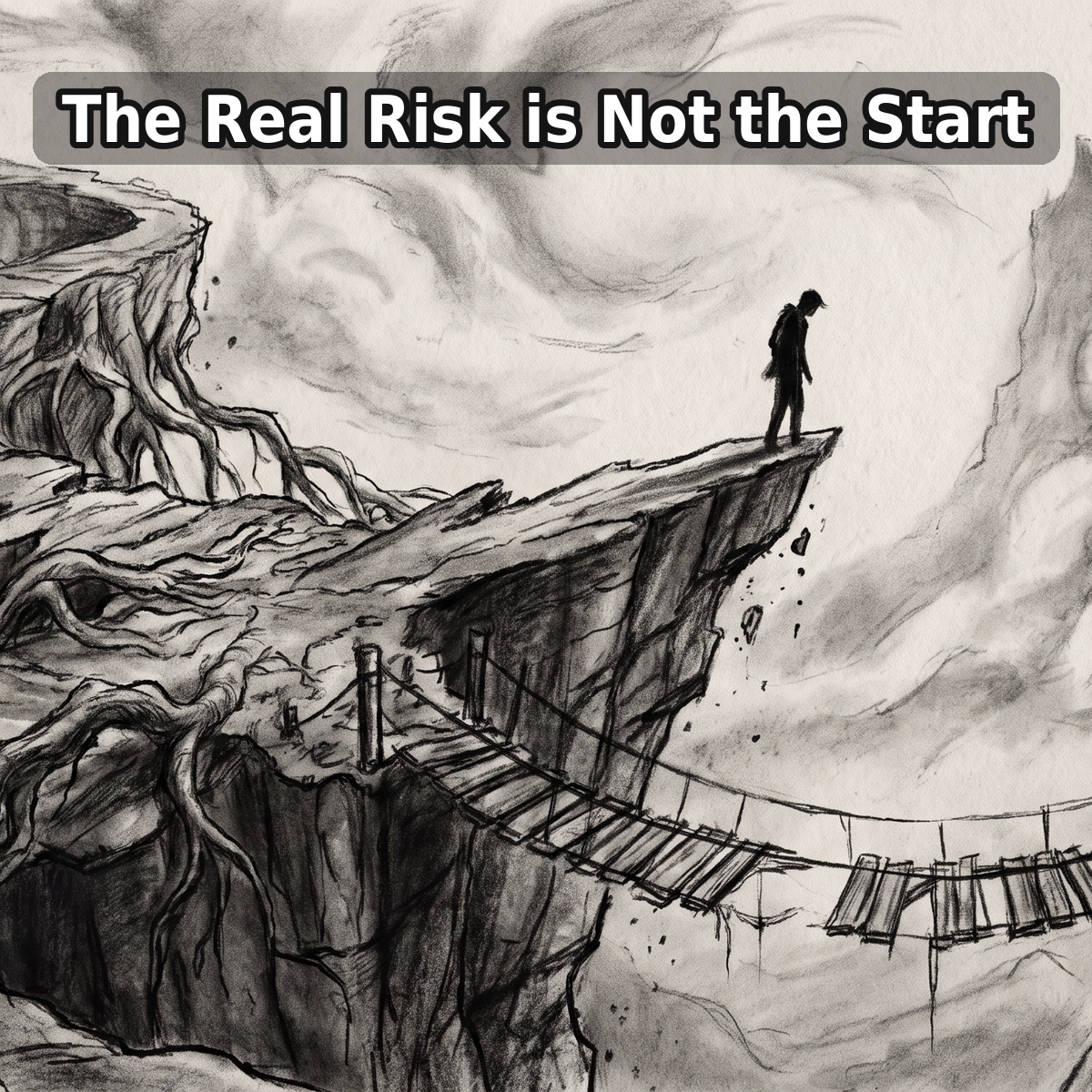
The real risk is not beginning. It is what happens after the easy gains are gone. This is one of the biggest misconceptions that keeps people from taking on new initiatives that could change their lives. They fail to start because they fear initial failure. They fear that it will not be enough. People overestimate the risk of starting and underestimate the risk of continuing.
The initial plunge feels dangerous because uncertainty is highest. But in many endeavors, the beginning actually contains the easiest opportunities: enthusiasm is high, expectations are low, obvious improvements abound, and the first customers, pounds lost, miles run, dollars earned, or features built can come surprisingly quickly.
Then you reach the first plateau.
Now the economics change. The next increment of progress requires more time, more specialization, more capital, more discipline, or a different strategy. What got you there may no longer work.
Starting a company, writing a book, getting fit, learning a skill, building software, or changing careers can produce enough early evidence of success that you think you’ve validated the entire endeavor. What you’ve actually validated is only the first stage.
When you first create something, obvious improvements are often available. You solve the biggest problems, serve the easiest customers, capture the clearest opportunities, and fix the most visible defects. A relatively small amount of effort can therefore produce surprisingly large results.
Then you exhaust the low-hanging fruit. At that point, every additional unit of success requires disproportionately more effort.
The real risk is not starting. Whereas the startup is uncertain, the plateau is expensive. Plateau Risk is the risk that appears after initial success, when the easy gains are exhausted, and continued progress requires disproportionately more effort, skill, capital, or change.
So if you’re thinking about starting something and worried that your startup attempts will fail, you are worried about the wrong thing. Chances are that when you start, you will have some success. Perhaps more than you had considered possible. The real worry isn’t your initial success, but how hard it is to get off the first plateau.