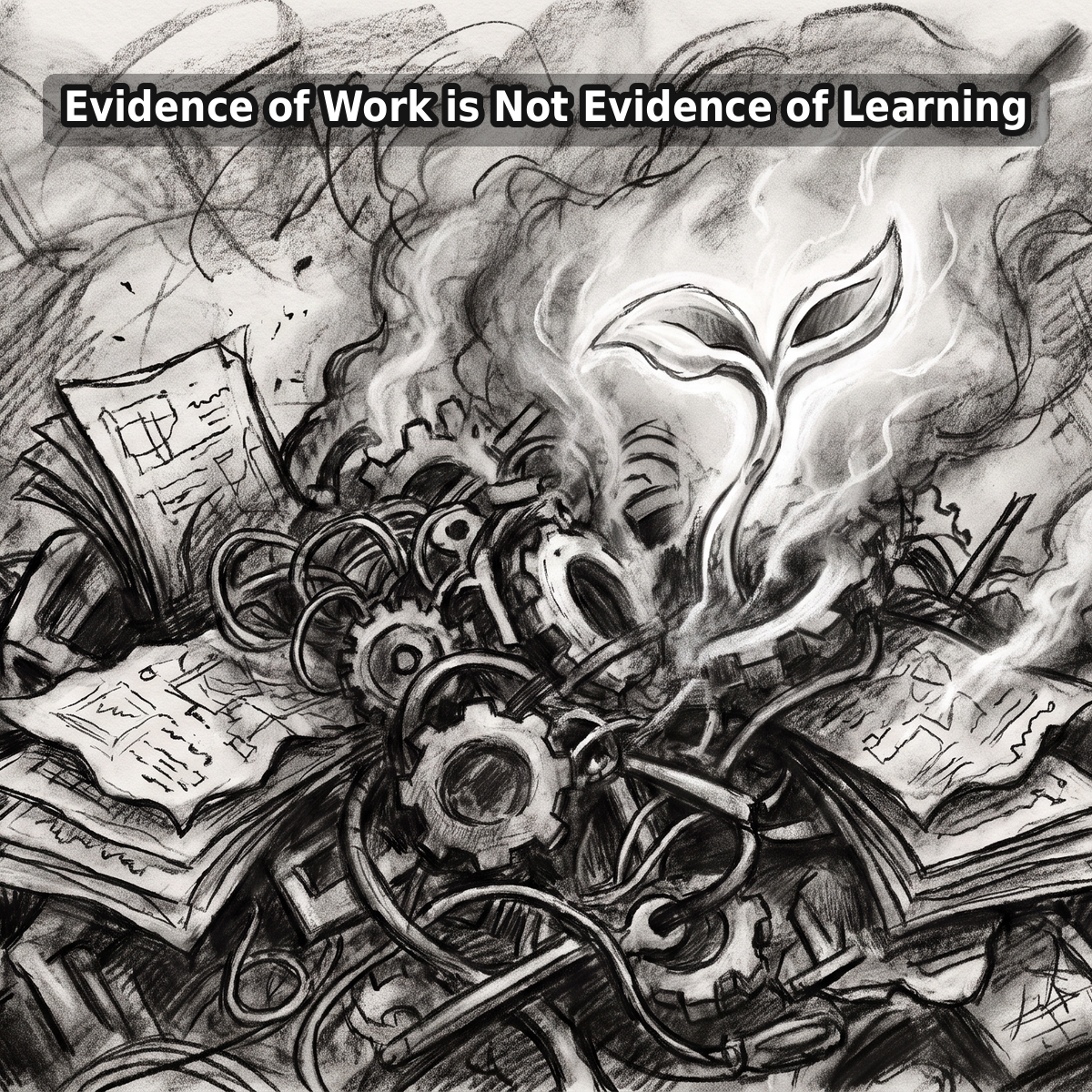
We all instinctively know this is not right, yet we tolerate it. Anyone who has recently made it through K-12 or has been a parent of these young people knows what I mean. School has increasingly substituted evidence of work for evidence of learning. A completed worksheet, a submitted Google Classroom assignment, a passing quiz, satisfactory completion of an online module. These all fall firmly into the evidence-of-work category.
All of these things were intended to support learning, not replace it. They have become proxies for learning, and now we have a problem. Artificial Intelligence is brutally effective at exposing bad proxies. So schools are now banning devices, banning AI use, and spending billions on district-controlled devices and methods to restrict cellular traffic. Doing everything they can to prevent what they are referring to as the mechanism that is harming education.
A student can now produce the worksheet, the five-paragraph essay, the chapter summary, the vocabulary definitions, the discussion-board response, and perhaps even the presentation without much underlying knowledge. Schools understandably see this as a crisis. Countless dollars spent on software, online curricula, and evidence-based modalities are now at risk.
This begs the question. What exactly is under threat of being lost?
If the educational activity was primarily “read this, answer these questions, submit it by Friday,” AI has not destroyed teaching. It has destroyed the mechanism schools were using to verify compliance. That is uncomfortable because it forces education back toward the expensive, difficult thing: actual teaching. What is being exposed here is a fallacy. For decades, we have often treated the production of academic artifacts as the same as the development of a mind. They are not the same thing.
Three things that I was not eager to do in school were to read, write, and solve math problems represented in paragraph form, what kids call word problems. An essay is important because writing forces a person to organize their thoughts. Math problems help you build intuition for problem solving, and reading builds sustained attention and fosters comprehension. It is absolutely correct to fear that if a student performs these artifacts while skipping the cognitive work, then yes, something important is being lost.
However, the answer cannot be "We need better ways to make sure students complete the worksheets themselves.” Which is almost a direct quote that I heard from a school administration official recently. AI proliferation is almost universal, at least in the halls of U.S. high schools, so it will get increasingly difficult to confuse completion with competence. The question is not whether the student completed the activity. The question is, did the student do the cognitive work the exercise was intended to create?
Perhaps the real educational opportunity AI presents is that it makes busy work nearly impossible to defend. If a machine can complete an assignment perfectly while learning absolutely nothing, we should at least ask whether completion of that assignment was ever particularly good evidence that a human being had learned anything in the first place.
We all already know this. AI did not create the crisis in education. It revealed that much of education had already been automated before AI arrived. We now need to make the thinking visible. Measure thinking, not completion. We can no longer focus on assessing the artifact. We will have to focus on our ability to explain, defend, apply, question, revise, and extend what we have produced, whether AI helped create it or not.