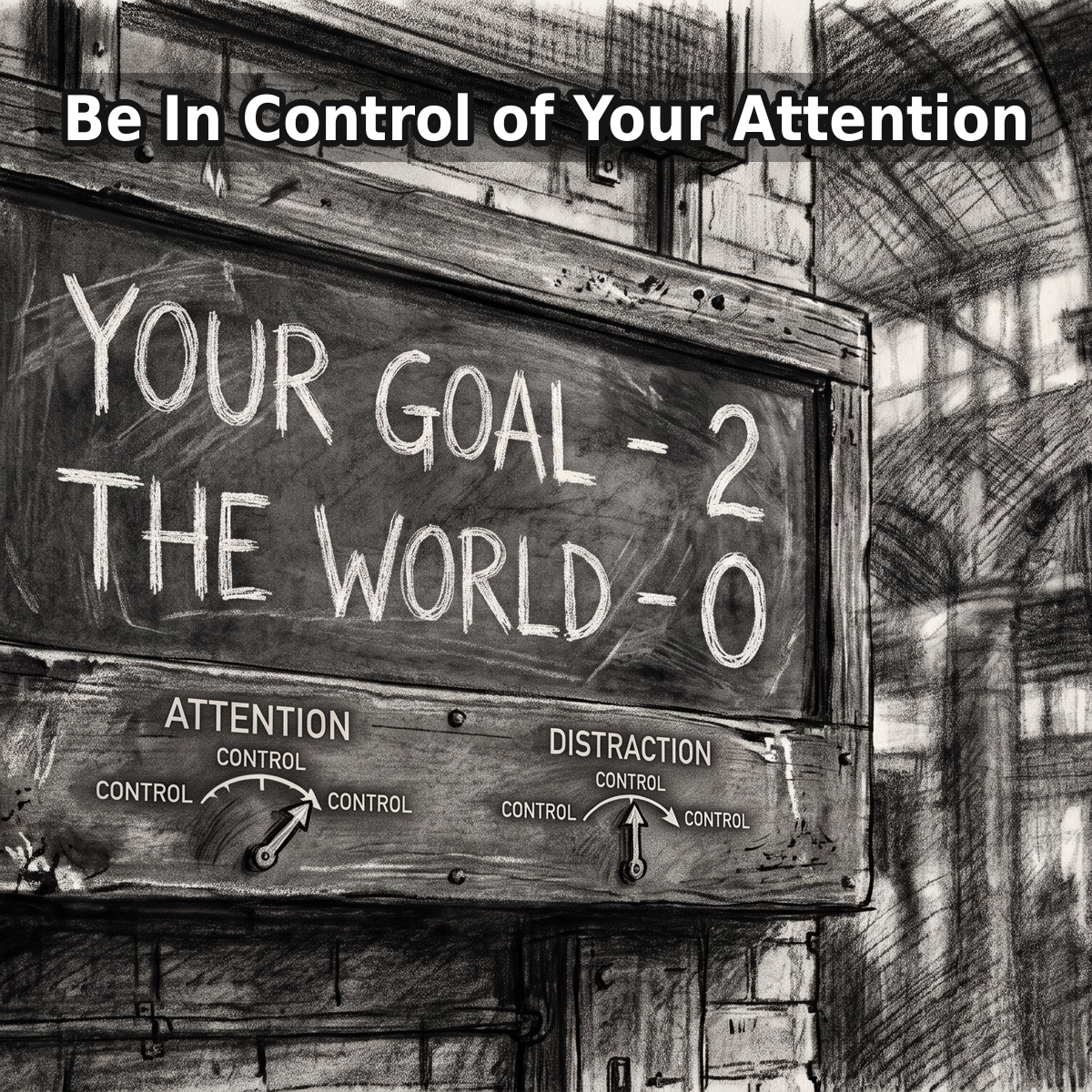
Improving is sometimes as easy as just choosing to pay attention.

Hawthorne Effect

This concept became popular due to Elton Mayo’s research in the late 1920s. Humans will improve their performance because they become aware of observation. This is now known as the Hawthorne Effect. You can read up on that with an easy search, being well documented.

My point is that we can learn a bit of our own psychological response by considering this effect. Anything we pay attention to is going to improve. This may not be because we have done anything of particular significance. By emphasizing something with our attention, we will improve our effort. As a consequnce the thing we focus on will improve.

Focused attention becomes the key. Other factors are important, sure. Yet, the key ingredient seems to be our focus. Stated in a simple fashion, we improve what we focus on. Focusing provides a magnification effect. You start to create waves that end up cycling back your way, often times, stronger than before.

Pay attention to the areas of your life that you want to approve. There is this wierd cognitive issue that we all do. We set goals to improve areas of our lives that we never spend anytime on. Success is not as complicated as we like to pretend it to be. If you want improvement quickly, just pay attention.
Subscribe
Notify of
guest
0 Comments
Inline Feedbacks
View all comments
Share the Post:

Recent Blogs

Day 329 – Art is Capturing the Form

The author explores the concept of art through the lens of form and function, using two tape measures as an analogy. They then delve into Charles Ross’s Star Axis project, which aims to capture the journey of the North Star, suggesting it as a powerful example of art capturing form and connecting humanity across time.

Read More

Day 328 – Would You Trust Your Brain?

The author explores the idea of copying a human brain into an AI and questions the trustworthiness of such an AI, highlighting human biases and limitations. The piece argues that AI excels in repetitive tasks and factual recall but will never truly think like a human. It also delves into the author’s personal frustration with an AI agent, revealing that the frustration stemmed from their own inadequacy and unwillingness to plan, rather than the AI’s limitations. The author concludes by suggesting that AI’s “flaws” often reflect human tendencies and a lack of clarity in communication.

Read More

Day 327 – We Need God

This article explores the practical necessity of a concept of God, regardless of personal belief in a literal deity. It argues that humans need a higher, fixed point of reference to establish values, prevent self-serving rationalizations, and guide their aspirations beyond immediate desires and worldly pursuits.

Read More

Day 326 – Small Things Do Not Automatically Compound

This article explores the idea that while small, consistent actions are powerful, they don’t automatically compound into significant results. It emphasizes that mindful repetition, reflection, and adjusting the process are crucial to ensure habits remain effective and aligned with their original purpose.

Read More
0
Would love your thoughts, please comment.x
()
x