NOTE!! – The data on the William H. Murray trip in his blog is not correct. I made a mistake and mixed up expeditions. The book he wrote was from 1951 and about a different expedition. I am reading up on that now and when I have it fixed will edit the text of this blog. Oops! However, the concept still works!
“Until one is committed, there is hesitancy, the chance to draw back, always ineffectiveness. Concerning all acts of initiative (and creation), there is one elementary truth that ignorance of which kills countless ideas and splendid plans: that the moment one definitely commits oneself, then Providence moves too. All sorts of things occur to help one that would never otherwise have occurred. A whole stream of events issues from the decision, raising in one’s favor all manner of unforeseen incidents and meetings and material assistance, which no man could have dreamed would have come his way. Whatever you can do, or dream you can do, begin it. Boldness has genius, power, and magic in it. Begin it now.”
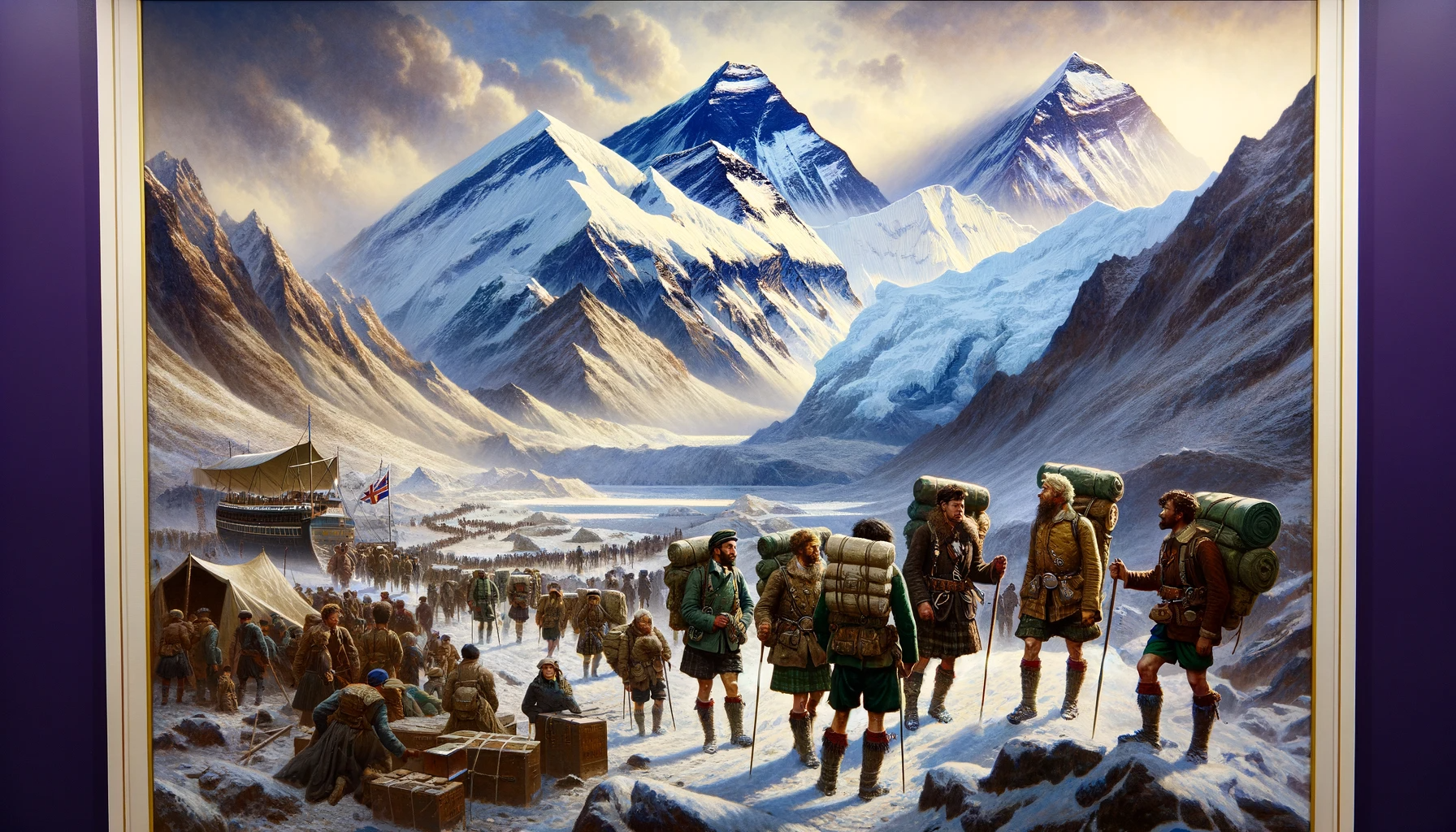
This was the call to action that William H. Murray issued to his fellow Scotsmen in 1921 as leader of the first-ever British expedition to attempt to reach the summit of Mount Everest. Though the mountain’s peak would remain elusive for another 30 years after their journey, Murray’s account of the 1921 reconnaissance mission, preserved in his book “The Scottish Himalayan Expedition,” would serve as a crucial first step in that direction.
Setting out from Darjeeling, India, in May of that year, Murray led a team of fellow Scots, including renowned climbers like Alexander Mitchell Kellas, into Tibet, where they established an advanced base camp in the Western Cwm. From there, small groups pushed higher day by day, inching up the untrodden slopes of the mightiest peak on Earth. Hampered by the lack of oxygen equipment that would later enable the summit, Murray’s men still managed to set new altitude records above 23,000 feet before hazardous conditions and the short weather window forced retreat.
While the summit of Everest would not be conquered on this first attempt, the 1921 expedition blazed literal and figurative trails for the climbers who would follow. Painstaking maps and vital lessons about survival at extreme altitudes were borne out of their efforts, paving the way for future expeditions. Murray’s profound words on the courage required in the face of uncertainty captured the very spirit that allowed these pioneers to venture into the unknown.
The lesson is clear – great ambition requires commitment in spite of fear. For it is only by boldly taking the first step that Providence can align to support us with all we need to achieve our aims. With courage and resolve, anything we set our minds to is possible.


Mind set is always what it is about! You have to be committed.
Burn the Boats!