I remember the day the first shopping mall opened in my small town in rural Colorado. It was a big deal. Suddenly, there was a cluster of name-brand stores all connected under one roof, where you could get all your shopping done with ease. But it wasn’t just about shopping—there was an arcade where parents could drop off their kids, a movie theater, and a handful of restaurants. Early in the mornings, seniors would walk laps in the warm, enclosed environment for exercise. At night, the younger crowd gathered in the parking lot, turning it into an informal social hub. You could visit Santa, get family portraits taken, and grab dinner, with each person in the family choosing their favorite meal from the food court.
The mall was initially built on the outskirts of town, where there was plenty of land. But before long, it became the epicenter of the community. Housing developments sprang up nearby, followed by new stores like The Home Depot, Target, Babies “R” Us, and Bed Bath & Beyond—not to mention several liquor stores. The mall became the heartbeat of the town, drawing life away from the downtown area. Old bookstores, music shops, banks, and jewelry stores in the heart of town were shuttered. The movie theater where you had your first kiss turned into an abandoned storage facility.
Even celebrities were drawn to the mall. I remember when Britney Spears performed there—she must have been about twelve at the time, singing in the same spot Santa set up shop each Christmas. Not all visitors were so welcome, though. One morning, the local paper ran a chilling headline: Ted Bundy had visited the mall in search of his next victim. The mall had truly become the new epicenter of our community, for better or worse.
But that was then. Nowadays, things have shifted again. While the mall still stands, and people still visit, the cultural center of gravity has returned to downtown. Downtown is quaint now, with high real estate prices and a bustling scene. The old movie theater is out of style, replaced by cabarets and other chic venues catering to a younger (and sometimes older) crowd enjoying their libations. Shopping downtown now often means browsing through vintage clothing stores or consignment shops pretending to be antique boutiques. Even the fortune teller remains—a descendant of the original, perhaps, wearing the same costume but charging a lot more than five cents for a palm reading.
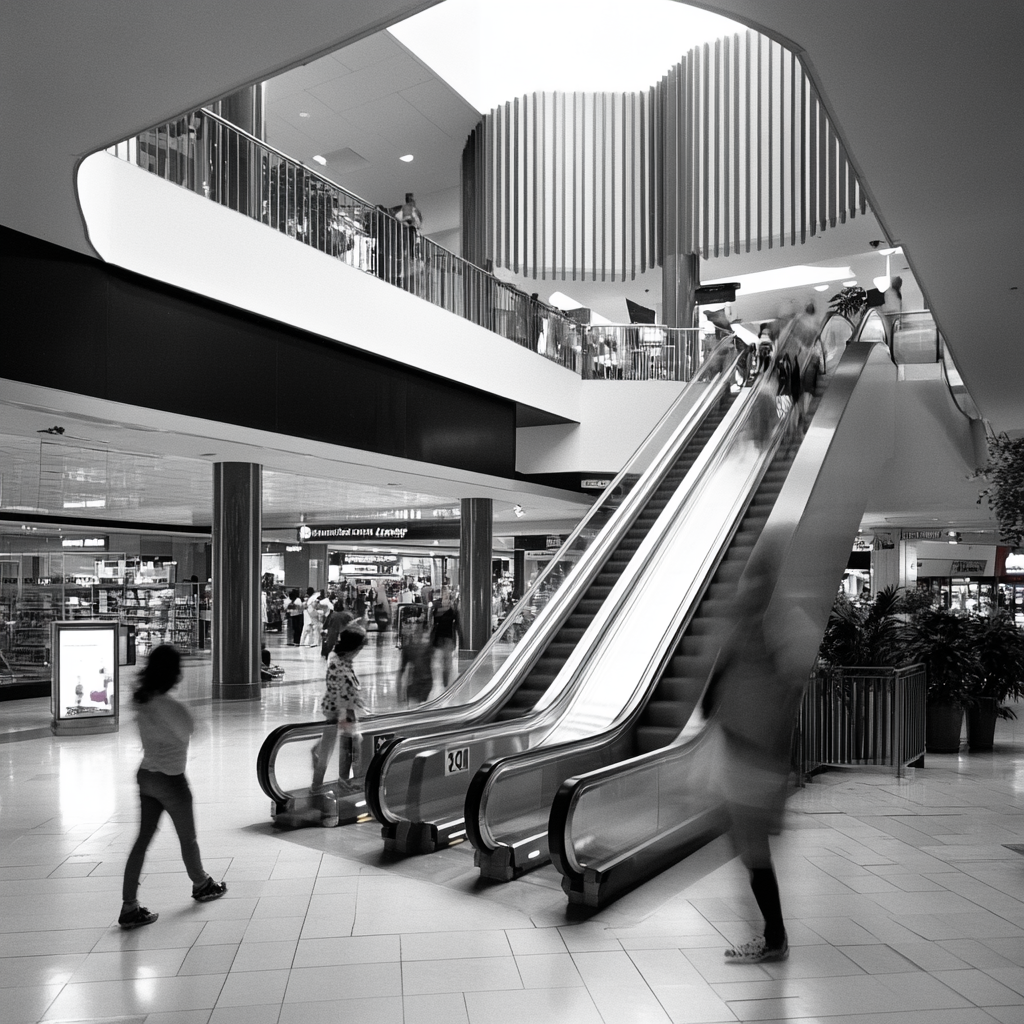
I found myself at the mall recently, hunting for a last-minute gift. Amazon’s algorithm had failed spectacularly to predict what I needed, so here I was. To my surprise, the mall was lively. People weren’t just shopping—they were doing all sorts of activities. The place had taken on an amusement park atmosphere. Santa was still there, taking last-minute Christmas wishes from eager children.
The cynical side of me wanted to scoff. I’ve always seen the mall as a monument to consumerism, a temple to everything wrong with society. Yet, as I weaved through the crowd—why am I always walking against the flow?—I started to notice something. People were laughing, smiling, and genuinely enjoying themselves. A group of teenage girls wandered ahead of me, holding hands and giggling over what they should buy for their moms. I imagine their moms would have been astonished to know this was the topic of conversation.
I saw a man riding an e-scooter in an elephant costume, his four-year-old daughter perched on his lap. Her face radiated pure joy. Even a pair of shoplifters seemed oddly jubilant as they wheeled stolen luggage toward the parking garage. Little did they know, the store manager was already on the phone with security. Their escape would be short-lived, but in that fleeting moment, they were happy.
Eventually, I found what I was looking for. A pleasant young woman helped me spend far more than I had intended, but I didn’t mind. They didn’t charge extra for anything—gift wrapping and packaging were included, and they even offered me a beverage while I waited. It felt almost quaint, like they were just as surprised as I was that someone had walked into a brick-and-mortar store.
As I waited, the bell over the door jingled, and another customer walked in, looking just as bewildered as I had felt moments before. The attendant turned to me with a smile and said, “That’s my cue. Your gift wrapping should be done shortly.”
I drove home, hitting every red light along the way, but I didn’t mind. When I finally walked through my front door, relieved to be done with my shopping, I was greeted by stacks of Amazon packages waiting to be opened. The irony wasn’t lost on me. I wondered, for a moment, if the loss of the mall as the cultural center of our community was really such a good thing. Maybe we’ve lost something important along the way.
And then my daughter walked in, her eyes sparkling with excitement. “Dad,” she asked, “when are you going to take me to do my shopping?”