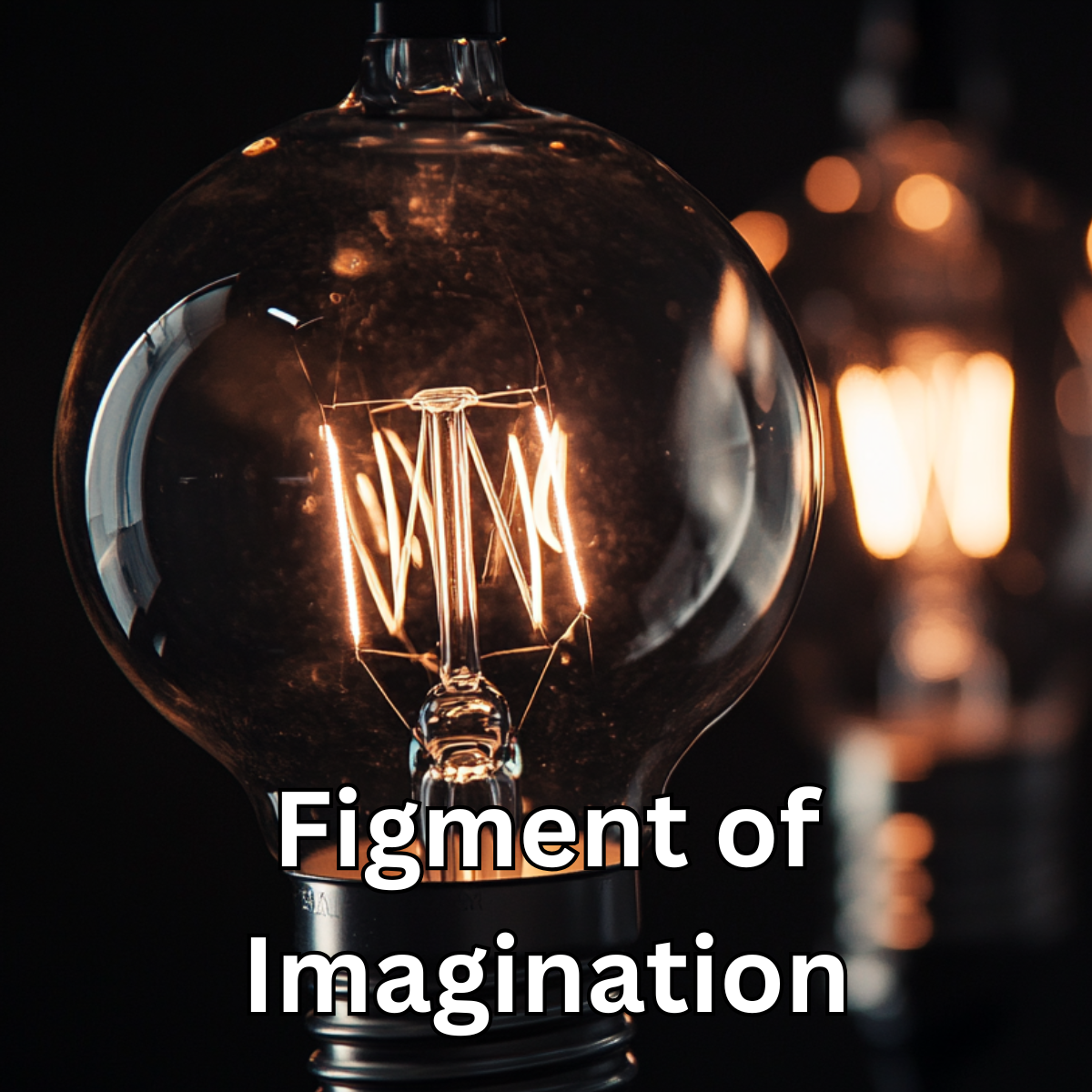
There exists a realm untouched by machines, one that remains distinctly, unequivocally human—the power to create something from nothing. A mere figment of our imagination, a thought with no physical counterpart, an idea shaped in the unseen spaces of our minds.
The Meaning of a Figment
The phrase “a figment of your imagination” traces back to the Latin figmentum, meaning “something formed or fashioned,” derived from fingere, meaning “to shape or invent.” A figment is not simply an illusion or a mistake of perception—it is something crafted. It is an act of creation, however fleeting or insubstantial it may seem.
The imagination is not just a place of fantasy or escape; it is the very foundation of progress. Everything that has ever been built, designed, or written was once nothing but a figment in someone’s mind. A dream before it was reality.
The Concept of the “Not”
What is it about human consciousness that allows for this? Why do we possess the ability to conceive of things that do not exist? One theory lies in our understanding of the not.
Unlike other species, we do not simply react to what is—we ponder what is not. We see a landscape and imagine a city where there is none. We hear silence and invent music. We look at a blank canvas and see a painting before the brush ever touches the surface. This ability to conceptualize what is not yet there is the foundation of all human creativity.
This is our power. This is what sets us apart.
Protecting the Space to Create
And yet, we are in danger of losing this. The modern world inundates us with constant input—endless streams of images, videos, and sounds, all created by others. Instead of shaping our own thoughts, we consume the creations of someone else’s imagination. We scroll, we watch, we listen—but do we take time to think?
To create, we must first allow ourselves the space to do so. True creativity does not emerge from distraction but from quiet. Free time is not wasted time; it is the soil in which ideas grow.
We must not rob ourselves of the one thing that makes us unique—our ability to think for ourselves—by spending all our time staring at artificial things. Let your mind wander. Embrace solitude. Give yourself the freedom to form thoughts unshaped by external influence.
For in that space, in the quiet corners of your own mind, the next great idea—the next figment—is waiting to be born.