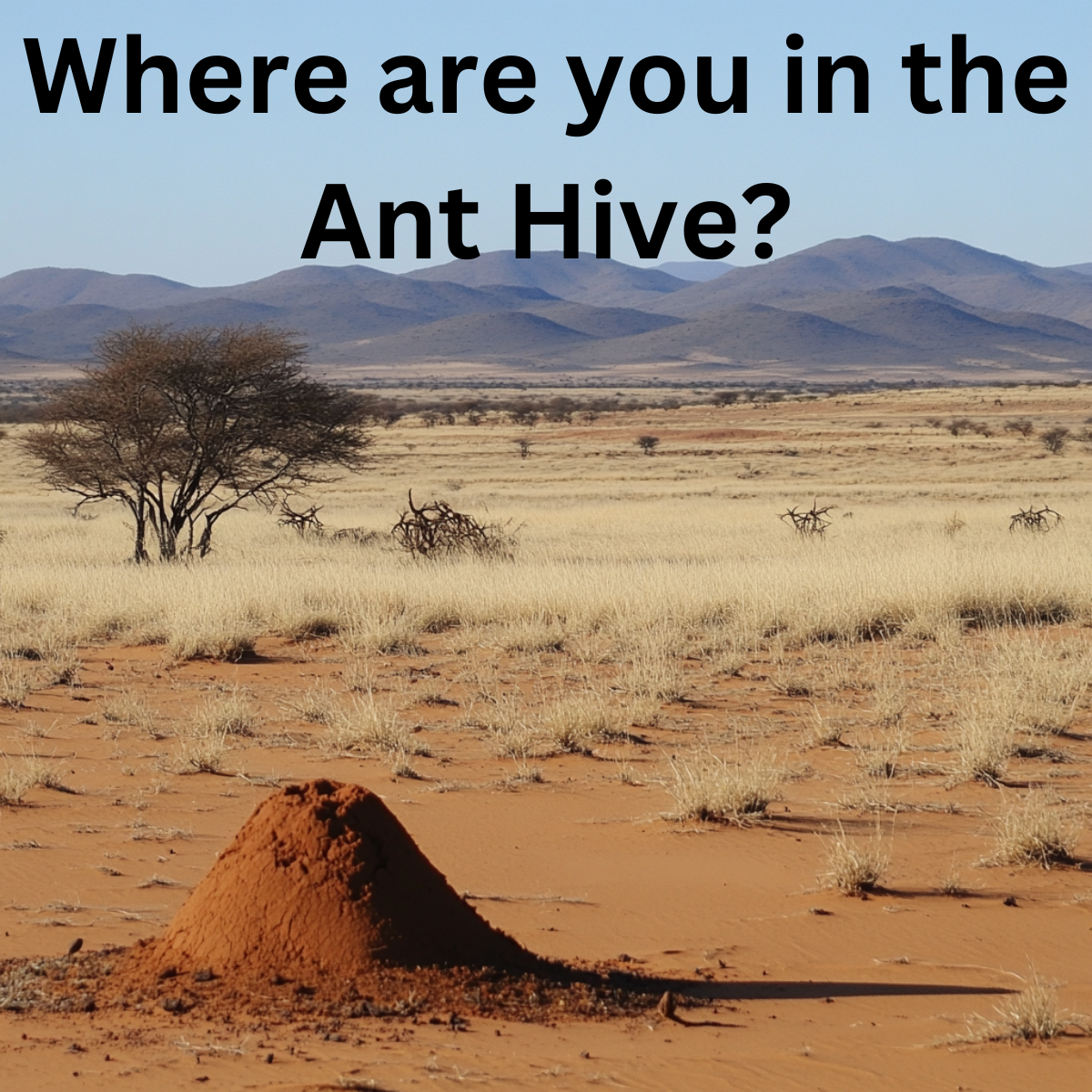
As a child growing up in western Colorado, I spent more time than I care to admit staring at ant hills. I would crouch down, watching the tiny creatures scurry about, each one seemingly locked into some predetermined task. But I had questions—lots of them. How did they know what to do? Who decided where they should go? How did they communicate? And most importantly, what happened when chaos erupted?
Even at a young age, I noticed something interesting. The anthill was not the well-oiled machine I had imagined. It was full of mistakes, missteps, and frantic scrambling. Ants collided, some lost their way, and not every task was completed successfully. Yet, somehow, the colony still functioned. There was no singular perfection—just persistence.
A Human Hive
It wasn’t until years later that I recognized the parallels between ants and people. We like to believe that human society operates in a structured, logical manner, but the truth is far messier. Like the ants, we each seem to follow a vague sense of marching orders. Some of us build, some of us defend, some of us explore, and some of us lead. Not everyone is efficient, and many fail in their tasks. Yet, despite the disarray, civilization moves forward.
The key realization here is that, whether we acknowledge it or not, we are all playing a role in the hive. The question is—do you know yours?
Learning Your Role
Understanding your place in the larger structure is critical—not just for society, but for your own sense of purpose. There are few things more frustrating than feeling aimless, unsure of what you contribute or why you are even participating at all.
That’s why I remind myself of a simple phrase: Learn role.
If you don’t know what your role is, take the time to figure it out. Look around. Observe. See where your skills, talents, and desires intersect with what the world needs. If you don’t like the role you are playing, change it—but do so with intention. The worst thing you can do is wander the hive without direction, unaware of your contribution or potential.
The Power of Awareness
Ants don’t have the luxury of choosing their assignment. We do. And while that freedom can be overwhelming, it is also an incredible advantage. We can shape our place in the world. But that requires awareness—both of ourselves and the systems we operate within.
So, ask yourself: Where are you in the ant hive? Are you playing a role that aligns with your purpose? Are you moving with intention, or are you simply reacting to the chaos around you?
The hive will continue to function with or without you. The real question is—how will you choose to participate?