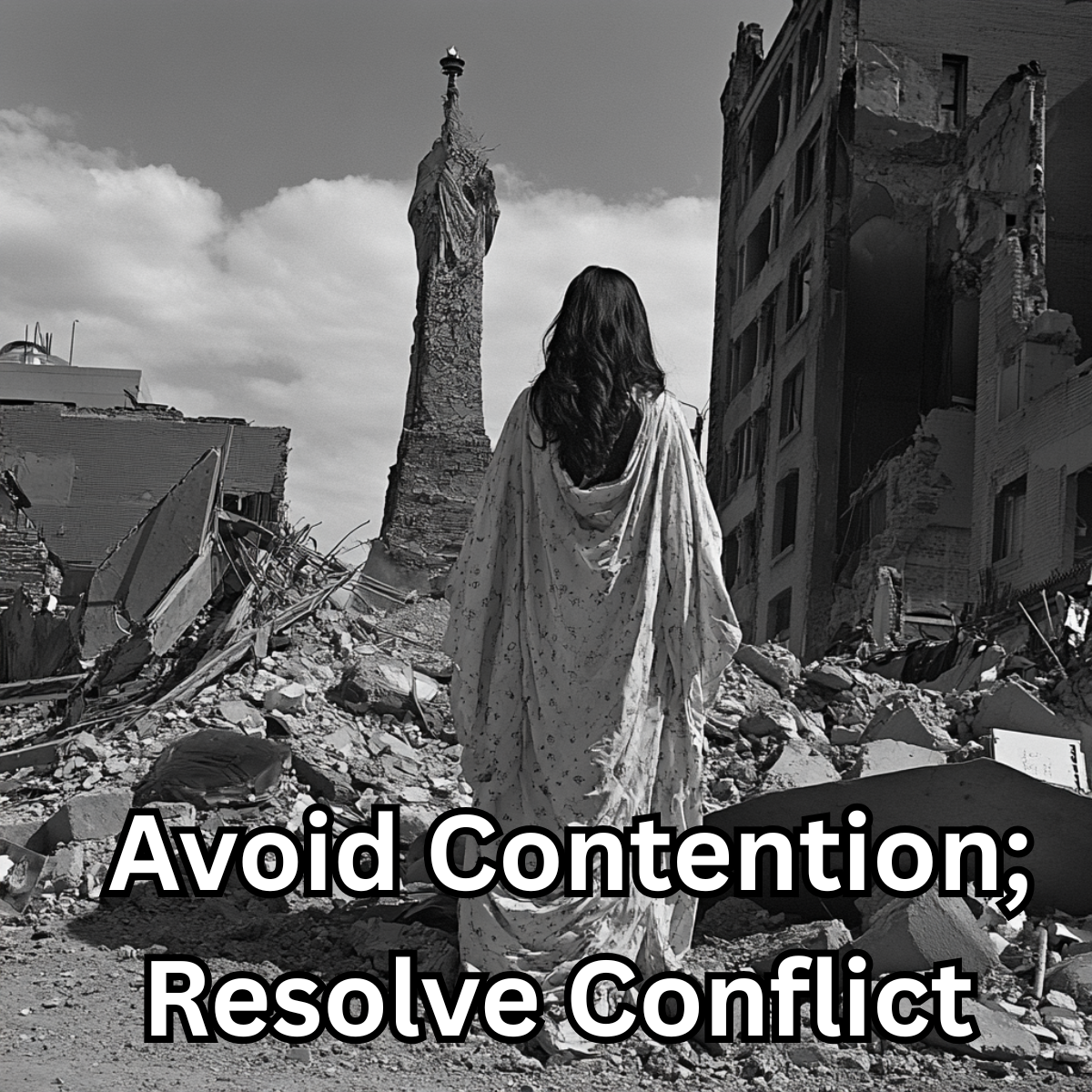
Conflict is a natural part of our human existence. Conflict often arises not because people want different things, but because they envision different paths to achieving shared, basic needs. Conflict causes paths to diverge in our families, communities, teams, companies, and nations. However, contention is different. Contention is not about solving problems or reaching shared objectives. Contention is fueled by passion, egotism, a win-lose mentality, and a general intent to harm or destroy. It is destructive by nature, not constructive. When conflict arises, contentious individuals seek to establish a winner and a loser. Those who bravely face conflict, on the other hand, seek a path toward reconciliation, enabling all to achieve a shared goal together.
Religious leaders over the last several millennia have consistently warned us to avoid contention. From the Buddha to Muhammad, they have taught that those who argue are not strong, but weak; not wise, but foolish. All these traditions teach that contention separates us from truth, whether that truth is represented as God or some other ideal state. Understanding and dealing with conflict can help people grow, but allowing contention to creep into our society introduces an agent that corrodes the very fabric of our social structures. All these religious leaders have emphasized that the wise and prudent engage others peacefully, carefully avoiding the unnecessary creation of enemies.
Jesus Christ created a powerful social movement founded on this principle, ultimately leading to the establishment of one of the world’s largest religions. From his recorded teachings, we learn that he emphasized not only avoiding contention but took this idea even further. He taught forgiveness, even toward those who abuse or seek to harm us. Perhaps the greatest testament to his radical approach is the moment of his execution, when he asked God to forgive his tormentors because they did not know what they were doing. The most famous example of Jesus’s teachings is found in the Sermon on the Mount (New Testament, specifically Matthew Chapters 5 through 7). His approach to radical peacekeeping is emphasized throughout this sermon. For Christians, his life stands as a model for confronting the worst forms of contention with clarity, grace, and forgiveness.
Contention does far more than erode relationships; it disintegrates the foundation upon which society is built. Contention isolates people, divides groups, and tears communities apart. The alternative to contention is not to become a combatant on the opposite side of the battle, but rather to become a peacemaker. Peacemakers are builders. They create bridges by finding common ground. Peacemakers enable our society to flourish and grow. If contention is anti-society, then peacemaking is pro-society—it is ultimately the glue holding us together as a species.
This principle is not merely religious—it is fundamentally human. We simply cannot survive without each other. Our species has always achieved greater accomplishments by working together. At a core, primal level, we could not survive the harsh conditions of this planet without forming societies. This principle applies to every human organization: the workplace, the boardroom, the classroom, and even the street corner. Humans depend on each other, but unfortunately, we will not always agree. Conflict will always arise within our organizations. How we deal with conflict ultimately shapes the growth of our organizations. Therefore, we must always prevent disagreement from slipping into contention. We should attack ideas, not people. We should seek solutions, not victories. We should elevate discussions, not shut them down.
You can always determine a person’s or organization’s intent by what they produce—you can tell what they are by the fruit they bear. Do they promote contention and division? Or do they foster clarity, calmness, and progress, even in difficult conversations? Always look at the results. Are these people builders or breakers? Are their arguments motivated by ego, pride, and attempts to win at all costs, or are they genuinely trying to help society?
To be perfectly clear: contention is bad. Religious traditions might even say it is of the devil. Conflict, however, is acceptable. We should not run from or hide from conflict, or worse, pretend it does not exist. Avoiding conflict allows disharmony to fester, often leading to greater harm. The key is how we handle conflict when it occurs. If we face it head-on, with respect, transparency, and honesty, we can work through differences. By doing this, we avoid slipping into the dark pit of bitterness and blame.
In my experience, the first step in dealing with conflict should always be establishing common ground. This should always be the initial objective when handling conflict between parties. We should not be seeking to score points or “win” the moment—trading barbs, launching attacks, or looking for a “gotcha” moment. The goal is to build, not burn down. If we start from our shared values, shared goals, or even just our shared basic needs, it becomes much easier for the spirit of peace and forgiveness to guide us in resolving our differences.
We are meant to be creators—to build, improve, and grow. We are meant to use our heart, might, mind, and strength to bring forward the best in ourselves and in others. Our species is truly magnificent, possessing immense potential to create beauty and continue seeking truth. But we cannot realize this potential if we remain locked in cycles of contention. To overcome this, we need more people willing to turn the other cheek; to be brave and bold—not by winning arguments, but by forgiving others and demonstrating a willingness to move beyond destructive behaviors, seeking instead a higher, shared common ground.
The message here is simple: Avoid contention. Resolve conflict. You do not have to back down from hard conversations—but you do not need to make them ugly. When in doubt, I say: choose peace. Choose to build. Choose to be beautiful.
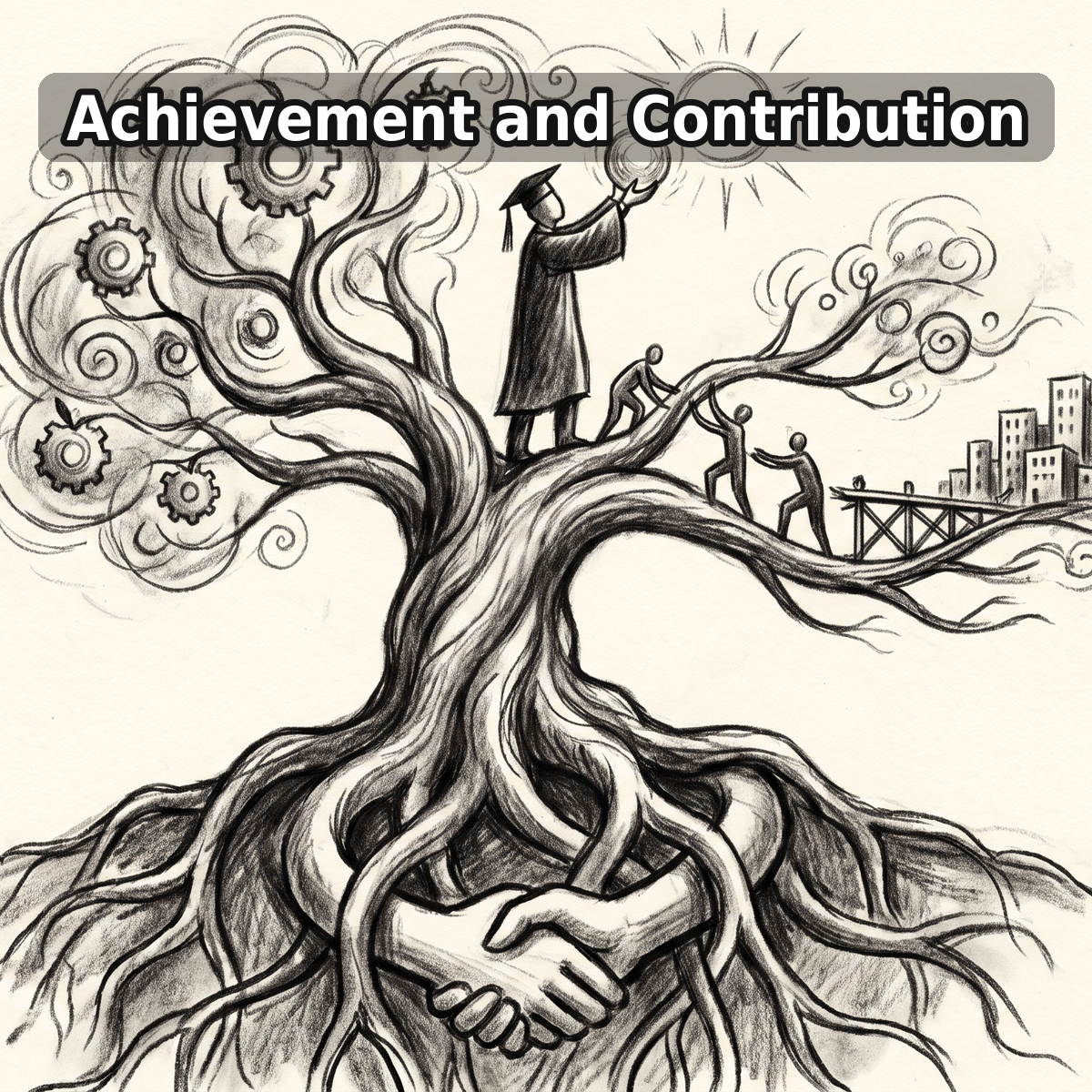
Day 3,206 – Achievement and Contribution
The author shares two daily questions that help focus on achievement and contribution, leading to a sense of purpose and well-being. This approach, combining personal progress with helping others, serves as an anti-anxiety recipe and a path to living well.