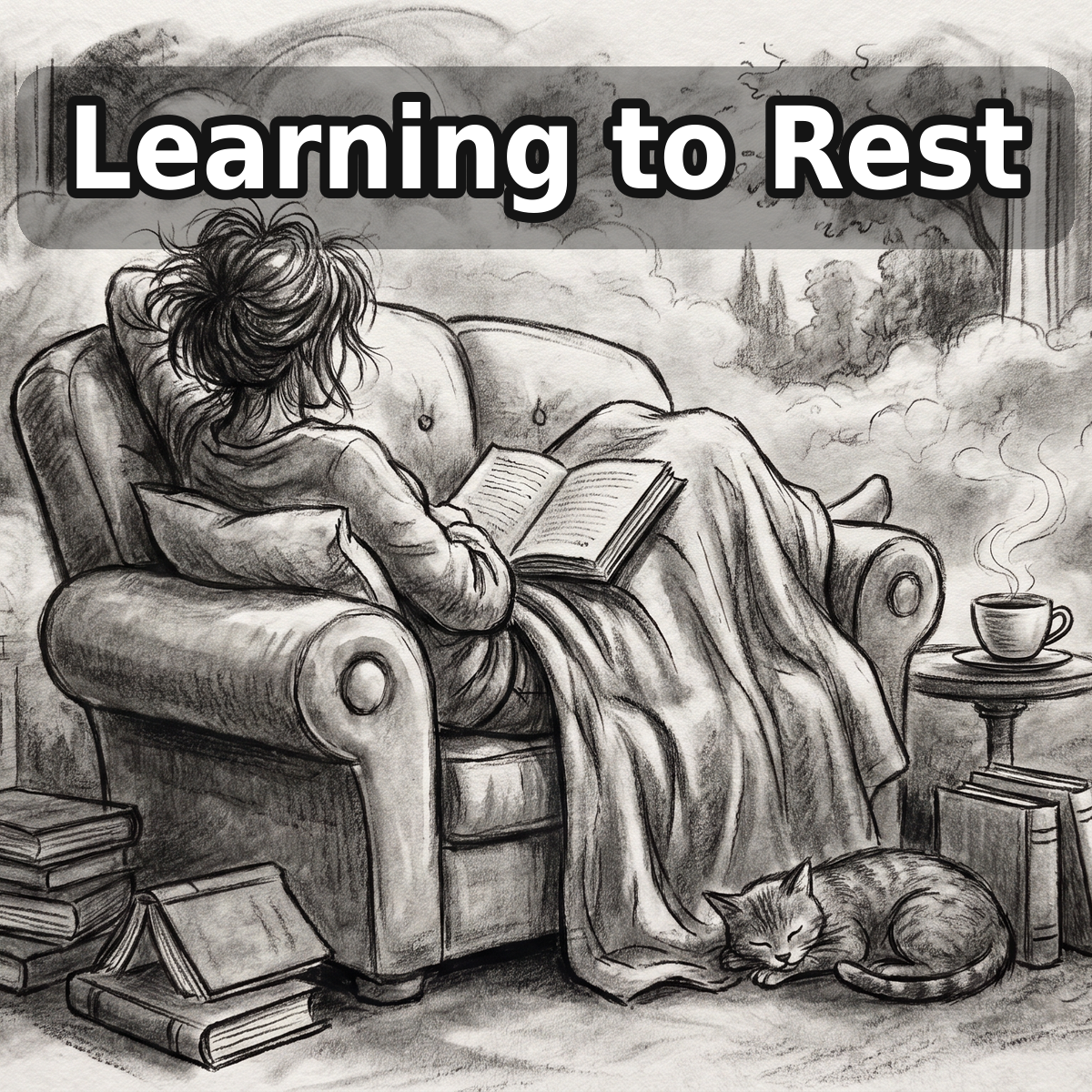
Day 3,235 – Learning to Rest

The author reflects on the challenge of truly resting and recovering, often falling into the trap of using rest time for other productive tasks. They realize that associating satisfaction with accomplishment hinders their ability to genuinely rest, and propose that rest should be viewed as an intentional act of recovery, similar to an athlete's training regimen. The key is to become as disciplined about resting as about working, scheduling and protecting recovery time.

So when you are actually tired. Meaning that you legitimately need a break. Not because you are just feeling down, anxious, depressed, or for some other reason, but when you are just worn out, how do you deal with that? How do you get real, rejuvenating rest that can help you come back with full intensity after you are done resting?

This seems to be challenging, and oftentimes I fail at resting because I use my time to work on other things and really never get any rest at all.

I have come to realize that I am actually pretty bad at this. I know how to work hard. I know how to push myself. I even know how to keep going when I probably should not. What I do not seem to know how to do very well is stop.

When I finally get an opportunity to rest, I immediately start thinking about all the things I could accomplish with that extra time. Before long, my day of rest has turned into another day of work, just on different projects.

I think the problem is that I have trained myself to associate satisfaction with accomplishment. If I am not getting something done, I feel like I am wasting time. That is a difficult habit to overcome.

However, I am starting to understand that rest is not necessarily the absence of effort. It is the intentional act of recovery. There is a significant difference.

An athlete who trains intensely understands that recovery is part of the training. Muscles need time to rebuild. The body needs time to replenish. Without recovery, all that intense effort eventually produces diminishing results.

Why would I expect my mind, emotions, and willpower to operate any differently?

Perhaps the answer is to become as disciplined about resting as I am about working. To actually schedule recovery, protect that time, and resist the temptation to fill it with something productive.

That might mean sleeping more, sitting quietly, enjoying a beautiful afternoon, or simply allowing myself to do absolutely nothing without feeling guilty about it.

I am beginning to think that learning to rest is another form of personal discipline.

The goal was never to see how exhausted I could become. The goal was to become capable of giving my very best effort, consistently, over a lifetime.

If that is really my commitment, then learning how to recover is just as important as learning how to push.


Subscribe
Notify of
guest
0 Comments
Inline Feedbacks
View all comments
Share the Post:

Recent Blogs

Day 3,235 – Learning to Rest

The author reflects on the challenge of truly resting and recovering, often falling into the trap of using rest time for other productive tasks. They realize that associating satisfaction with accomplishment hinders their ability to genuinely rest, and propose that rest should be viewed as an intentional act of recovery, similar to an athlete’s training regimen. The key is to become as disciplined about resting as about working, scheduling and protecting recovery time.

Read More

Day 3,234 – Get Good at Failing

This article explores the idea that getting good at failing is a valuable skill. It emphasizes recovering quickly from setbacks, learning from mistakes, and making adjustments for future attempts. The author suggests that true progress comes from continuous improvement through failure, rather than avoiding it altogether, and that we should not let disappointing results define our capabilities.

Read More

Day 3,233 – The Life You Already Have

The author recounts a peaceful lunch with his wife, where they observed a laughing couple. This experience led him to realize that true enjoyment comes from appreciating the present moment and the life one already has, rather than constantly striving for improvement.

Read More

Day 3,232 – Carving the Time

The author reflects on the struggle of consistently achieving meaningful work by focusing on minimum daily accomplishments, which often leads to mediocre results and burnout. They propose a strategy of fiercely protecting early morning hours (5 am to 9 am) as sacrosanct time for personal priorities, emphasizing that defending this time will eventually lead others to respect and accommodate it.

Read More
0
Would love your thoughts, please comment.x
()
x