Many years ago, I was friends with a man who served as a senior leader at a large catalog retail company. They were a cornerstone in their industry; well-known, respected, and widely patronized. When you thought of their product space, you thought of them. It was the sort of company that felt immovable. Market dominance like that makes you believe the structure is permanent.
Then one day, the impossible happened. They were told they were being acquired by a dot-com startup. The leadership team was in disbelief. They had boardroom traditions, established protocols, polished shoes, and twenty-year forecasts. Now, suddenly, they were being overtaken by some website?
My friend shared with me a telling moment. The senior executives were gathered in their high-rise conference room in downtown San Francisco. It was the classic executive scene: leather briefcases, custom suits, pristine slide decks arranged meticulously in front of each participant. The conference room, a corner jewel of the skyscraper, offered panoramic views of the Bay.
Then came the arrival of their new “owner.” A young man, barely thirty, strolled in wearing flip-flops, board shorts, and a faded baseball cap—a tribute to the band Rage Against the Machine. He sat at the head of the table, propped his feet up, and looked around.
He did not ask for an overview of operations or inquire about the sales pipeline. He simply said, “We don’t do business like this anymore.” The meeting lasted all of fifteen minutes. He told them change had come. He was there as a courtesy. They would no longer be needing this real estate.
It was a jarring moment for these seasoned professionals. The myth of their company had loomed so large. Their procedures, their organizational charts, their carefully calibrated systems—all suddenly looked like relics of a past era. What they thought was immovable had just been moved.
There’s a truth buried in that story that we too easily forget: the myth is always bigger than the reality.
When we think about entering a space filled with big names and sophisticated players, we often hesitate. The giants feel invincible. We whisper to ourselves, “Who am I to try?” We convince ourselves that we’ll never match the resources, the polish, the reach. It feels safer not to try at all.
But that is precisely the illusion they want you to believe. It is the strategy of every dominant player: create the appearance of invincibility. Build a myth so grand that no one even attempts to challenge it.
Let’s not forget how these giants started. eBay launched in a world where Sotheby’s and Christie’s seemed untouchable. People scoffed at the idea that a website could disrupt the centuries-old auction house tradition. But it did. And quickly.
Amazon took on Walmart. Not by building more stores, but by changing the concept of the store entirely. The largest and most logistically sophisticated retailer in history was overtaken by a website built from a garage.
A24 and Blumhouse proved that cinema did not have to belong to bloated studio empires. They told stories differently. They gambled on vision over volume. And suddenly, the old guard looked confused.
Kickstarter changed how ideas got funded. Instead of bowing to venture capital and legacy investors, creators now turn to communities. The crowd became the gatekeeper.
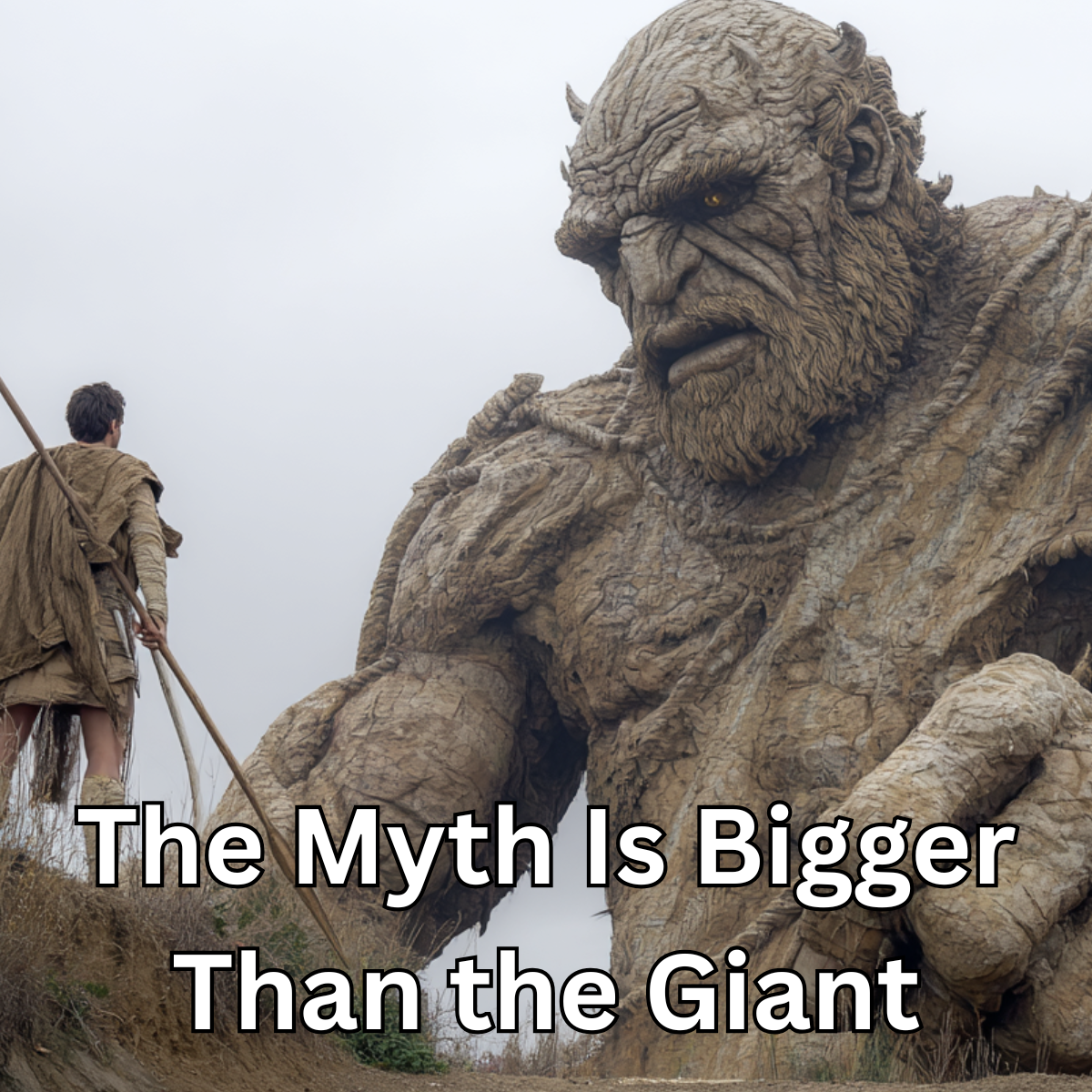
This theme runs through our literature and our mythology. David and Goliath. The most famous underdog story ever told. A young boy with no armor and no pedigree stepped onto a battlefield where no one else dared. Not because he was stronger, but because he dared.
Ragnar Lothbrok is remembered as a slayer of dragons and conqueror of kingdoms. But in reality, he was likely just a local chieftain with a good sense of storytelling. Yet, his myth endures. It endures because we all secretly love the idea that the small can rise.
Let us remember this: IBM once looked immovable. AT&T once seemed untouchable. The most dominant monopolies in modern history eventually gave way. The cloud replaced the mainframe. Wireless networks replaced the landline. All of it happened because someone, somewhere, dared to believe the myth was just that—a myth.
Behind every major company we admire today was once a pair of dreamers working from a kitchen table. No budget, no staff, no traction—just a crazy idea and enough stubbornness to keep going.
So when you find yourself looking at the goliaths in your space, do not be fooled. Do not let the myth stop you from building what you believe in. If you must mythologize something, mythologize your own courage. Let the rest fade into the fog of fiction.
You may find that the giant is not nearly as tall as he seems when you finally walk onto the field.