When I was a young boy, I joined the Boy Scouts. We would go on small adventures into the woods with our scout leader, a man who seemed as comfortable among trees and campfires as others are in their living rooms. These trips always held a sense of magic for me; each one a small journey into the unknown, a space where skills mattered and decisions had weight. We would often need to tie things—shelters, gear, packs—and I remember watching in awe as our scout leader moved his hands with practiced certainty. He had this uncanny ability to tie any knot with speed and elegance, as though the rope itself knew what it was supposed to do.
The knot I remember most was the bowline. He showed it to us once and then again and again, until the story of the rabbit coming out of the hole, running around the tree, and diving back into the hole was burned into our memories. The thing is, I could follow the steps. I could even get it right after a few tries. But he—he could tie a bowline behind his back while looking at the stars. That was when I realized something. This man was a true professional. He did not just know how to tie a bowline; it was part of who he was. His muscle memory, his instinct, had internalized that knowledge. No hesitation, no thinking—just action born from experience.
Years later, I would go fly fishing with my grandfather. He was another quiet professional. He would never say it, but you could tell by watching him. His hands were thick and calloused from years of work, yet he could take two pieces of tippet line—thin, nearly invisible—and weave them into a perfect blood knot with patient precision. I would watch him, mesmerized, as he tied line after line while sitting beside the river. The knot always held. The fly always landed just right. That is when I understood again—this man knew his craft. He had lived it. He had failed and practiced and repeated it until it became second nature.
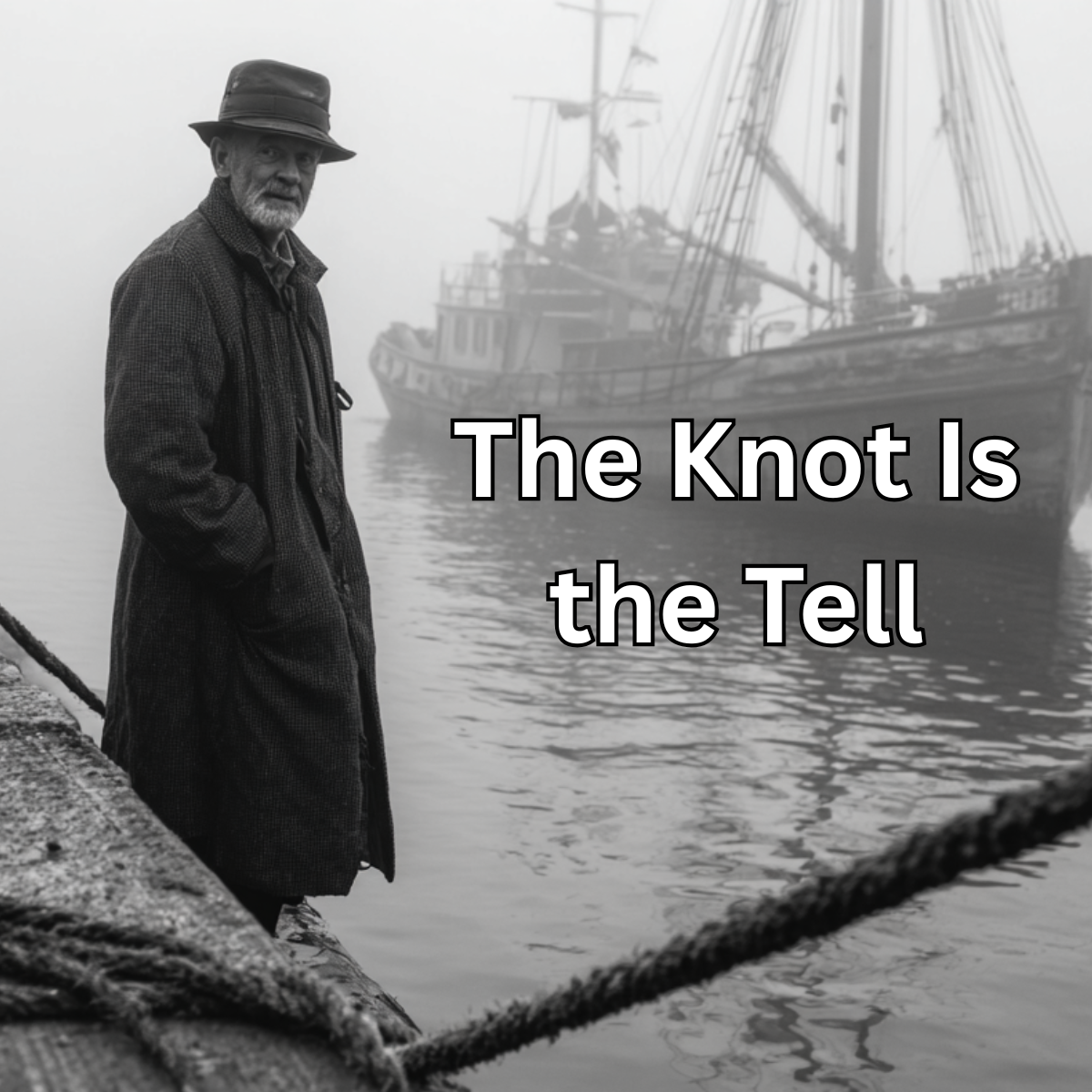
When I became an adult, I made the ill-advised decision to buy a boat. One day, I found myself and my son in a precarious position. We were stuck in a tight corner of a marina, surrounded by docks and pilings, with very little room to maneuver. As frustration mounted, an old sailor emerged from the fog, walking down the ramp like a character from a novel. He offered to help, and we gratefully handed him a line. With a few smooth motions, he secured our boat with a clove hitch, kicked the bow in just the right direction, and timed everything with a practiced cadence. When I pushed the throttle as he instructed, the boat eased around in a flawless arc. The clove hitch pulled free at just the right moment and we were off, leaving our mysterious guide to disappear down the dock as quietly as he came.
I did not need to ask him where he had sailed or what credentials he held. I knew. He was a sailor because he knew his knots. Not because he had read about them. Not because he had watched a tutorial online. Because he had used them. Many times. In many situations. Until they became instinct.
That is the lesson. You can learn the steps of a knot from a book or a video. You can even memorize the sequence and get it right a few times. But until you have tied that knot dozens of times, until you have relied on it under pressure, until your hands know what to do without your mind intervening, then you do not truly know it. You do not own it. It does not yet live within you.
When someone tells you they are a professional, watch them closely. See how they handle the fundamentals. Do they struggle with the basics? Do they pause, hesitate, over-explain? Or do they move with quiet confidence, instinctively doing what must be done? That is the tell. The fundamentals reveal the truth.
In some trades, knots are the measure. In others, it might be the way someone handles a tool, or how they write a line of code, or how they speak to a customer in distress. Whatever the domain, there is always a sign. A gesture. A skill made so natural it no longer requires thought.
We would be wise to learn those signs. They are how we separate the pretenders from the professionals.