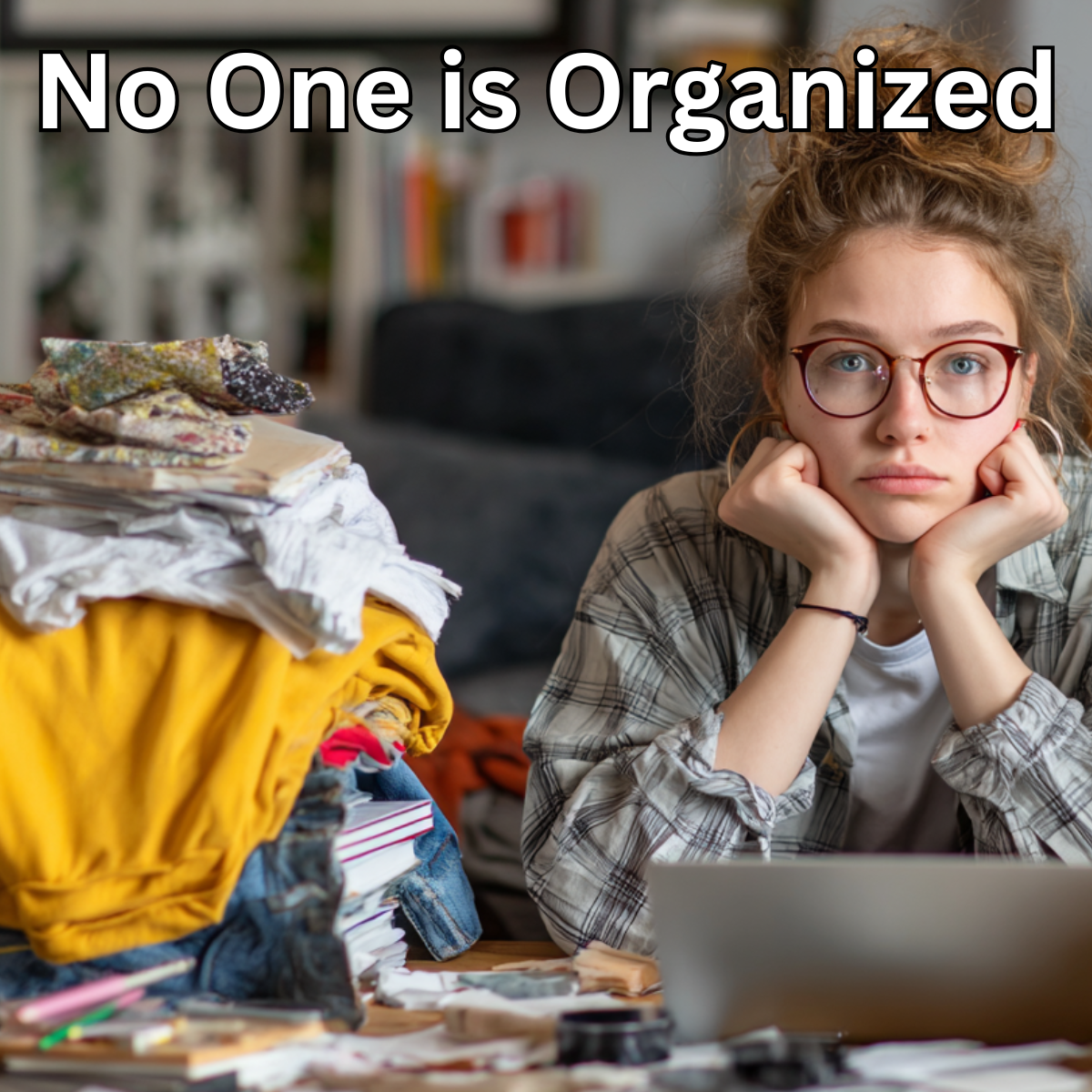
I heard someone say, I am not an organized person. That sentence followed me around for the rest of the day. I kept turning it over and landed on a simple thought. No one is organized. Not in some fixed and permanent way. What we call organized is a skill that grows out of repeated contact with chaos. You face a particular kind of mess many times. You experiment. You make a small rule. You try it again. Over time you learn how to systemize that mess, and to everyone else it looks like you are organized. In truth, you are a person who learned how to deal with a specific kind of disorder.
This is why our first attempts to get organized so often fail. We overdesign. We perfect the tool before we practice the habit. Most systems collapse because they ask too much of us on the days when life is loud. A tool should fit the smallest repeatable behaviors you will actually do when you are busy. If the habit is not doable on your worst day, it will not survive your average day.
There is also the force that waits for all of us. Entropy. Every system wants to slide toward disorder. That is not a character flaw. That is physics. Entropy wins unless you pay the tax. The only antidote I have found is a small, regular maintenance dose. A quick list reset that takes five minutes. A brief sweep to clear your path. A short review to refill the plan. The dose is small, the rhythm is everything.
Most of us think about getting organized at the exact moment when chaos surges. When that happens, I switch into a different mode. First, I stop the bleed. I pause intake for a short period. I say yes to fewer things and I practice saying no as much as possible. The goal is simple. Stabilize what is in front of me.
Next, I make the work visible. I take the swirl in my head and put it where I can see it. A simple board with three columns is enough. Backlog → Doing → Done. That one move gives me relief because I can now see reality rather than feel it.
From there I run triage in three passes. On the first pass, I sort. No dramatic decisions, only where each item belongs. On the second pass, I sequence. What must happen first, then what follows. On the third pass, I schedule. I put blocks on my calendar so that time and task now agree with each other. Sort, sequence, schedule. Three clean passes.
Getting organized takes time and it takes a steady effort. A theme you hear often is that you capture everything before you categorize. That is good guidance, but my flaw has always been too many capture buckets. I do better when I consolidate capture into one incoming method. It is hard to do, and it takes discipline, but when everything enters the same way I feel more in control. The next shift that helps is a single source of truth. When all my commitments live in one place, I trust that place. When I trust it, I use it. When I use it, it works.
Limits matter. Order loves limits and chaos hates them. My limit is three. I only allow myself three work in progress items at any given time. I cannot handle more than that. Every time I try, I watch my quality slip and my stress rise. So I stopped pretending. If you feel overwhelmed, try limiting your active list to three things. It sounds small. That is the point. Small creates focus. Focus creates movement. Movement restores belief.
In the end, the only method that works is the one you actually follow. I give my method a little attention every day. I pay the entropy tax. I make tiny adjustments as I go, and those small changes compound. The habit becomes the system. The system makes me look organized. What really happened is simpler and more honest. I learned how to deal with my version of chaos, one small repeatable behavior at a time.