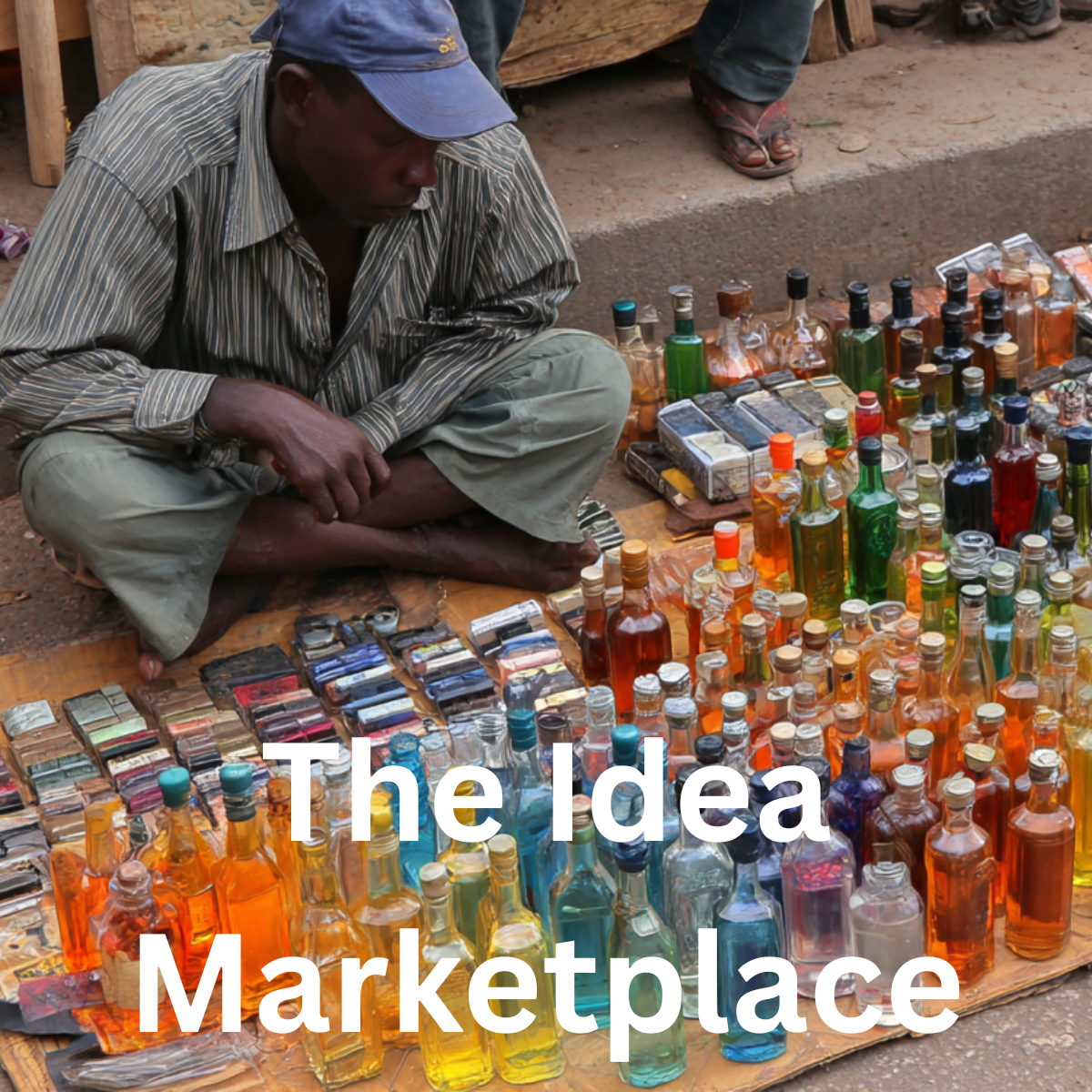
It occurs to me that the marketplace for ideas has become the early stage investment scene. Do you have a great idea? The true test of that is whether people are willing to put their money at risk to support it. Contrary to popular belief, this is only the beginning and not the end. High-risk investments happen at this initial idea phase, and they are usually reserved for people you know and have a relationship with. These early investments are more about the people than the idea itself.
The second test comes when you must take your idea to the marketplace of public consumption. This is where you demonstrate that there is value behind your idea—enough to convince people to exchange their money for it. Once this test is complete, you are ready to present your idea to people you do not know. These individuals will judge the concept not only on its promise but also on the early metrics that indicate potential for broader acceptance.
The third test in the early stage investment cycle is to determine whether your idea can sustain and expand at scale. An idea may be exciting and well-liked, but can it generate revenue? At this stage, you must show that the idea is not only solvent but profitable. The execution and delivery of the idea must yield a meaningful return on investment.
These three tests form the ultimate proving ground for the viability of an idea. Will it attract enough interest to fund the experiment? Will it hold enough value for people to pay for it? Finally, will it produce a profit?
In the end, every idea must face these tests if it is to move from imagination to reality. Inspiration is cheap, but conviction is costly. It is not enough to have a clever thought or a passionate belief. The worth of an idea is proven in the willingness of others to join you, to invest, to buy, and eventually to build alongside you. This process refines both the idea and the person behind it. What survives these trials is not merely a concept but a living endeavor, one that has earned its place in the world through faith, effort, and results.