Last night I sat at my kitchen table long after the house had gone quiet. My business partner and I had been circling the same decision for months. The kind of decision that carries weight. The kind that could determine whether the business survives or folds. We had talked through every angle. We had mapped the risks. We had weighed the costs and imagined the outcomes. And yet, here I was again, turning it over in my mind like a stone I could not put down.
Then a question arrived that I had not asked before. Have we moved past deliberation and into rumination?
The difference matters more than I realized.
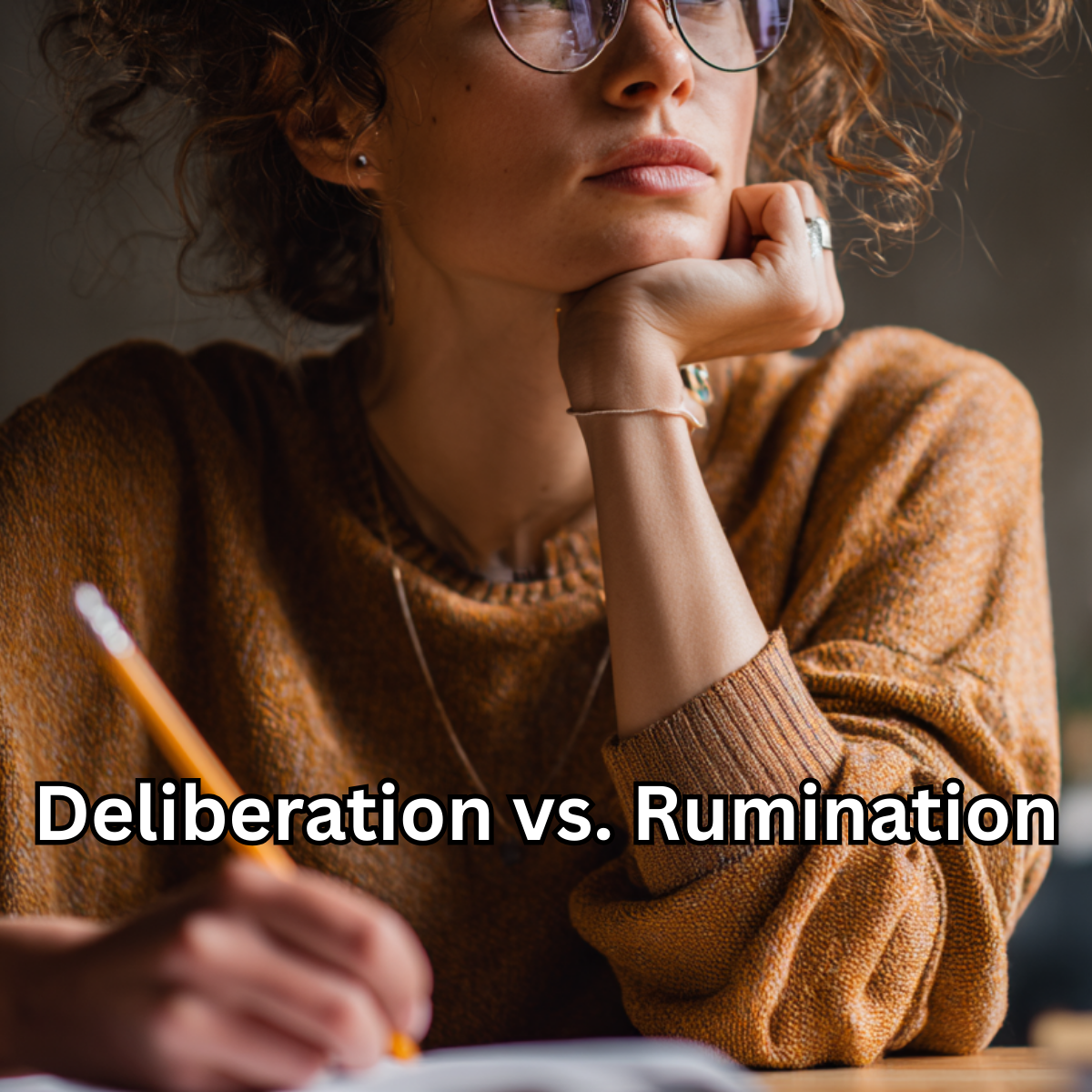
Deliberation is productive. It clarifies options. It seeks wisdom. It gathers information and tests assumptions. It moves you closer to a choice. Rumination is something else entirely. It replays the same arguments. It circles without progress. It produces anxiety instead of insight. It feels like thinking, but it is really just stalling.
Deliberation helps you choose. Rumination helps you delay.
I have watched this pattern before, in myself and in others. A decision feels too important to get wrong, so you keep thinking. You tell yourself you need more data, more time, more certainty. But the truth is, no new information is coming. The conversation has started repeating. The same points surface in every meeting. The same concerns get voiced in slightly different words. The discussion is no longer creating progress. It is creating a delay.
There is a moment when deliberation ends. It happens when the options are clear, when the trade-offs are understood, when no new facts will change the picture. At that point, continued thinking is not wisdom. It is avoidance. The cost of waiting exceeds the cost of acting. The team grows uncertain. Momentum stalls. Opportunity slips past. And the decision that once felt urgent begins to feel like a burden you carry everywhere.
Indecision is not free. It charges interest.
I know why we stay there. Fear of making the wrong choice. Desire for perfect certainty. Responsibility to others. Fear of regret. The comfort of discussion versus the risk of action. Rumination is not really about confusion. It is about courage. It is easier to keep thinking than to commit. Easier to analyze than to act. Easier to postpone than to own the outcome.
But time will make the decision for you if you refuse to make it yourself.
So I asked a different question. What new information would actually change this decision? I wrote it down. I looked at the list. It was short. Most of what I needed to know, I already knew. The rest I would learn as I move forward. Clarity is often the reward of movement, not the prerequisite.
I called my partner the next morning. We set a deadline. Not an arbitrary one, but a real one tied to the work that needed to happen next. We agreed that if no new facts emerged by that date, we would decide. We would make the best choice we could with what we had and execute it fully. No more loops. No more rehearsing the same conversation. We would act.
That decision, the decision to decide, changed something. The weight did not disappear, but it shifted. The anxiety that came from endless circling began to ease. We were no longer trapped in the question. We were moving toward an answer.
This is not about reckless decisions. It is about timely ones. Leadership requires action under uncertainty. Waiting too long is its own form of choosing, and it is rarely the right one. Momentum is a strategic advantage. The longer you delay, the more you lose.
If you have been thinking about the same decision for months, ask yourself this. Are you learning or looping? Are you gathering insight or rehearsing fear? Are you deliberating or ruminating?
If the answer is rumination, set a deadline. Identify what would actually change your mind. Accept that certainty often comes after commitment, not before. Make the best decision you can, then move. Do not wait for perfect clarity. It will not arrive. Do not wait for the fear to leave. It will not. Do not wait for the decision to feel easy. It will not.
Deliberation seeks truth. Rumination postpones courage.
The goal is not to eliminate doubt. The goal is to act despite it. To trust that you have thought enough, gathered enough, prepared enough. To trust that the next step is not more thinking. It is movement.
So if you are standing at that same crossroads, the one you have visited a hundred times in your mind, consider this. You may already know what you need to know. You may already have what you need to make a decision. The question is not whether you have enough information. The question is whether you have enough courage to commit.
The decision is waiting. It has been waiting. It will not get easier with more time. It will only get more expensive.
Choose. Then move.