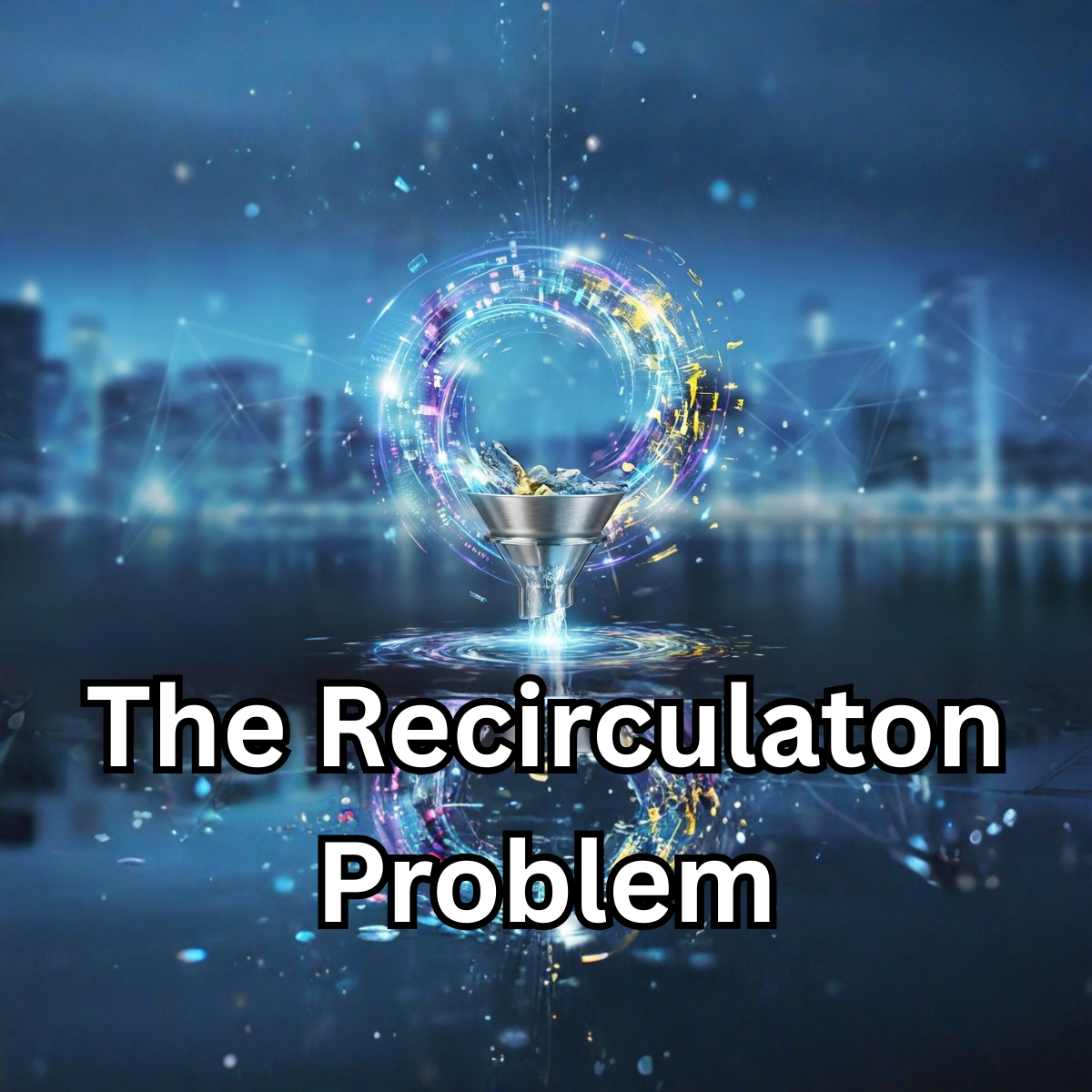
I was talking with someone last week who seemed anxious about everything. Not one thing in particular, just everything at once. And by the end of the conversation, I noticed I felt it too. Not because anything in my life had changed, but because I had absorbed what they were carrying. That’s when I realized we don’t have a drainage problem. We have a recirculation problem.
We’ve increased the input. More news, more stress, more uncertainty pouring in every day. We’ve increased the distribution too. More channels to talk, more ways to share, more platforms to broadcast how we feel. But we haven’t increased the things that actually help us process it. Internal resilience. Emotional processing habits. Boundaries. So the system just recirculates. The same worry gets poured from cup to cup without ever draining.
At the core of it, people don’t handle excess emotional load very well. Angst creates internal pressure. Uncertainty, fear, lack of control. And humans are wired to offload pressure, not just contain it. That’s not weakness. It’s design. But it means we need to understand what’s actually happening when someone brings their worry to us.
Emotional regulation is social, not just individual. We like to think of emotions as private, but they’re not. Humans regulate emotions through other people. Talking about worries. Seeking validation. Venting or complaining. These aren’t just habits. They’re mechanisms to stabilize ourselves. So when someone brings you into their worry, it’s often an unconscious attempt to reduce their own internal tension. They’re not trying to burden you. They’re trying to balance themselves.
Anxiety also looks for confirmation. Angst doesn’t like to sit alone. It wants to be confirmed. If I’m worried about something and you agree, even subtly, it makes my brain feel safer. Okay, I’m not crazy. This is real. So people spread concerns not just to offload them, but to anchor them in reality through others. Your agreement becomes their proof.
A lot of modern angst comes from lack of control. Economic uncertainty, technology shifts, constant information flow. When people feel powerless, they try to regain control in smaller ways. Influencing how others think. Shaping conversations. Getting others to adopt their concerns. It’s a way of saying, if I can’t control the world, I can at least control the narrative around me.
Emotional contagion is real, and it’s amplified now. Emotions spread like viruses. This is well documented. But now social media accelerates it. News cycles amplify threat signals. Constant connectivity removes quiet space. So instead of anxiety dissipating, it circulates. Water being poured from cup to cup without ever draining.
There’s also less internal processing happening. Historically, people had more space to sit with things. Boredom, silence, reflection. Now, discomfort gets externalized almost immediately. Text someone. Post something. Bring it up in conversation. So instead of processing, we broadcast.
“We’ve increased the input and the distribution, but we haven’t increased the things that actually help us process it.”
If you’re noticing this more, it might mean your own sensitivity to it has increased. That’s not a bad thing. It just puts you in a position where you have to decide. Do I absorb this? Do I reflect it back? Or do I stay grounded and not participate in the transfer? That last option is rarer than it sounds, and it’s pretty powerful.
The next time someone brings their worry to you, notice what happens inside you. Notice if you start to carry it. You don’t have to be the next cup in the chain. You can listen without absorbing. You can care without recirculating. That’s not cold. That’s drainage.