Almost everyone says they believe in iteration. Very few people actually build a system that forces iteration. That gap is not an accident. It is the difference between intention and structure.
I have watched teams talk about iteration as if it were a value they hold. They say they want to improve, to learn, to refine. They mean it when they say it. But when the work starts, iteration becomes optional. It becomes something they will do when there is time, when the pressure eases, when things settle down. And things never settle down. So iteration stops.
The problem is not that people lack discipline. The problem is that iteration depends on it. If you have to remember to iterate, if you have to choose to iterate, if you have to find time to iterate, then iteration is competing with everything else that demands your attention. And in that competition, iteration usually loses. The urgent always beats the important when the important is not built into the system.
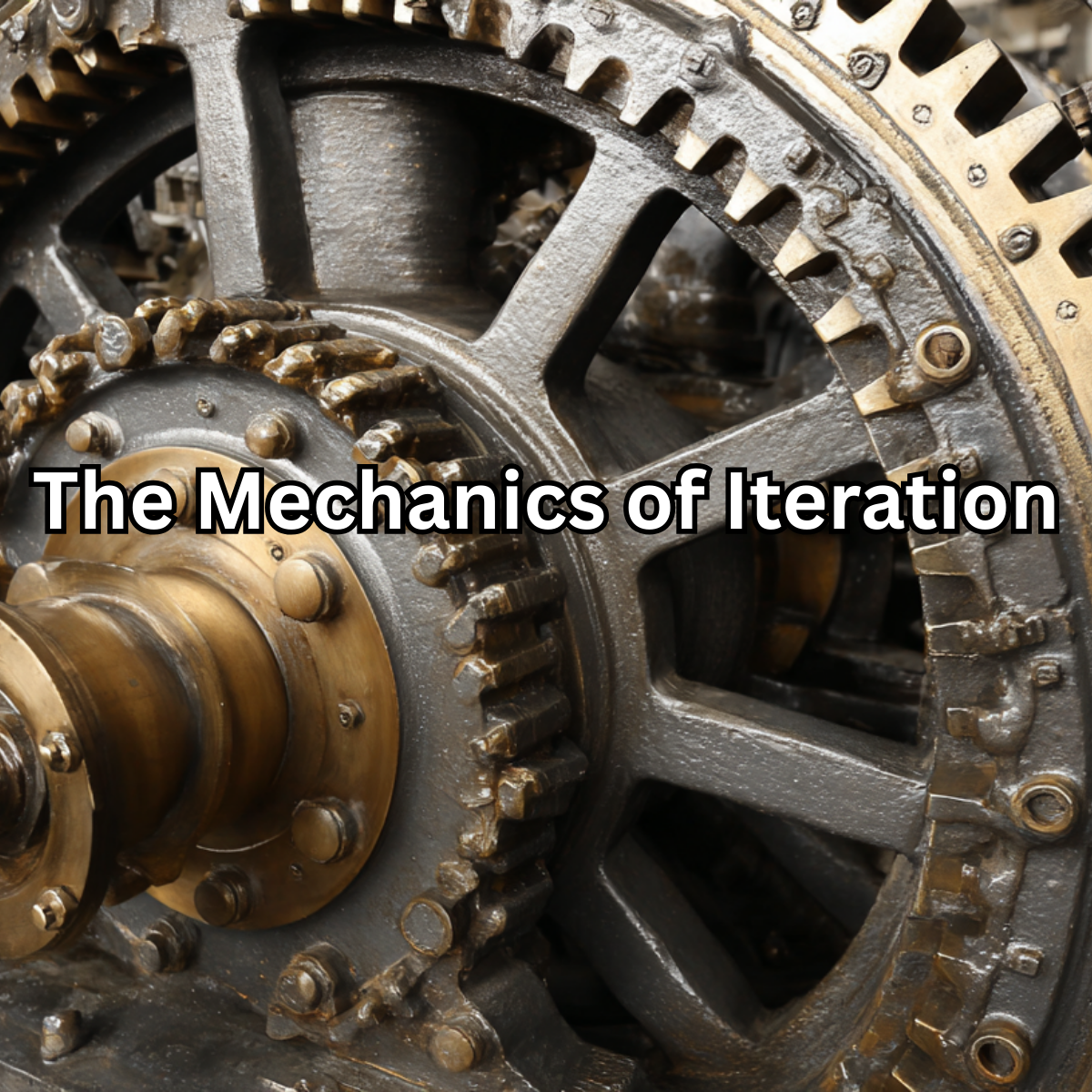
This is not a mindset problem. It is a structural problem. Iteration does not fail because people stop caring. It fails because the mechanics of how work gets done do not require it. If iteration is something you add on top of the work, it will eventually get dropped. If iteration is part of the work itself, it becomes inevitable.
I learned this the hard way. I used to believe that if I just reminded the team often enough, if I just made it clear that iteration mattered, then it would happen. It did not. People nodded. They agreed. They intended to do it. But when the deadline arrived, when the pressure mounted, when the next thing demanded attention, iteration was the first thing to go. Not because they did not value it. Because the system did not enforce it.
The shift happened when I stopped treating iteration as a practice and started treating it as a requirement. I built it into the process. I made it impossible to move forward without it. I created checkpoints that forced review. I scheduled a time that could not be skipped. I tied progress to reflection, not just to output. When iteration became part of the mechanics, it stopped being optional.
“If iteration depends on motivation, it will eventually stop. If it is baked into the mechanics, it becomes inevitable.”
So if you want iteration to happen, stop depending on people to remember it. Build it into the system. Make it a step that cannot be skipped. Make it a gate that must be passed. Make it part of how work gets done, not something that happens after the work is done. That is the only way it survives when everything else is competing for attention.