I watched an entire company grind to a halt over a single question. It happened on a weekly management call, the kind where every department reports progress so the finance team can model earnings before the public release. The CEO had a gut reaction to one area of uncertainty. We did not know exactly when manufacturers would release inventory, and the numbers in their systems were often wrong. He said it seemed easy enough to validate. We could just call the vendors and ask them.
On the surface, he was right. But what followed in the next week was a complete refocus of effort across the organization. There were over 6,000 vendors being managed by a large team of people. Getting that information collected, reported, updated, and converted into a single document was nothing less than a full stop on their primary jobs. I remember that week clearly. Every team lead dropped what mattered most to meet this new reporting requirement.
One week later, the SVP in charge delivered the impossible. She produced an accurate report on expected ship dates for 90% of the vendors in the system. Praise went around. Everyone felt proud. But I noticed something that no one else seemed to mention. The detailed report barely moved the forecast. It changed almost nothing about our outlook or our decisions. The needle did not shift.
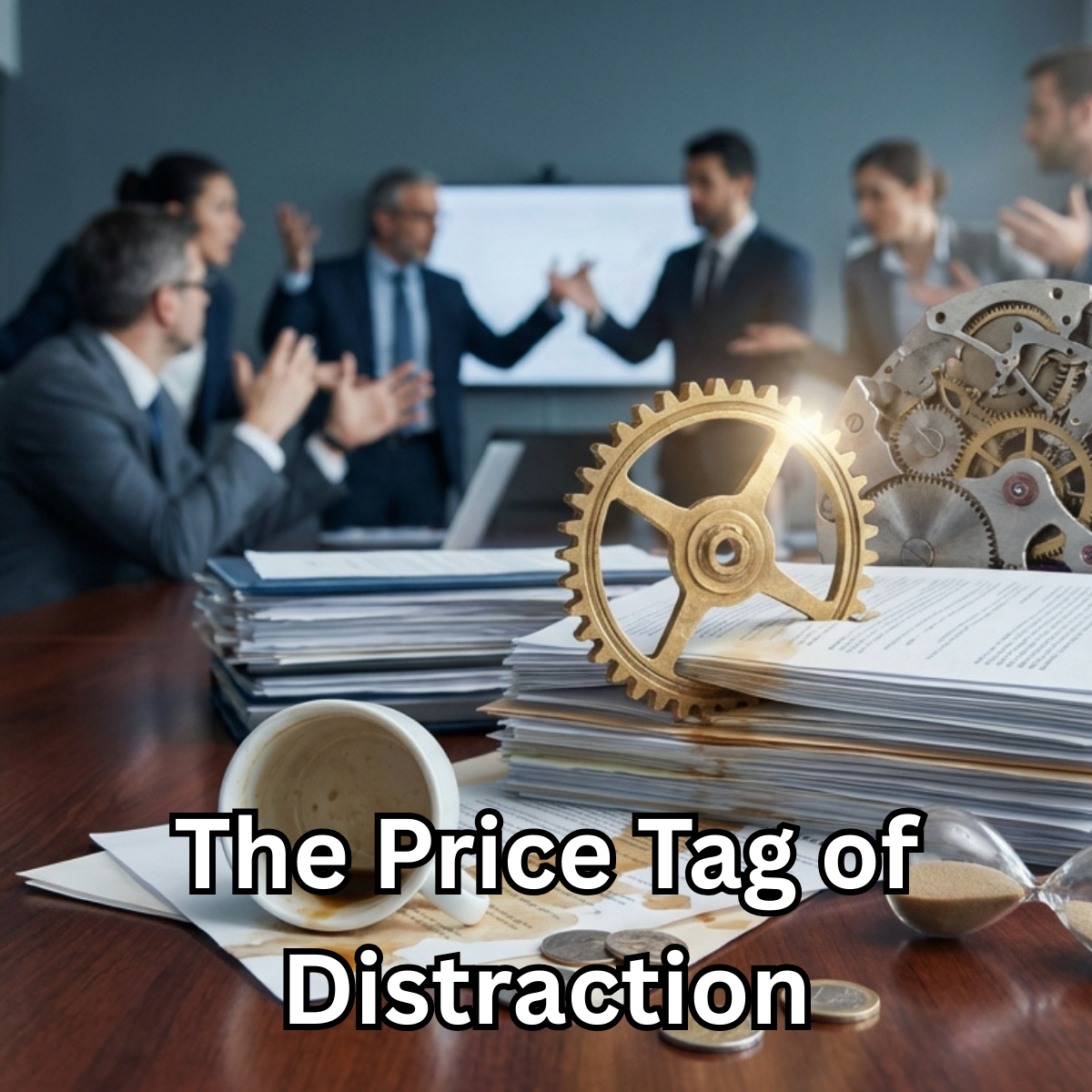
That is when the lesson landed. The price tag of distraction is often far higher than the benefit received from that distraction. You think you are winning because you checked something off your list or cleared an area of ambiguity that was bugging you. But you completely distracted your team from their primary objective. The work that actually moves the business forward got delayed, deprioritized, or dropped entirely while everyone scrambled to answer a question that felt urgent in the moment.
“The price tag of distraction is often far higher than the benefit received from that distraction.”
Every leader must understand this. The cost is not just the hours spent. It is the momentum lost, the focus broken, the energy redirected away from what matters. The question is not whether you can get an answer. The question is whether the answer is worth what it will cost your team to deliver it. Think hard before you ask. Was the juice worth the squeeze? I am going to guess that it was not.
Next time you feel the urge to clear up an area of uncertainty, pause. Ask yourself what your team will have to stop doing in order to give you that answer. Then decide if it is worth the trade.