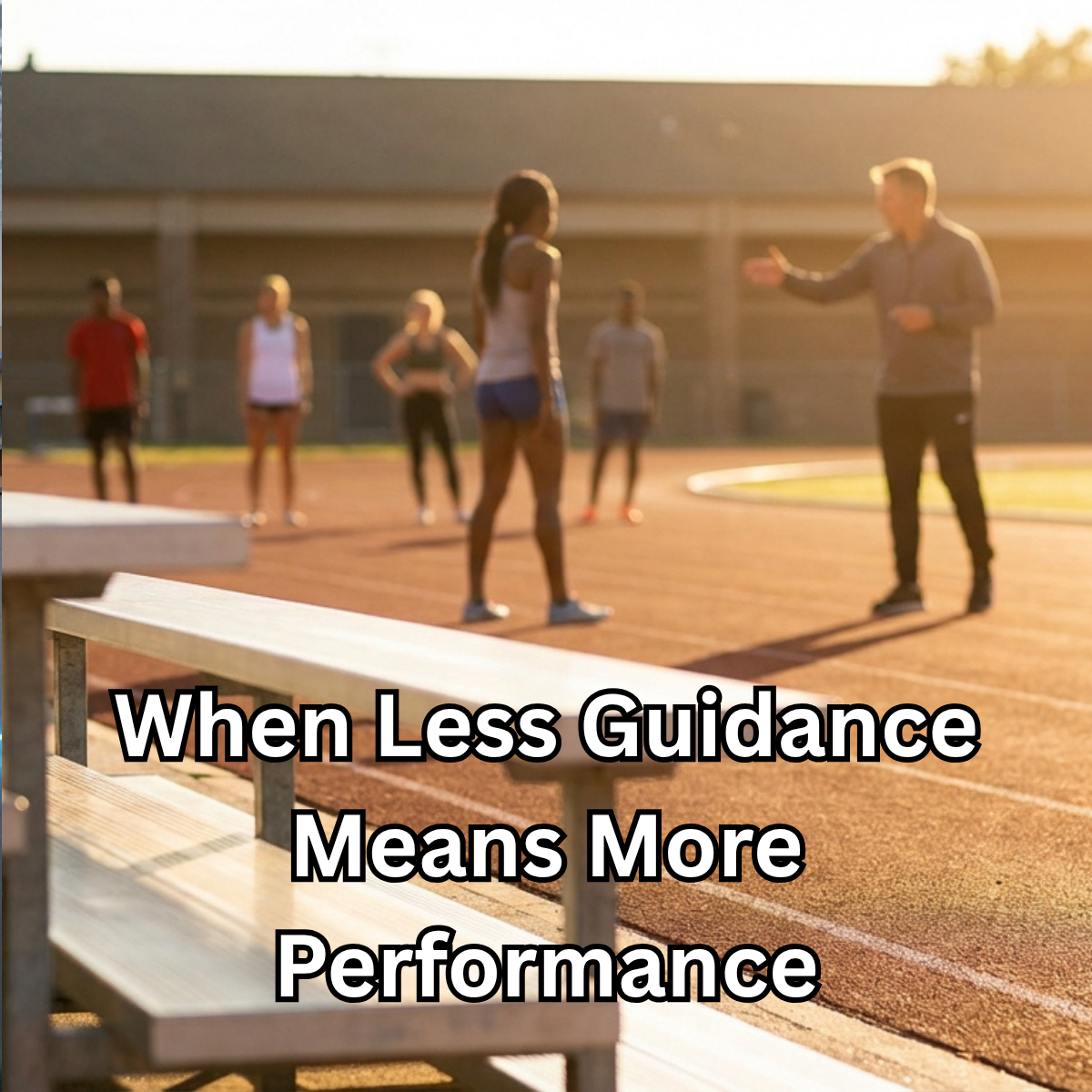
I spent most of today at a track meet, watching my daughter compete. Track meets are a special kind of endurance test for parents. You sit on metal bleachers under the hot sun, trying to stay productive while your attention drifts in and out. Today, that drift turned into something worth noticing.
Between events, I watched two coaches prepare their athletes. The first coach was animated, thorough, technical. He rattled off reminders about blocking in, lifting knees, keeping the head up, maintaining a clear airway. The list kept growing. Each athlete who walked away from that conversation wore the same expression. Confused. Worried. A little overwhelmed.
The second coach worked differently. Athletes would approach him for advice, and he would ask a few short questions. Did you check in at the booth? Yes, good. Do you know when and where you compete? Yes, good. Do you have water? Are you drinking it? Yes, good. What have you eaten? Do you need food? Here, eat something small and light. Then he would finish with this: That is it. That is all you can do. Now sit back, listen to your music, and get yourself mentally ready. You are going to do great.
Every athlete who left that second coach had a different look. Locked in. Serious. Determined.
The difference was striking. The first coach clearly cared. He knew the mechanics. He wanted his athletes to succeed. But in that moment, right before performance, he was loading them with variables. Remember your form. Remember your knees. Remember your breathing. What the athlete actually hears is this: there are ten things I could mess up. That creates hesitation. It breeds confusion.
The second coach had done this before. He understood something fundamental about high pressure moments. More input does not equal better performance. When someone is about to perform, their brain is not in learning mode. They are in execution mode. Emotion mode. Adrenaline mode. Adding technical details at that stage does not help. It harms.
So the second coach removed all of that. He focused only on controllables, not mechanics. He grounded each athlete in certainty. Did you do the basics? Yes. Then you are ready. Certainty reduces anxiety. Reduced anxiety improves performance.
“When someone is about to perform, their brain is not in learning mode.”
I sat there on those bleachers thinking about how often I get this wrong. How many times I have tried to help someone by giving them more information, more reminders, more things to think about, right when they needed less. The impulse to add is strong. It feels like care. It feels like thoroughness. But in the moments that matter most, subtraction is the better gift.
The next time someone I care about is about to step into something hard, I am going to ask myself what the second coach knew to ask. Are the basics handled? Then step back. Let them execute. Trust that they already have what they need.



Very interesting advice and observation. Though you didn’t say if the second team did better (of course there were a lot of other variables at play).