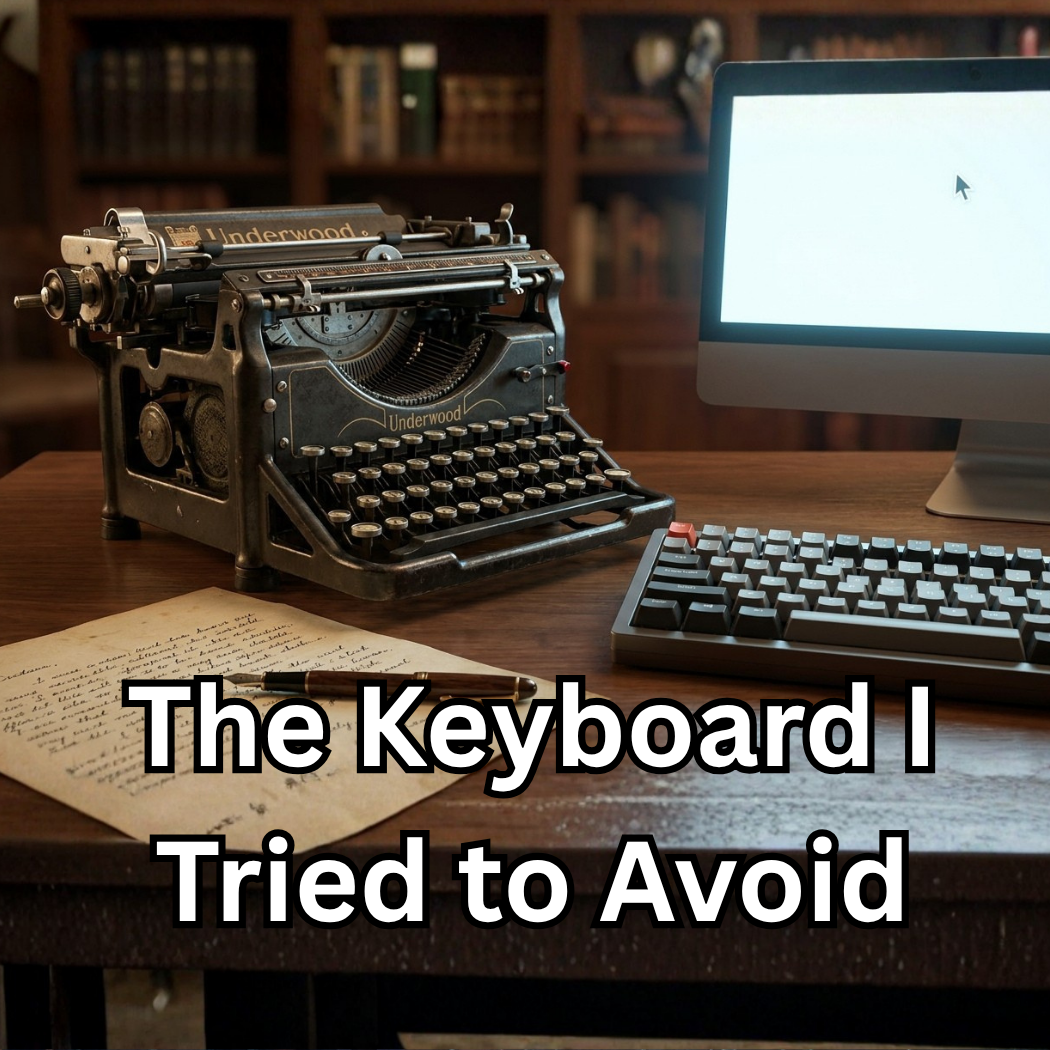
When I was a child, computers barely existed. They were science fiction, or giant boxes sitting in the middle of office buildings. Most work was still done on paper. I did not stop using my old Underwood typewriter for college assignments until my second year. Yesterday, I wrote a note to my mother for her 80th birthday, and I wrote it in cursive.
Cursive felt forced, slow, even frustrating at the time. But now it carries a kind of intimacy. That note to my mother probably meant more because it was not typed. Meanwhile, typing, once dismissed, became the invisible backbone of my entire day. One became rare and meaningful. The other became constant and essential.
I learned to write cursive in third grade, and I hated it. I got a grade of “needs improvement,” with the comment “pleasure to have in class, needs to focus.” I must have paid some attention because I can write in cursive, and if I spend my time, the script actually does not look that bad. I remember my mom telling me when I was around that age that the most important thing for me to learn was how to type. I scoffed at that. I had no idea the proliferation that the PC would have.
We had Apple computers in middle school, but we only had five of them. I got a small Radio Shack PC at home with a keyboard that I used to write some basic programs, but that quickly got replaced by console video games. The keyboard was not as much of an attention grabber as the joystick was. However, my mom was actually correct, even more today. I think I am typing almost all day long. I never am not typing.
I spent a bunch of money on a really fast keyboard with metallic spring loaded keys, and it has made a big difference in my ability to type quickly. However, I still make errors and use the backspace way too much. Now with AI chatbots, I am always typing. Funny how my mom was right even before there were computers, much less AI chatbots.
I have gone from a world where writing was physical and deliberate to one where it is constant and fluid. Yet somehow, the handwritten note still stands out. It suggests that even as tools evolve, certain forms of expression do not lose their value. They just become more intentional.
“Even as tools evolve, certain forms of expression do not lose their value. They just become more intentional.”
I spent years trying to avoid the keyboard, and now I cannot seem to put it down. But when I really want to say something that matters, I still pick up a pen. The next time you need to say something that matters, consider writing it by hand. Not because typing is wrong, but because the deliberate act of writing carries weight that typing cannot replicate.