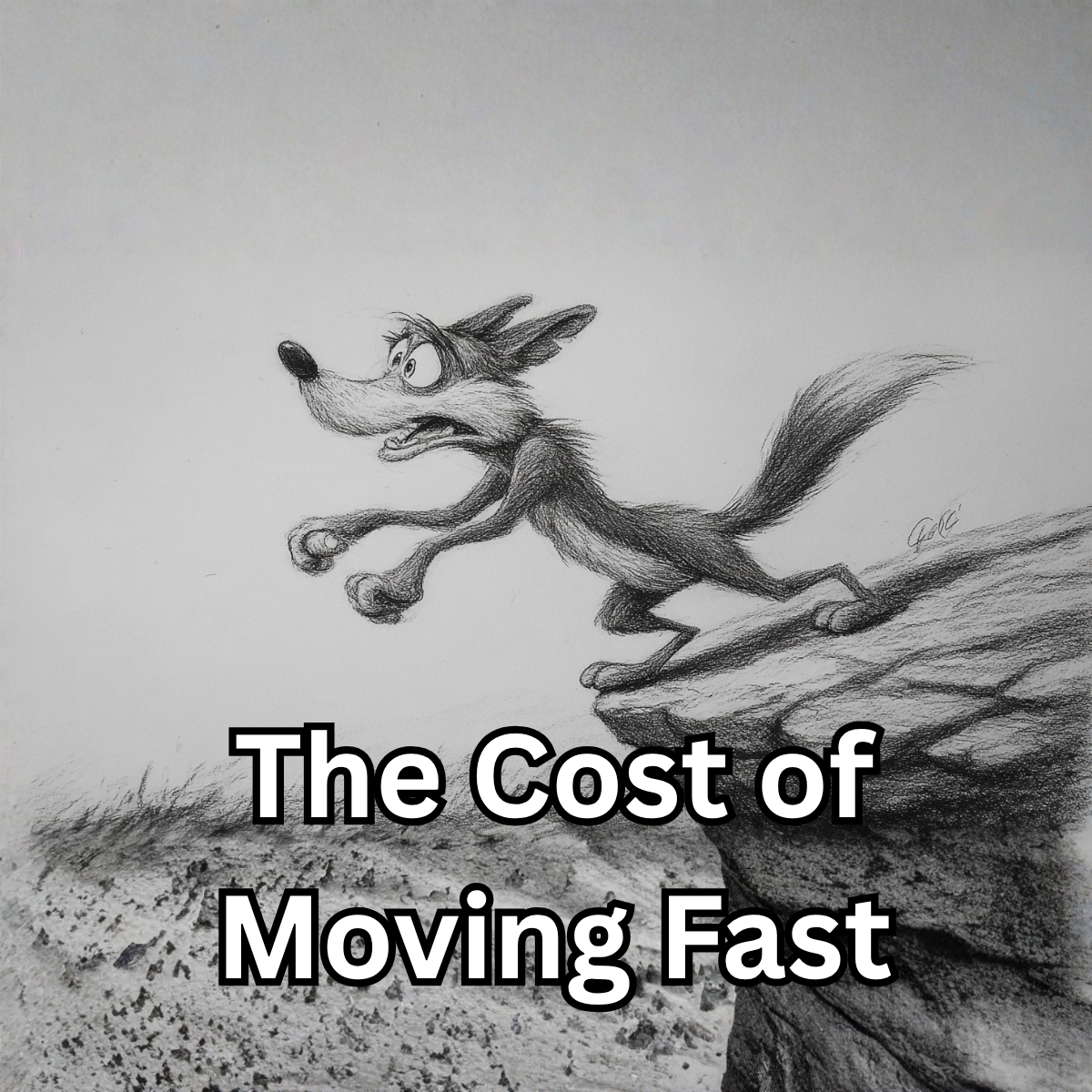
I was watching a team deploy code last Thursday when the build broke. Not a small break. A full stop. The engineer who pushed it looked surprised, then frustrated, then defensive. They had been moving quickly, trying to hit a deadline. The speed had worked until it did not.
This is the pattern I see everywhere. When you increase speed, you increase mistakes. That is not opinion. It is physics. It is written into the way systems work, the way people work, the way attention works. You cannot move faster and expect the same error rate. The errors will come. The only question is whether you are ready for them.
Speed exposes weakness. It reveals gaps in your process, your communication, your assumptions, and your preparation. When you move slowly, many of those weaknesses stay hidden. You have time to catch them before they matter. You have room to adjust. When you move quickly, they surface. The gap in your testing shows up in production. The unclear instruction becomes a miscommunication. The assumption you never questioned becomes the reason something breaks.
The mistake is not the problem. The problem is pretending speed will not create mistakes. The problem is acting like you can move faster without changing how you operate. You cannot. If you try, you will spend more time fixing what breaks than you saved by moving quickly in the first place.
But that does not mean you should slow down. It means you should become more aware. It means you should expect the mistakes and build for them. You can create tighter feedback loops so you catch errors early. You can inspect more often so small problems do not become large ones. You can correct quickly so mistakes do not compound. You can avoid turning small errors into major failures.
This requires a shift in how you think about speed. Speed is not about moving without friction. It is about moving with awareness. It is about knowing that mistakes will happen and having a system to recover from them. It is about humility. It is about accepting that faster means messier, and messier is fine as long as you are watching.
I have watched teams try to move quickly without this awareness. They push hard, hit a wall, and then blame the speed. They slow down, thinking that will solve the problem. But the problem was never the speed. It was the lack of preparation for what speed requires. They did not build the feedback loops. They did not inspect often enough. They did not create a system for recovery. So when the mistakes came, they had no way to handle them.
The teams that move quickly and survive are the ones who expect the mistakes. They do not panic when something breaks. They do not stop moving. They fix it, learn from it, and keep going. They know that speed does not require perfection. Speed requires awareness, humility, and a system for recovery.
“Speed does not require perfection. Speed requires awareness, humility, and a system for recovery.”
So if you are trying to move faster, do not pretend the mistakes will not come. They will. Expect them. Build tighter feedback loops. Inspect more often. Correct quickly. Create a system that can recover without losing momentum. That is how you move fast without breaking everything. That is how you turn speed into an advantage instead of a liability.
The next time something breaks because you were moving quickly, do not slow down. Ask what you missed. Ask what you can inspect more often. Ask what you can build to catch the next mistake sooner. Then keep moving.