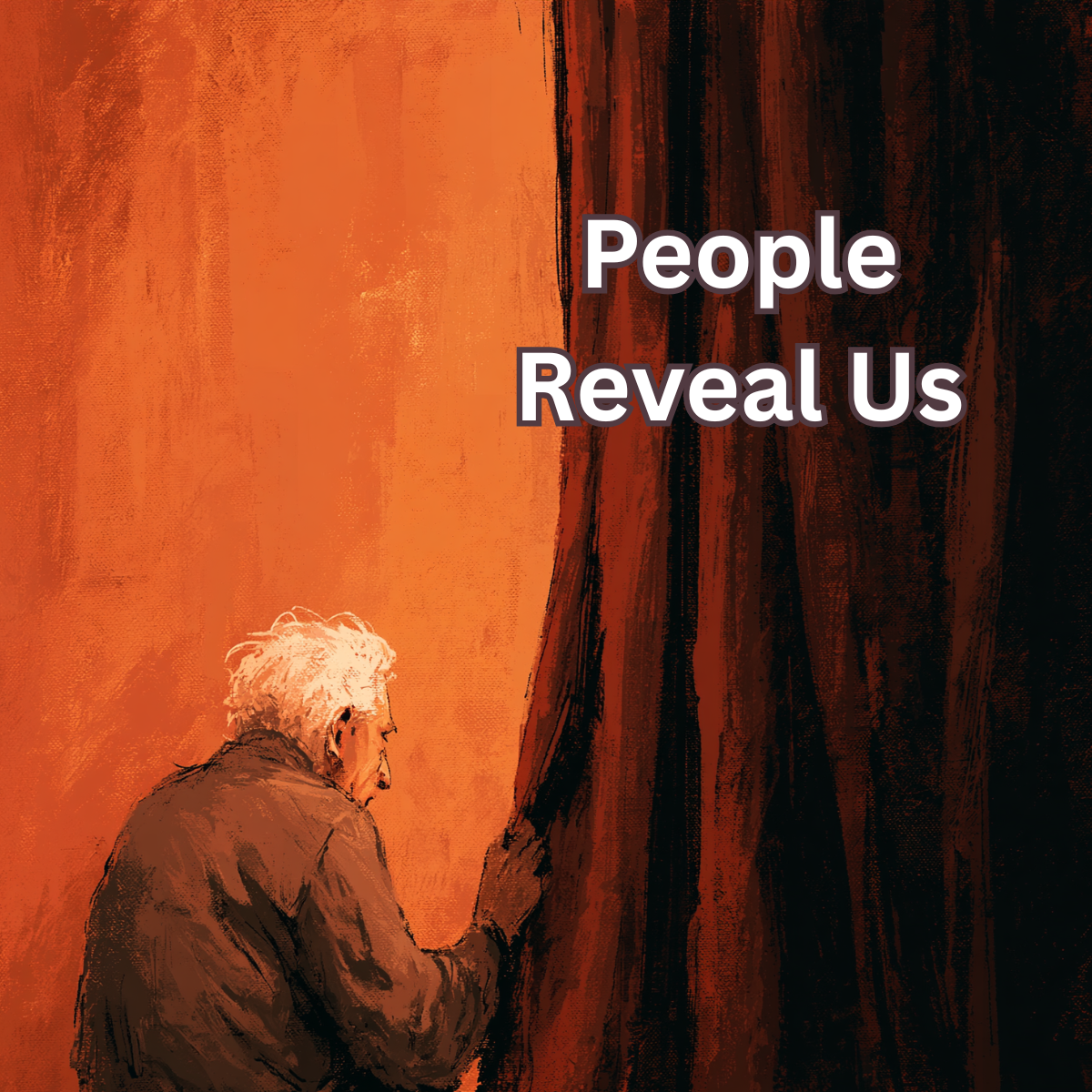
I was listening to someone talking who had just said something that made my chest tighten. It was not a cruel comment. It was not even directed at me. But the reaction was instant. My shoulders tensed. My jaw set. I felt the familiar pull of defensiveness rising before I could name what had triggered it. That moment taught me something I have been learning slowly over the years. People do not just enter our lives. They reveal us.
A difficult person can expose impatience we thought we had conquered. A trusted friend can show us gifts we did not know we had. A spouse, child, colleague, customer, competitor, mentor, or even an enemy can become a mirror. They bring something out of us. Sometimes it is love. Sometimes it is anger. Sometimes it is insecurity. Sometimes it is courage. That is why relationships are so powerful. They do not merely add experiences to our lives. They draw hidden things out of us.
The people we meet often become the catalyst for our most meaningful growth because they force us beyond theory. It is easy to believe we are patient until someone tests our patience. It is easy to think we are forgiving until someone wounds us. It is easy to imagine ourselves generous until generosity costs us something. It is easy to believe we are humble until someone corrects us, ignores us, outperforms us, or misunderstands us. People make character real.
At the same time, people can also be the source of our deepest pain. The same doorway through which love enters is often the doorway through which grief, betrayal, disappointment, rejection, and loss enter as well. We cannot experience the full richness of connection without also becoming vulnerable to hurt. To know people deeply is to accept some measure of risk. But maybe that is part of the design.
Growth does not usually happen in isolation. Isolation can preserve us, but it rarely transforms us. We may become safer by withdrawing, but we do not necessarily become wiser, kinder, stronger, or more whole. Those things are often formed in the tension of relationship. Learning when to speak, when to listen, when to forgive, when to set boundaries, when to stay, when to leave, when to trust again, and when to stop handing sacred parts of ourselves to people who have not shown they can handle them carefully.
The lesson is not that every person should have access to us. Some people grow us by loving us. Some grow us by challenging us. Some grow us by leaving. Some grow us by teaching us what we must never again tolerate. In that way, people are both invitation and test.
They invite us to become more compassionate, more discerning, more courageous, more honest, more faithful, and more grounded. But they also test whether our values are real. They test whether we can love without losing ourselves. They test whether we can forgive without becoming foolish. They test whether we can remain soft without becoming weak, and strong without becoming hard.
Maybe the goal is not to avoid pain, because a life without relational pain would likely be a life without deep relational love. The goal is to let pain become wisdom rather than bitterness. To let disappointment become discernment rather than cynicism. To let love stretch us without destroying us.
“People are our greatest opportunity for growth because people are where our inner life becomes visible.”
People show us where we are healed. They show us where we are still wounded. They show us what we value. They show us what we fear. They show us who we are becoming. And perhaps one of the great marks of maturity is learning to receive the growth without worshiping the person, learning from the pain without becoming defined by it, and continuing to believe that connection is worth the risk.
So the next time someone brings something out of you, pause. Notice what surfaced. Ask what it reveals. That moment of tension, that flash of joy, that unexpected reaction is not random. It is information. It is showing you something true about where you are right now. And if you pay attention, it will show you where you need to go next.