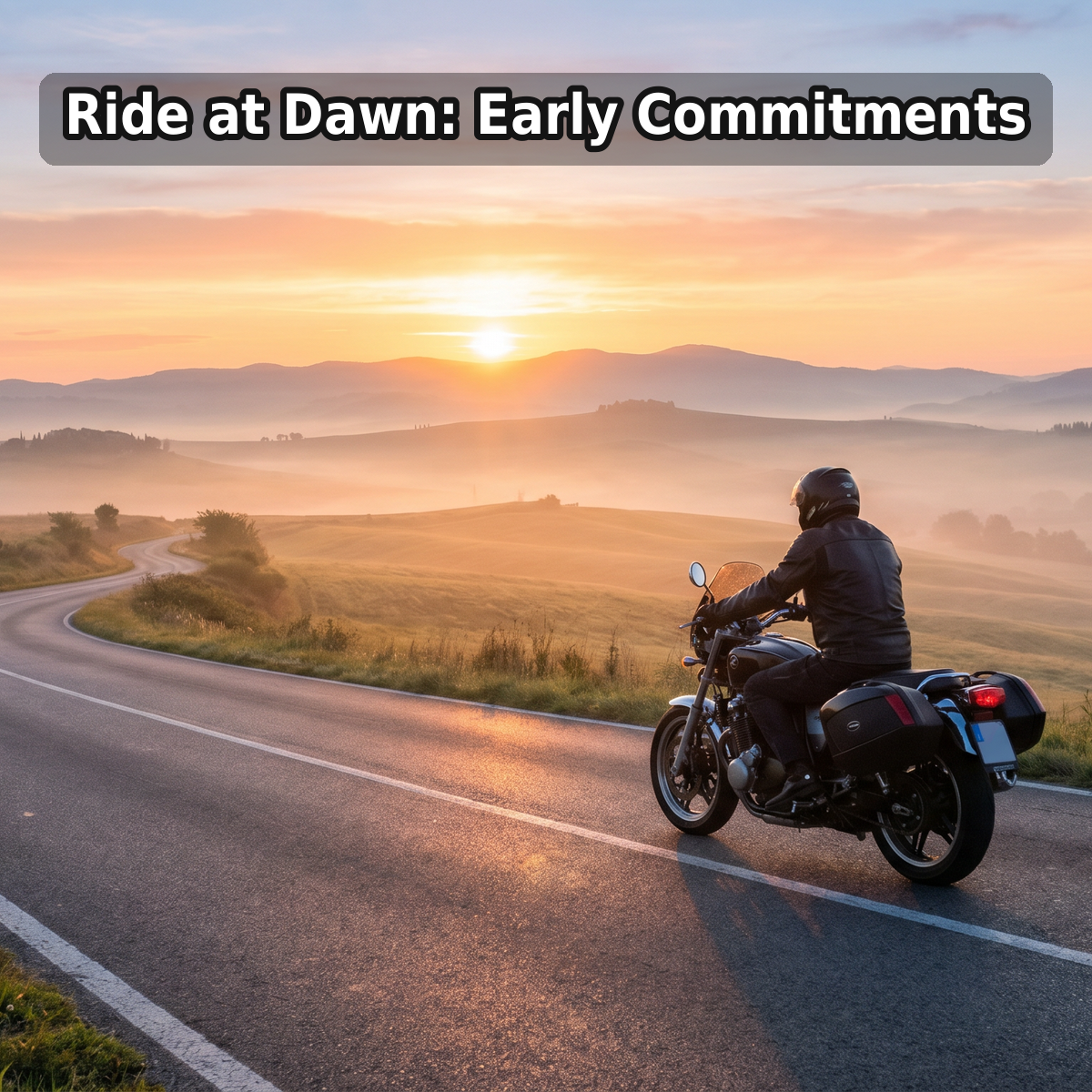
Ride at Dawn
At the end of some days, I already know whether tomorrow will matter.
Not because the whole day is planned. Not because I suddenly became more disciplined at night. I know because there is one thing that cannot be left to chance, and if it is going to get done, it has to happen before the day starts making other plans.
That is what I mean by Ride at Dawn.
More than a motto
For me, this is not a dramatic phrase. It is a practical one. It is the quiet decision made before sleep that tomorrow’s most important commitment will be handled early, before distraction, delay, travel, fatigue, or trivial tasks get their turn.
Every day offers a reset. That part is easy to admire and easy to waste. We like the idea of a fresh start. We like the language of change. But a new morning does not change much unless it meets action quickly.
That is why the first thing matters so much.
Whatever you do first begins to govern the day. If the morning belongs to noise, then noise usually wins. If it belongs to avoidance, then avoidance keeps spreading. But if your first energy goes to the commitment that actually matters, the whole day takes a different shape.
"Your most important commitment should be done before the world gets a vote."
That is not theory. It is structure. It is a way of keeping your real priorities from getting negotiated away by smaller things that arrive louder.
What you do first reveals what rules you
I have come to believe that many good intentions fail for a simple reason. They are scheduled too late.
We leave our most meaningful work for the part of the day when our attention is already fractured. Then we act surprised when it gets pushed aside by email, errands, interruptions, tiredness, logistics, and the hundred low grade demands that never seem urgent until they have stolen the day.
If something matters, let it go first.
Not everything. Just the one thing that carries the most weight. The key strategy. The important task. The piece of work that would make the day feel honest.
This is where routine becomes powerful. You do not rise each morning hoping motivation will visit. You remove the argument. You decide in advance. You make the important thing the early thing, and over time that repeated choice becomes part of your operating system.
That matters because life is always ready to negotiate with your standards.
Later sounds reasonable. After lunch sounds harmless. Tonight sounds responsible. But many commitments die in polite postponement. Not because they were impossible. Because they were unprotected.
Early action beats reactive living. It puts you in motion before the rest of the world starts assigning you a script.
Protect the morning, protect the promise
The obstacles are rarely mysterious. You already know them. Travel. Fatigue. Distraction. The drift into easy tasks. The temptation to feel productive without touching the one thing that actually counts.
So the answer is not just inspiration. It is preparation.
Pick tomorrow’s commitment tonight. Name it clearly. Make it specific. Reduce friction where you can. Do not leave the morning to improvisation if the work actually matters. Good intentions are fragile when they are forced to compete with a busy day.
I think that is why this idea stays with me. Ride at Dawn is not about waking up early for its own sake. It is about refusing to let your highest commitments live at the mercy of your lowest impulses.
It is about acting before excuses get organized.
Tonight, before you close the day, choose the one task that matters most tomorrow. Then get up and do it first.
Ride at dawn.