I recently returned from a wilderness trip. This morning, I walked over to my water purifier, filled a glass, and within two seconds had sixteen ounces of pure, pristine water.
A few weeks earlier, obtaining that same amount of water was an entirely different experience.
I was squatting beside a narrow trickle running down a mountainside, working a pump whose filter had become clogged with tannins and sediment. Each stroke produced only a small amount of water. I was tired, hungry, and trying to squeeze out just enough to cook my evening meal and carry me through the night.
In the wilderness, water is never an afterthought. It is a constant concern.
Our entire journey was planned around the availability of reliable water sources. We studied maps, identified streams and springs, and calculated how much water we would need to carry between them. We looked for sources that were flowing freely and were less likely to be contaminated. At every stop, we pumped, filtered, boiled, filled bottles, and checked what lay ahead.
You rarely travel for long without thinking about where your next water will come from.
Water became the center point of the journey. It determined where we camped, when we rested, how far we traveled, and whether we felt secure. When our bottles were full, we felt relief. When the next source was uncertain, concern began to creep in.
More than anything, water became a symbol of vitality.
There was something deeply renewing about arriving at a stream after a long stretch of dry trail. The sound of moving water immediately lifted our spirits. Drinking it restored energy. Washing dust from our hands and faces made us feel human again. Much of our gratitude during the trip centered on finding water and experiencing its ability to revive us.
That reminded me of a story my father told me when I was a child.
My great-grandfather supposedly collected jars of water from different parts of the United States. He was searching, in his own way, for the Fountain of Youth. I do not know how seriously he took the idea, but I have always loved the image of him traveling from place to place, filling jars, wondering whether one of them might contain something extraordinary.
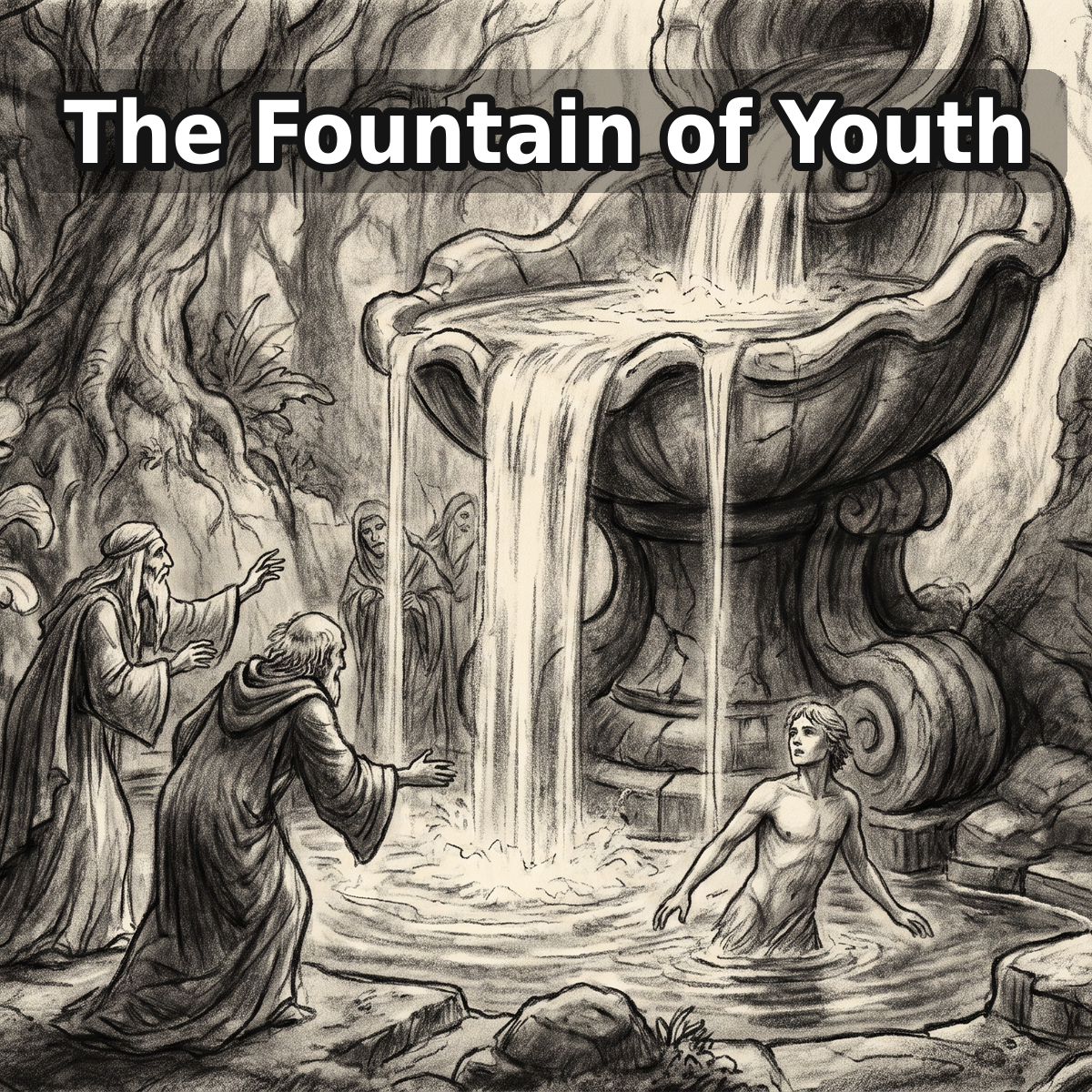
The legend of the Fountain of Youth is much older than the Spanish exploration of the Americas. For centuries, people told stories of distant springs, rivers, and wells with the power to heal illness, restore strength, or reverse the effects of age.
When Spanish explorers reached the Caribbean, they heard accounts of a northern land known as Bimini. It was described as a place of abundance. Over time, Indigenous geography, European folklore, and the ambitions of explorers became mixed together. Bimini was eventually associated with a miraculous spring, and the legend became connected to Juan Ponce de León.
Perhaps the explorers misunderstood the symbolism.
A spring does not have to make an old person physically young to be a fountain of youth. Water already possesses the power to renew. It restores the exhausted, revives the dehydrated, cleanses the body, and sustains every living thing. To a traveler who has gone too long without it, a clear spring can feel miraculous.
Since returning home, I have become more aware of how easily we take water for granted.
The other day, I sat in a restaurant and listened as we complained about the taste of the tap water. Yet there it was, in unlimited abundance. Someone had collected it, treated it, transported it, tested it, and delivered it directly to our table. We had done nothing to procure it. We simply lifted the glass.
There is nothing wrong with preferring water that tastes good. But there is something humbling about realizing that what we casually criticize would feel like an unimaginable luxury in many places—and would have felt like a miracle to me on that mountainside.
The wilderness reminded me that, of all the habits associated with good health, one of the simplest is also one of the most fundamental: drink water regularly.
We often search for complicated ways to improve our energy, health, and vitality. We buy supplements, adopt elaborate routines, and chase new theories. Yet the body continues to depend on the same basic elements it has always needed: water, food, movement, sleep, and rest.
Is there a literal Fountain of Youth hidden somewhere in the world? I doubt it.
But figuratively, perhaps we drink from one every day.
Each glass of clean water is an opportunity for renewal. It may not reverse our age, but it sustains our life. It restores what has been depleted. It gives the body what it needs to continue the journey.
The fountain may not be hidden on some distant island.
It may have been flowing from the tap all along.