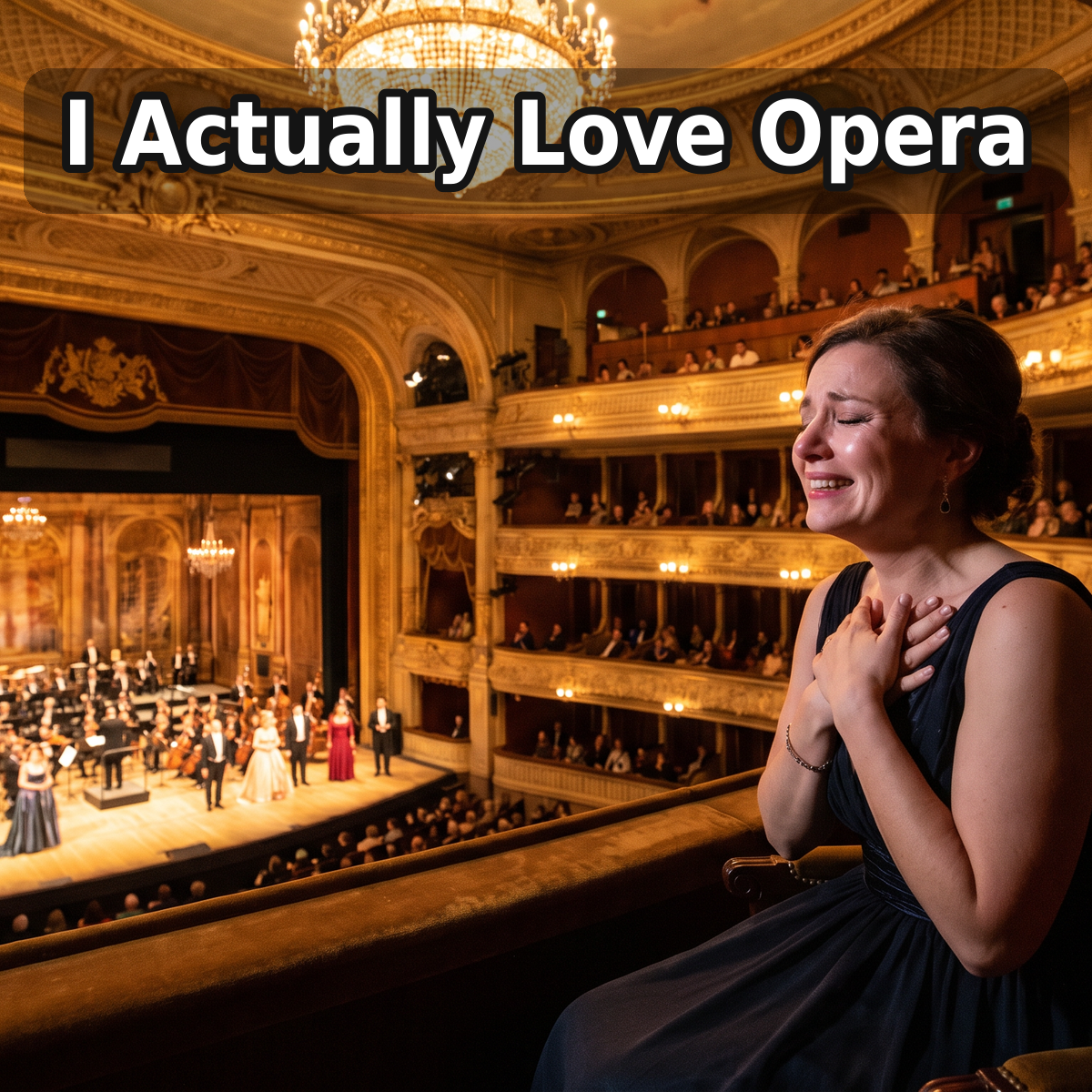
I actually love opera. I like the music, the drama, the history, and the sheer theatrical excess of it. I like that a story can take three hours to tell and that nobody seems particularly concerned about efficiency. Yet for some reason, saying “I love opera” can feel slightly more revealing than saying I like a particular restaurant or football team.
That feeling interests me because opera itself is not the issue. The issue is what we imagine other people might conclude from the information. Someone might hear “opera” and think pretentious, old-fashioned, intellectual, or wealthy. The label may be completely inaccurate, but once we know that labels exist, we begin anticipating them.
We do this with much more consequential parts of our lives as well. Someone may hesitate to mention a religious affiliation because they know others may immediately assume a long list of beliefs. Someone who has been diagnosed with a mental health disorder may worry that people will begin interpreting ordinary behavior through that diagnosis. Even harmless interests, from professional wrestling to poetry, can be quietly omitted when they do not seem to fit the image we think others have of us.
Over time, this can turn into a subtle form of self-editing. We become selective about which pieces of ourselves we reveal, not because those things are private, but because we are trying to manage how other people categorize us.
There is an important difference between privacy and concealment. Privacy is the decision that some things simply do not need to be shared. Concealment is different because it is driven by the fear that knowing something about us might change how others see us. One is a boundary; the other can become a burden.
Psychologists have long studied self-disclosure because revealing personal information is one of the ways relationships deepen and people develop a more coherent sense of themselves. That does not mean everyone should announce every belief, diagnosis, hobby, or preference. It does suggest that constantly hiding ordinary parts of ourselves because of anticipated judgment has a cost.
Perhaps a useful question is not, “Should everyone know this about me?” but, “Why am I afraid of them knowing?”
Sometimes there will be a perfectly good reason to keep something private. Other times the answer may simply be that we have spent years trying to avoid a label.
That is why I have come to like the simple statement: I actually love opera.
It is not really about opera. It is a small reminder that other people are free to form whatever conclusions they want about us, but we do not have to organize our lives around preventing them.
There is a certain freedom in becoming a little less concerned with being easily categorized and a little more comfortable allowing people to discover that we are more complicated than the labels they might give us.
So yes, I actually love opera.
I am beginning to think there are probably a few more things worth saying out loud.