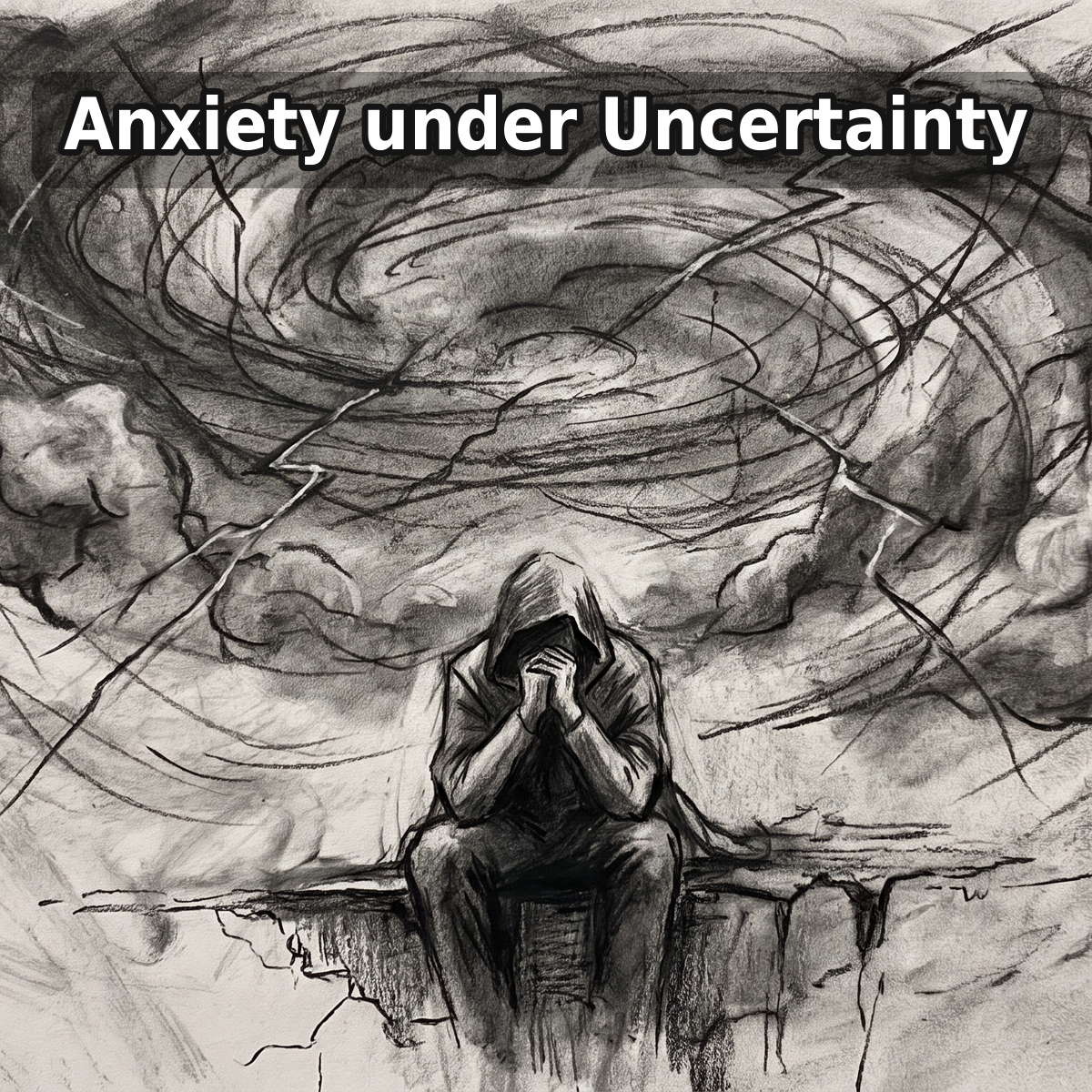
A few years ago, I set a goal to achieve an ultra marathon before my 50th birthday. My goal was to run a 100-miler, but I did not quite hit that objective. Instead, I went for the "50 before 50" target. I would run a 50-mile marathon before my 50th birthday. I was successful, and one of the techniques that I used during the run was to mentally focus on areas in my body where I felt pain. I would essentially cycle through my body, starting at my feet and working up toward my head, asking the question, "Am I feeling pain here?" If the answer was yes, I would focus on it. Why was it painful? How bad was it? Could I manage it? I would focus on it until I felt that I could tolerate the pain in that area and then move on to the next.
The technique proved to be surprisingly effective. I was able to push through knee pain, ankle pain, calf and quad tenderness, and even a small rock in my shoe that was causing me no small amount of distress. I had read many stories of runners who had willed through pain and had learned to focus their minds on resolving issues as if they could somehow control the internal workings of their bodies to repair areas that were in trouble. This all felt a bit far-fetched to me, but I have met some meditation practitioners who swore that they could control things like excessive inflammation, swelling, and joint pain by using concentration.
When you are running for 10 hours straight, you will do just about anything to get through it. So, I started trying this method to aid me in my journey. It worked, and I have always kept an eye open for research or people who have experience with this phenomenon. Yesterday, I came across a new study released: Mizrachi et al., "Voluntary attention regulates acute immune responses in humans," Nature Human Behaviour (2026). This study seems to indicate that turning toward a physical discomfort, rather than distracting yourself from it, actually regulates your body’s inflammatory response. The concept is that leaning in is not just a mindset; it shows up in your biology.
This is fascinating and direct proof that there may be some truth to this idea that I learned while running long distances. Across three experiments in healthy volunteers, researchers gave people an identical immune challenge and then had them either attend to the sensations at the inflammation site or distract away from it. Attending to the body measurably changed both the size and the time-course of the inflammatory response, an effect present in roughly 90 percent of participants across two independent groups.
This would indicate that it is better to focus on the problem area than to ignore it. So, I suppose this means Goggins’ concept of "Embrace the Suck" has some scientific merit behind it! If this study is accurate, then that means that potentially discomfort met with attention rather than avoidance produces a different, more regulated response inside the body itself. Now, I see the limits of the study. I am not sure that really draws a sweeping conclusion, but it is interesting. I have also seen this happen in the course of my running "through the pain."
So, what can I conclude from this? It seems that focused mental energy on the trouble spots in your body and perhaps your life is a worthy practice. So, apparently, we should lean into our pain.