I developed a superpower over the course of my life without intending to. I had a really hard time understanding things growing up. I desperately wanted to, but some concepts eluded me. They didn’t come easily to me, and my cognition took a while to develop. I did not want people to discover this, so I would pretend that I knew things and then spend countless hours thinking about them until I could finally figure them out. When I finally did figure out the concept, I would enthusiastically teach other people what I had discovered. Over time, people started thinking that I was really smart, which was not the case. I think I am pretty average on an intellectual level, but what I developed was a profound ability to naturally decompose systems into explainable parts. This was my method of figuring things out, and so I naturally gravitated toward job roles where this type of thing served me well.
I found that I could look at a complicated thing, determine what its meaningful components are, understand how those components interact, and then compress the whole thing into a model that another person can actually hold in their head. My first real job was teaching Microsoft Excel to a team of accountants at a CPA firm. I was nervous because it was onsite, in their office, and I had never opened Excel in my life. I had to learn the program over the weekend before my first class on a Monday.
My instinct kicked in. I did not just need to learn Excel. I needed to answer the following questions:
What are the essential concepts here?
In what order must someone understand them?
What can I safely leave out?
What analogy will make this click?
That course was incredibly successful and basically launched my career into computer science. One person told me that they had never had a better course in their life. That was a massive ego boost for me and caused me to change my path in life. What I thought was just a job to pay the bills turned out to be my entire trajectory.
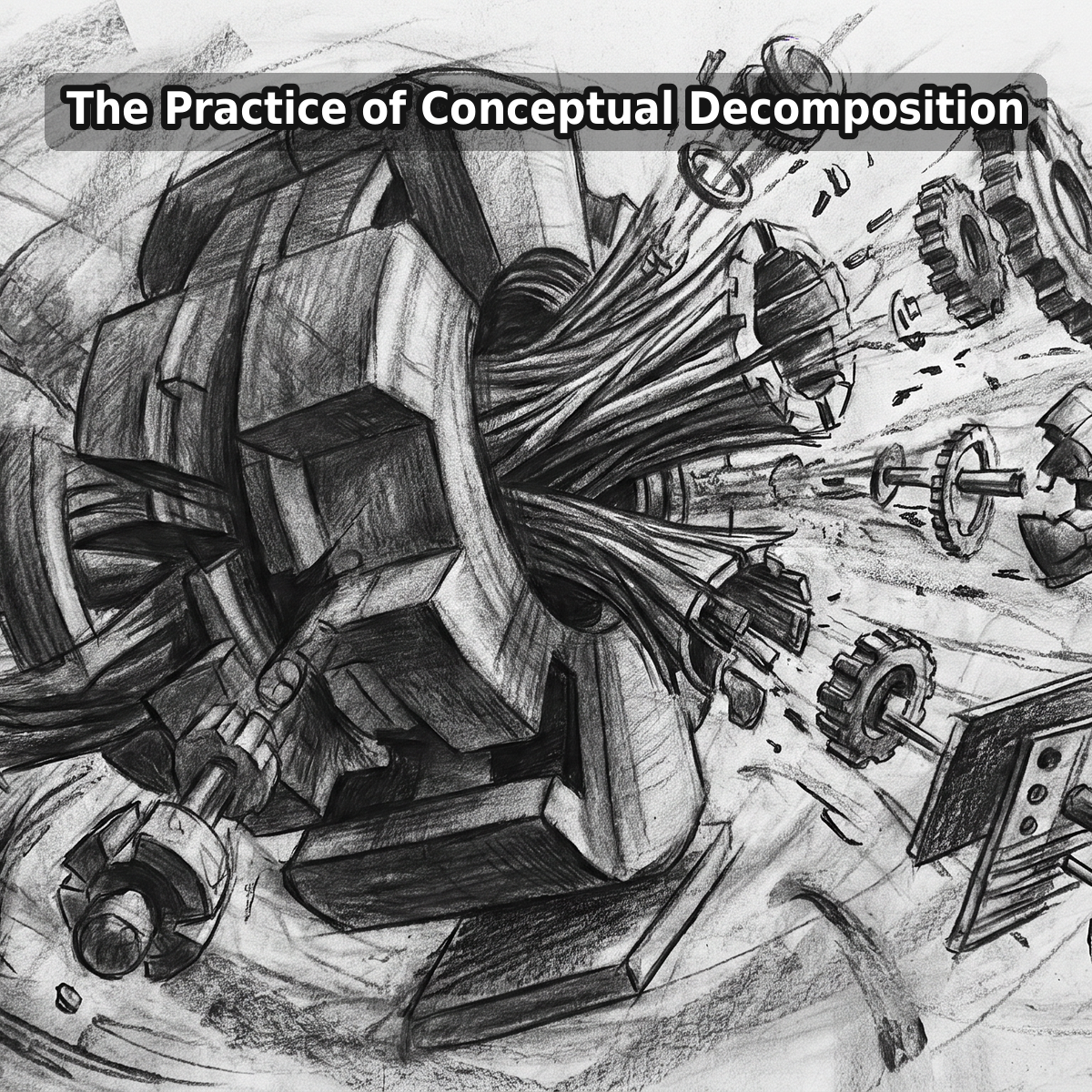
I would later learn in an educational psychology course that this methodology was not something that I invented; it was a process that people were taught, referred to as decomposition. This is why troubleshooting complex problems can be hard for people, because this is not natural. Instead of jumping to answers, it is better first to break the system up into subsystems that can then be easily isolated.
I take this approach when writing about things. I take something vaguely sensed, separate it into ideas, give those ideas names, arrange them causally, discard unnecessary pieces, find an example, and reconstruct everything into a coherent narrative.
Many people are using AI these days. There is no magic intelligence behind any of this. All the hype about AI taking over humanity is funny. At the core, it is really an incredibly large model, running on super-fast computing, with a neural network that is incredibly accurate at predicting the next most logical word or phrase. We have all learned the perils of trusting this too much: answers often look good but aren’t accurate at all, and sometimes they’re even made up.
I brought up this superpower of conceptual decomposition because, if you follow these basic principles, you can avoid most of the challenges a predictive algorithm can introduce. If you ask a Large Language Model (AI) a question, do not accept the first answer. I highly recommend follow-up questions. If, for example, you were asking about something, you might follow up by asking:
"What is this called?"
"What is the underlying concept?"
"Where did this come from?"
"What are the components?"
"Is there a principle behind this?"
People talk about all these ways to craft the perfect prompt to get a better answer out of AI, and some of that may be true. Context always helps, but take it from someone who has been building, designing, and working with complex AI for a long time. If you want a great result from AI, then first try to practice this art of decomposition. Sorry, but AI works better when you actually think.