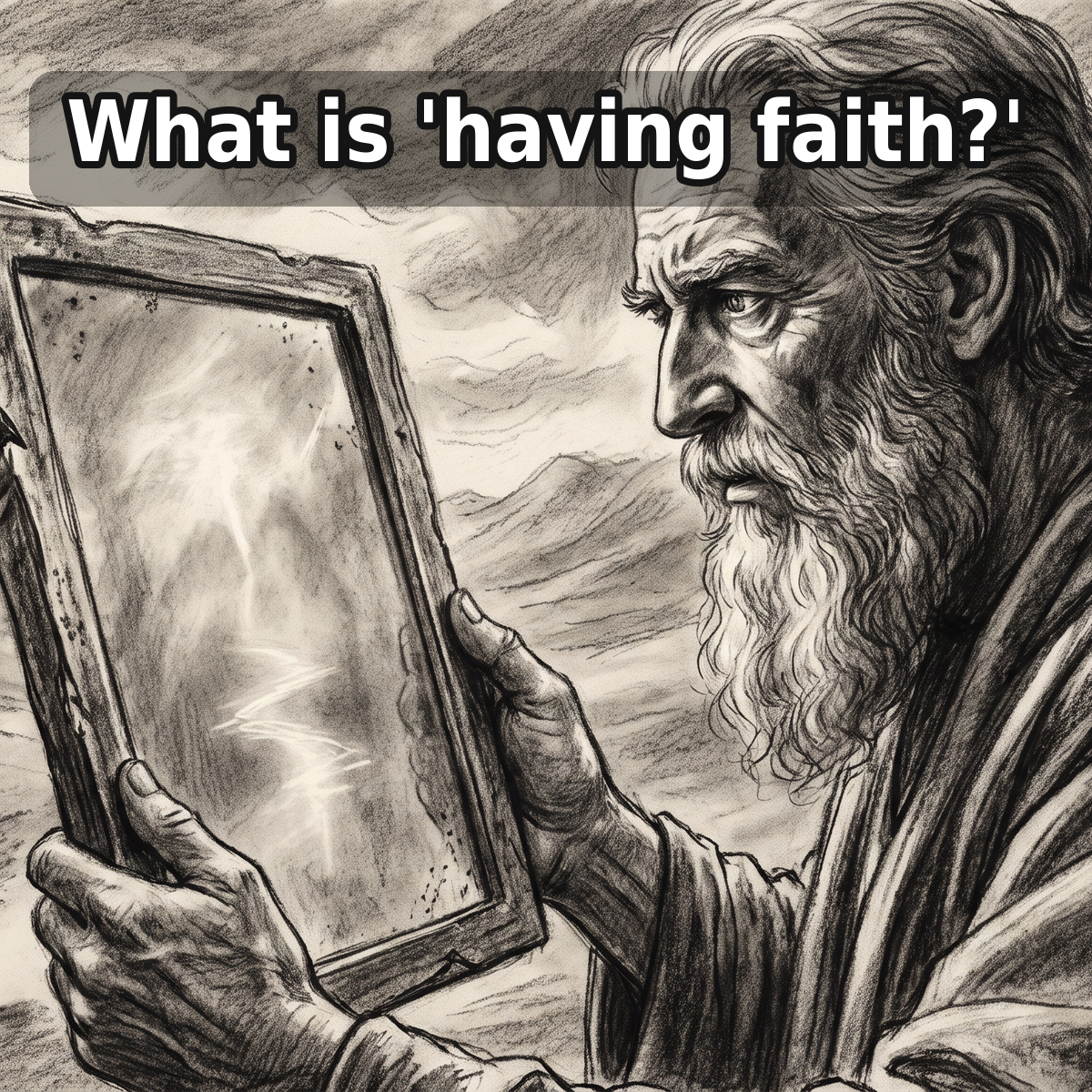
The man looked me in the eyes and said, ‘Every morning when I wake up, I look in the mirror and tell myself that everything I believe is not true.’ This statement shook me, especially coming from a spiritual leader. This man was a giant in my young eyes. He even looked like the Moses I imagined. He was tall and powerful, and his voice could shake the ground; when he spoke, even the rowdiest crowds fell silent. So for him to say this to me left me perplexed, to say the least. What did he mean by this?
That question haunted me for decades, and I have finally come to understand the meaning behind his morning ritual. Belief is the first ingredient to quiescence. When you believe, you have no compelling reason to do anything about it. I met a young man once who said, ‘I believe in God; I am Catholic.’ I think he had said this many times as a dismissive gesture. It allowed him a free pass out of a difficult conversation, so he repeated it frequently. As if to say, ‘Oh, do not worry about me; I am good.’ I then asked him a string of questions.
- Oh, you’re Catholic, so you must attend Mass? No, I have not attended church since I was a boy.
- Well, then you must enjoy reading the bible? No, I do not like to read.
- Then you certainly must listen to Christian music or devotionals? No, that stuff is boring.
- Well, then you must be active in a local charity sponsored by the Catholic Church? No, I do not have time for that.
- How about prayer? Nah, I just feel stupid when I pray.
In this young man’s situation, his belief was an excuse to do nothing. A get-out-of-anything-religious-free card. As the conversation shows, it’s possible to claim a belief system and have absolutely no faith. So what does it mean then, to have faith?
This is lost on many people. Like me when I was young, you look up to other people in admiration of their great faith and intense spirituality, and you imagine some great event they experienced, as Paul did on his way to Damascus. Faith, at its core, is an action that you take in the absence of proof. You have a faint hope that something is true, but have no direct or tangible evidence. Yet you proceed anyway. You take action; you do something, and in so doing, hope that what you are applying your faith toward will come true.
The great fallacy in spiritual life is to believe that those who have this quality have received some divine or direct manifestation. That may happen now and then, but the reality is that the most spiritual people I have met in my life are that way because they have spent a lifetime taking action toward something they have no direct evidence that is true. People can spend their entire lives looking for some great manifestation when the one thing required the whole time was their willingness to act in the face of doubt.
C.S. Lewis wrote in The Screwtape Letters about these devils who were corresponding regarding one of their subjects. Screwtape was really happy when Christianity became Christianity. Meaning that the ideology would replace faith. You would never want to give a human a reason to have faith, rather placate them and lull them into an absobed life where faith would never be necessary. Regardless of your religious persuasion, this is an absolute truth: belief alone becomes an excuse for complacency.
So the man who was Moses in my young mind had taught me a powerful lesson. The worst thing that he could do would be to castrate his spirituality by laying claim to a dormant belief. By waking up each morning and requiring himself to once again set out and prove that his beliefs were well founded, he was effectively teaching me what faith really was. Having faith means to take action, even though you cannot see any direct evidence. To have hope when faced with doubt. To press forward in darkness only to discover light a few steps ahead.