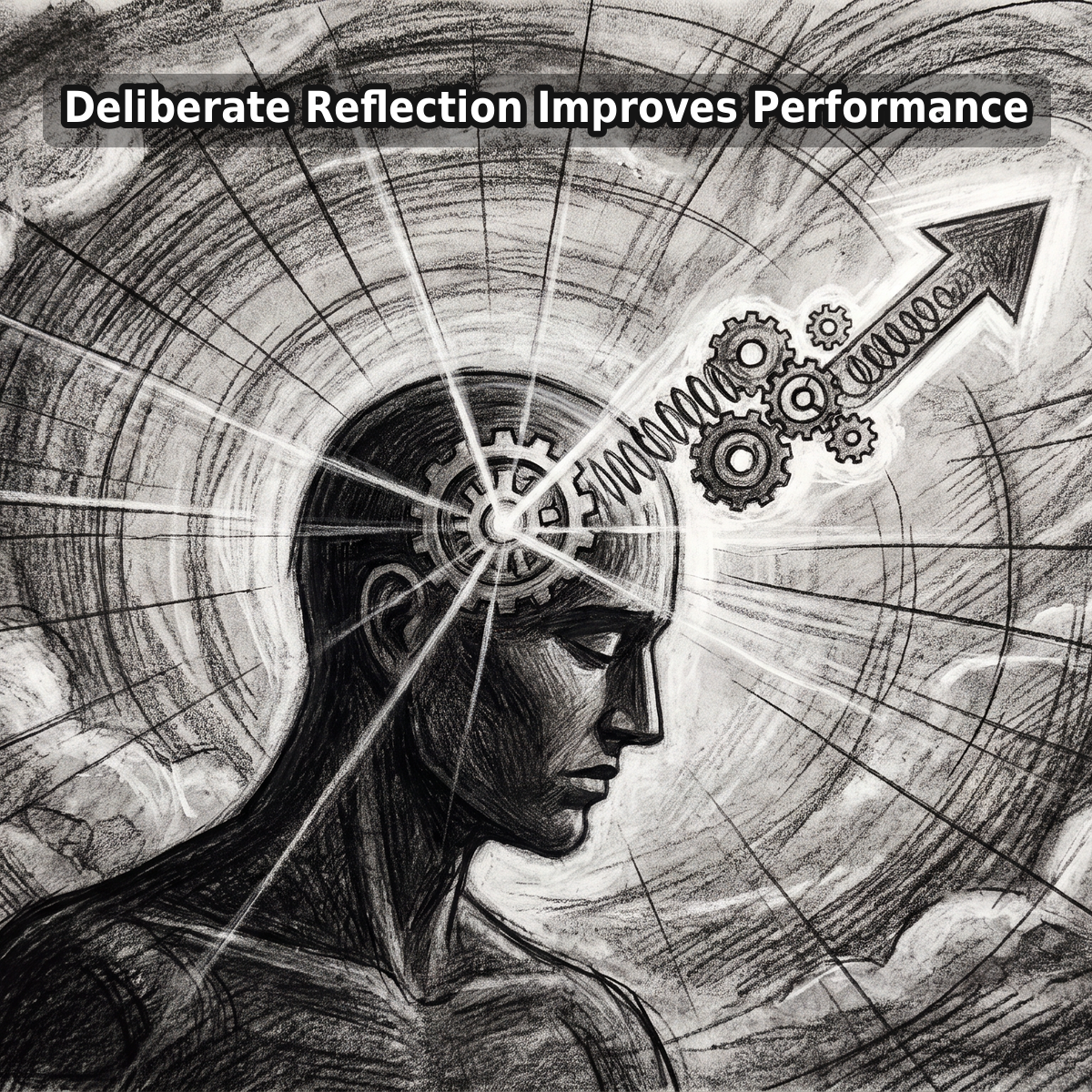
We spend a lot of time and money trying to improve. We listen to books, podcasts, videos and spend countless dollars on ways to improve ourselves. However the single greatest thing that we can do to improve anything we are working on is deliberate reflection. This is rarely done, yet it is provide by many behavioral psychologist as one of the foundational methods for improving subsequent learning. It is clear that reflecting on your previous experience produces far greater improvement then just accumulating experience alone.
Lets talk about chess. One of the most important ingredients to getting better at chess is to play more. The second best thing you can do is review your games, and understand what went wrong and reflect upon what you could do better. True, you get better by playing more chess. Equally true, if you actually review the games you played and reflect carefully on why you won or lost, your chess ability exponentially improves. This is also a well documented and known strategy for improvement.
Here is the reality. Deliberate, purposeful, reflection is necessary for improvement. In the military there is a common phrase known as After Action Review. This is implemented for the same reason. You are not going to improve, and learn from mistakes, unless you dedicate time to reflect on them. So military command is often trained on this concept because learning from our mistakes is mission critical in war and conflict. Nothing ever goes according to play, so having a mechanism to review what went wrong is vital.
For a long time now, I have a ritual I do at the close of each day. I spend a few minutes reviewing what I had planned to do that day and ask myself how I did. I spend that time really thinking, did I do well? What got in my way? What distracted me? Can I do better tomorrow? This does not take long and I write my thoughts down in what I call my 365 commitment journal. This does not take a long time, but it provides me the mechanism to realize if I am making traction toward my goals and if not, what is the adjustment that I need to make so that can make my goals a priority.
So, whether it’s a big project, a personal goal, or just the everyday stuff, taking a moment to look back can really shift things. It’s not about dwelling on what didn’t go perfectly, but more about gently nudging ourselves forward. Think of it as a quiet conversation with yourself, a chance to notice what worked, what felt a bit off, and how you might approach things a little differently next time. It’s a simple practice, but it’s one of those small habits that can quietly, steadily, make a big difference in how we move through our days and improve over time.