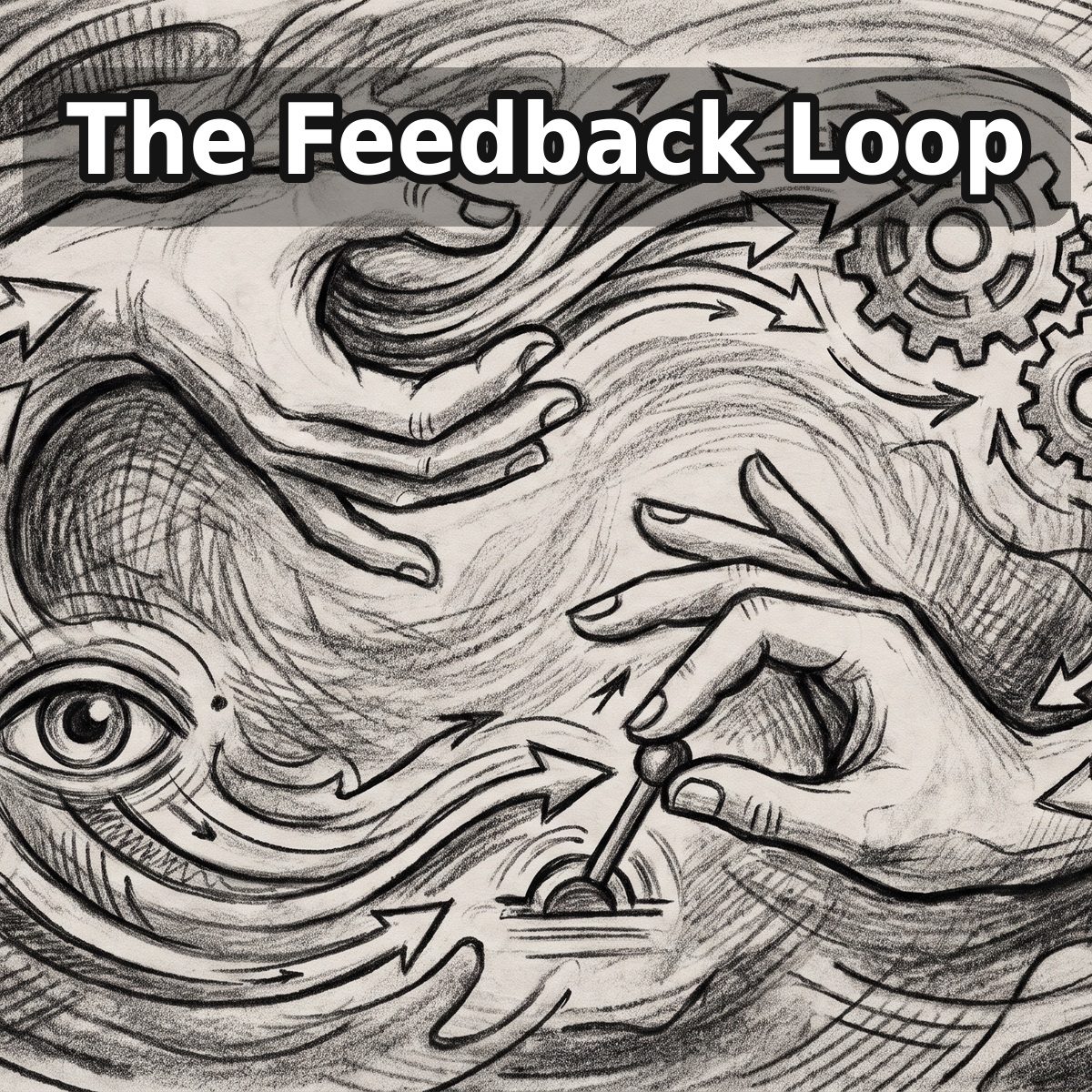
One of the most underestimated concepts, in my opinion, is what is known as a feedback loop. It is a highly effective mechanism, and despite that fact, we tend to dismiss or ignore the concept in planning business and personal projects. So what exactly is a feedback loop?
Simple concept, rarely implemented. For illustration, I will tell you a short story. When I was a child, I would go with my mom to Weight Watchers meetings. If you do not know what this is, it was a fad in the 70s and 80s in which women all over the country would check into these clinics once a week to "weigh in." Now, Weight Watchers provided many things as part of the program. They had a points system, nutritional guidelines, and low-calorie meals that you could purchase. They are still around and have a much more modern approach, but regardless of all the apps, online portals, and GLP drug sales, the most powerful aspect of the program is and always has been the check-in.
My mom would park the station wagon, my sister and I would climb out and follow her into the strip mall location. There my mom would check in, and they would escort her to a scale, and then unceremoniously she would be weighed on a scale that looked like one you would see in a doctor’s office, and there someone would officially note her weight for the week. Did she increase? Did she decline? This would be adjudicated, and sometimes there would be a discussion group to review their progress. I noted that my mom would stay when she was declining, and when she was increasing, we would quietly slip out the side door, get back into the station wagon, and put it in neutral and slowly roll out of the driveway before my mom would fire up the 7.5-liter big block V8 engine in our Mercury Cruiser.
This check-in process, weekly, was a feedback loop. My mom would work hard on being healthy and then show up to the clinic, weigh in, and get her feedback. She would get advice on how to improve and what to do, and then she would go back and try again. This is the feedback loop, and it is quite effective.
Yet we do not do it. This is because we do not like feedback. We do not want the potential for criticism.
I remember in one of my executive jobs, sitting in a meeting with the CEO where we were discussing poor customer satisfaction results. "There must be something wrong with the data, our clients love us!?" Emphasis on the exclamation point, the question mark was to make sure that everyone in the room agreed. Reality was that no matter how you looked at the results, the customers did not think of us the same way that we thought of ourselves. Once the CEO accepted this reality, the next question became, what are we going to do about it? I had one answer: feedback loops. Crickets. My suggestion got a nod, a slight look of confusion, and then we quickly moved onto "better" ideas. I am using the word "better" with more than an edge of sarcasm.
However, feedback loops were the correct answer. The company needed to ask for feedback from our customers, learn from that feedback, make adjustments, and then check back in with the customers to determine if that was successful or not. There is no other way, in my opinion. In the software development world, you live and die by this feedback. You roll out a new software package, and you wait anxiously for the first round of feedback. It is always bad, you know that heading into it. The first glimpse is usually happiness followed by a string of "could you…what if…perhaps…I like this, but…"
This is how the product improves. This is how a company improves. This is how my mom improved. This is how we will all improve in any endeavor we are chasing. Seek for feedback, get the feedback, make an improvement, and then check back in. That is a feedback loop, and it is continuous and never ceases. This is the classic error: people view problems as one-time things, a project that starts and stops. Improvement is never a project and never a one-time thing. If you, your company, or your software product is to improve, then the feedback and continuous improvement cycle needs to be continuous and constant.