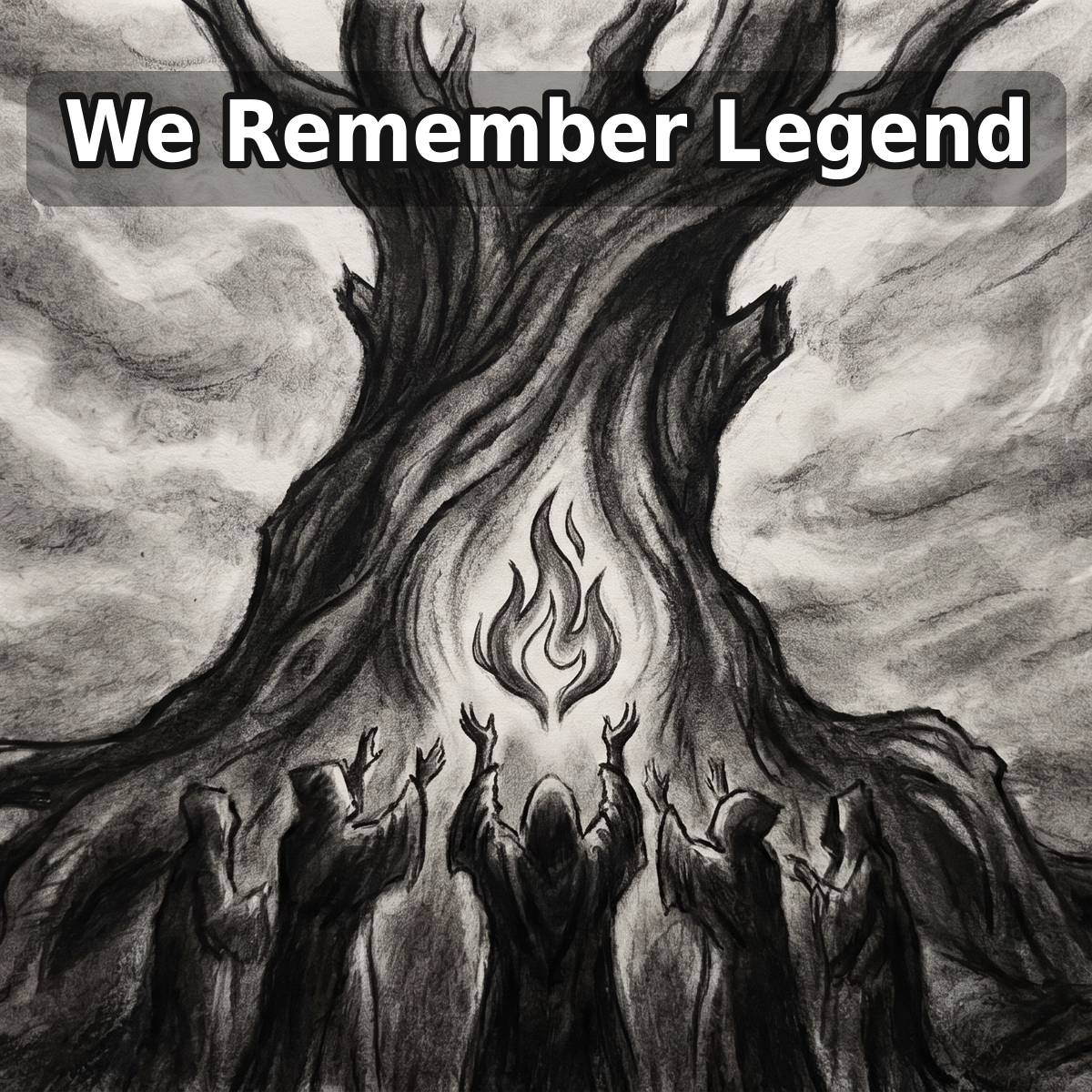
A person or group doesn’t become legendary simply by doing something impressive. Other people have to keep telling the story, and that retelling becomes the legend. History may be what actually happened, but legend is what people decide is worth remembering.
If you extend this concept over a few hundred years, history no longer matters. Essentially, if no one remembers it, then it might as well have not happened, at least in the eyes of those who are alive at the moment of the telling. Extend that over thousands of years, and only the legend remains.
Think of the story of Noah and the ark. Did that actually happen? Was there a flood? Was Noah a real person? I would venture to say yes, and I would be inclined to believe there was a real person and that some event occurred. I would also be willing to say Noah was probably a gifted individual with unique characteristics. However, it is also equally true that his deeds got exaggerated in the retelling. Oral and cultural transmission produced a need to place this remarkable character in a magnificent story, and so that is what happened. Then cultural and symbolic meaning was introduced, and all of this happened because some great Hebrew scholar, perhaps even Moses, decided to write the story down.
Then you ponder: is the story true? That is entirely the wrong question because thousands of years of humanity is not capable of delivering up historical accuracy; it is only capable of producing a story, and that one will always be rooted in legend, at least the ones that survive. So the real question is: what is so meaningful about this legend that humans felt so compelled to hold onto it for so long? Why did they create this legend in the first place?
Consider your own family. What legends do you have? We have several, and it is really interesting to consider how they got created and why they were passed down. I have noticed that some are growing dim, while others are starting to emerge. It’s fascinating what we remember about our own families as generations pass by.
Which leads me to the final conclusion. As I look over the many decades of my life, I wonder what parts of my life would even be considered legendary? Or at least a story the next generation would be compelled to remember, exaggerate, and embellish as the years roll along. Not sure; I might have one or two, but perhaps this is an opportunity to find something that I could do with the last half of my life that might be considered legendary in some fashion?