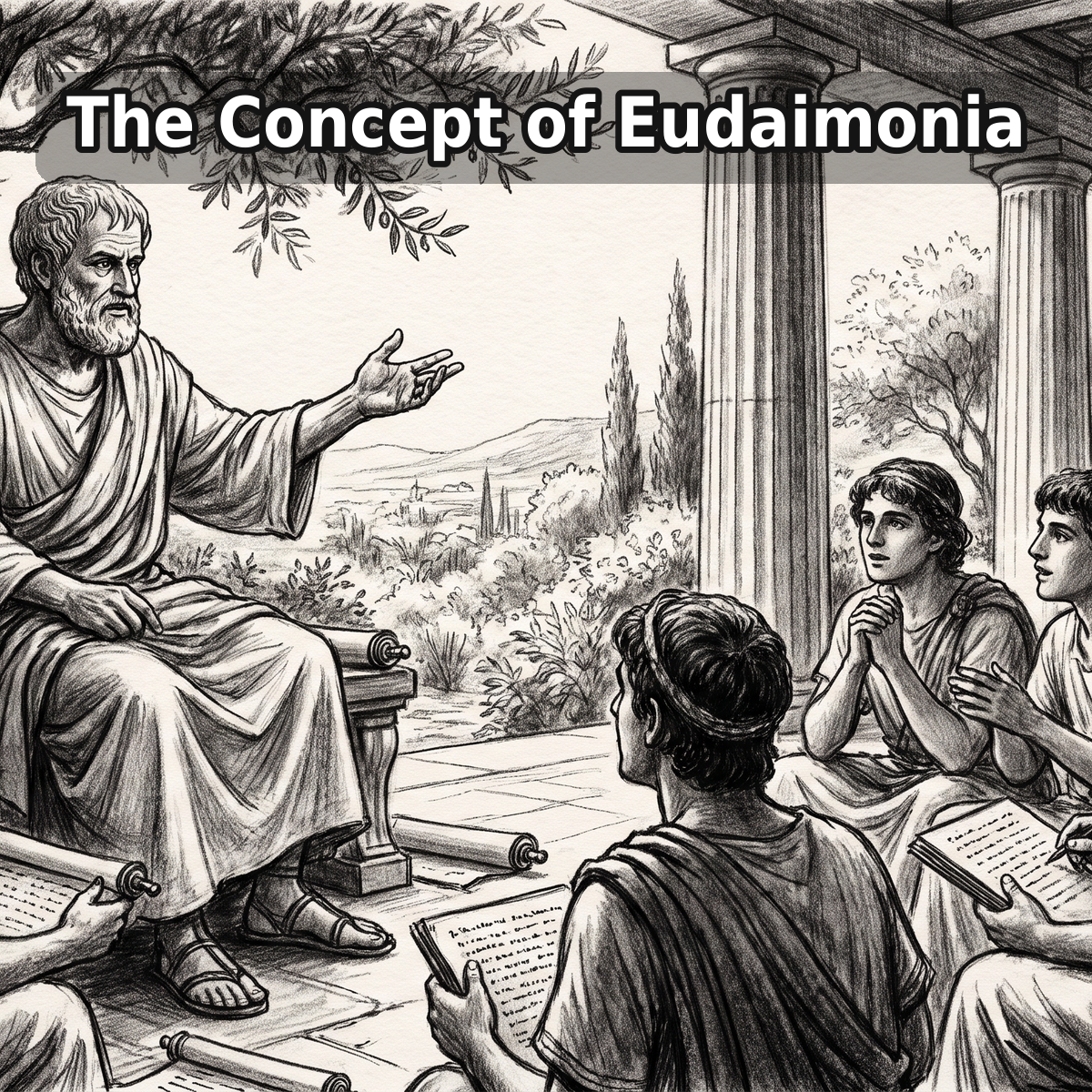
In my early days of college, I had a pair of humanities teachers who could tie pretty much anything in life back to Greek writings. They’d say something like, “Well, if we look back at what the early followers of Socrates had to say on this matter…” One day, they thought it would be a great exercise for us to read Aristotle’s Nicomachean Ethics, Book I, as a class. Fun times, to say the least.
In this writing, Aristotle observes the highest human good, which he calls eudaimonia. The concept is that human good can be defined when our activities align with the virtues we cherish. So when we do things that align with our values, we are doing good, and in Aristotle’s mind, that is the highest order of good.
You might have heard the phrase that one swallow does not make a summer. Meaning, the sight of one of these birds does not mean summer is upon us, but hundreds of them do. Apply this to your actions, and the concept makes sense. You are not good just because I am looking at one action, but because of a series of actions over time. That is what provides the person with evidence that they have achieved this eudaimonia.
This helps us understand what it takes to feel genuinely happy, rather than just experiencing a temporary feeling of pleasure. Happiness seems to be a general sense that your life is good, worthwhile, and sufficiently aligned with what you value. A wealthy person who has money to burn and spends it on a constant source of pleasure will eventually become despondent. They will start to seek real happiness once the allure of satisfying the need to just feel good is gone.
Aristotle cared less about whether you felt happy in a particular moment than about whether you lived well and did well over the course of a complete life.
So, when we talk about living well, it’s not just about chasing fleeting highs or avoiding every bump in the road. It’s more about finding that rhythm where what you do, day in and day out, really clicks with what you believe in. It’s about building a life that, when you look back, feels yours and full of purpose genuinely, even with all its messy bits. Maybe it’s about seeing those moments of struggle not as roadblocks, but as essential parts of the journey that make the good times even richer.